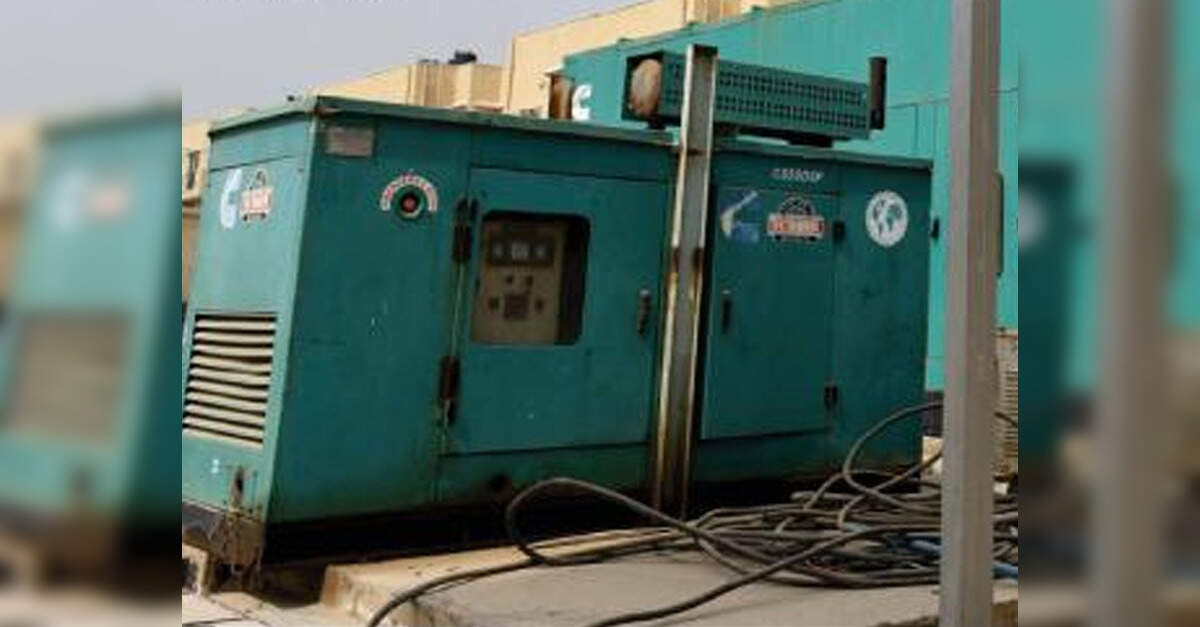
The global energy landscape is a complex tapestry of supply-side politics, macroeconomic shifts, and evolving demand patterns. While much attention focuses on crude production quotas and geopolitical tensions, a critical, often overlooked, dimension is the localized erosion of refined product demand driven by environmental mandates. A recent comprehensive study on Bengaluru, India, provides a stark illustration of this trend, highlighting how regional policy interventions targeting pollution from diesel generators (DG) could create significant headwinds for diesel demand in one of the world’s fastest-growing economies. For oil and gas investors, this isn’t merely an environmental footnote; it signals an accelerating shift in demand dynamics that warrants immediate attention and strategic re-evaluation.
Bengaluru’s Diesel Dilemma: A Harbinger for Urban Demand
Bengaluru, a bustling urban hub and a key economic engine in India, has been identified as one of the six most severely impacted cities nationwide by particulate matter (PM2.5) emissions from diesel generator sets. A detailed pan-India study reveals the alarming extent to which DG-driven pollution compromises human health and environmental quality. In 2022 alone, India saw nearly 1.5 million DG sets in operation, collectively contributing a staggering 42 Gg of PM2.5, 23 Gg of black carbon, and 877 Gg of nitrogen oxides (NOx) to the atmosphere. This is not a static problem; the diesel generator market in India is projected to expand at a robust compound annual growth rate (CAGR) of 8.8% through 2030, intensifying the urgency for decisive interventions. This growth trajectory, combined with the severe environmental impact, positions Bengaluru as a bellwether for what could become a widespread regulatory crackdown on diesel consumption in urban centers across emerging markets. Investors must recognize that while overall energy demand in India continues to climb, the composition of that demand is subject to increasing environmental pressure, directly impacting the long-term outlook for diesel.
Current Market Headwinds and the Broader Diesel Outlook
The regulatory push against diesel in urban India unfolds against a backdrop of significant volatility and downward pressure in the global crude market. As of today, Brent crude trades at $90.38, reflecting a substantial 9.07% drop from its opening, while WTI sits at $82.59, down 9.41% over the same period. This daily decline extends a challenging fortnight for crude prices, with Brent having shed over $20, or 18.5%, from its position at $112.78 just two weeks prior. Gasoline prices, currently at $2.93 and down 5.18%, further underscore a broader weakness in refined products. While geopolitical developments and macroeconomic concerns are primary drivers for these movements, the emerging narrative of localized demand erosion, such as that stemming from policy shifts in major consumption hubs like India, contributes to the overall bearish sentiment. Diesel, a critical fuel for industrial power, transportation, and commercial operations, is particularly vulnerable. Any significant policy-driven reduction in its usage in a rapidly industrializing economy like India could translate into tangible shifts in global demand curves for refined products, adding another layer of complexity for investors trying to forecast the trajectory of oil prices.
The Policy Pivot: Alternatives and Investment Opportunities
The proposed solutions to Bengaluru’s diesel pollution crisis are multifaceted and present distinct investment opportunities for forward-thinking capital. Researchers advocate for a national scrappage policy for aging, highly polluting DG units, alongside financial incentives for integrating rooftop photovoltaic (PV) systems with battery storage. Subsidies for CPCB IV+ compliant generators, which adhere to stricter emission norms, are also on the table. Crucially, there’s a strong push towards gas-based solutions and retrofitted emission control devices. While solar PV systems promise a 100% emission reduction, they currently meet only about 30% of demand due to high initial costs, land requirements, and reliability concerns—highlighting an immense need for innovation and investment in renewable energy infrastructure and storage. Gas generators, capable of cutting PM2.5 emissions by over 95%, face their own hurdles, primarily steep costs, poor pipeline infrastructure, and safety perceptions. For investors, this signals a burgeoning market for companies involved in solar energy solutions, natural gas infrastructure development (especially piped natural gas, or PNG, networks), and manufacturers of advanced, lower-emission generators. The emphasis on strict enforcement and mandatory periodic emission testing also creates a market for environmental monitoring and compliance services, signaling a clear shift away from an unconstrained diesel market.
Navigating Future Catalysts and Addressing Investor Concerns
The interplay between localized demand shifts and global market dynamics will be a defining feature of the energy investment landscape in the coming years. Many of our readers are keenly asking about the future trajectory of oil prices, specifically what they might expect for crude per barrel by the end of 2026, and what OPEC+ production quotas currently look like. These macro questions are profoundly influenced by both supply-side management and granular demand shifts. The upcoming OPEC+ Joint Ministerial Monitoring Committee (JMMC) and full Ministerial meetings this weekend (April 18-19) are critical events that will signal the cartel’s collective stance on production levels. Any decisions on quotas will directly impact global supply-demand balances, influencing price discovery for the remainder of the year and into 2026. Furthermore, investors will closely monitor weekly data points such as the API Weekly Crude Inventory (April 21, April 28) and the EIA Weekly Petroleum Status Report (April 22, April 29) for insights into short-term supply and demand trends in major consumption markets. The Baker Hughes Rig Count (April 24, May 1) will also provide an indication of upstream activity and future supply potential. While OPEC+ manages the supply tap, the demand side is increasingly fragmented, with regional policies, like those proposed in Bengaluru, exerting a growing influence. Investors must expand their analytical frameworks to incorporate these micro-level demand destruction factors, recognizing that the sum of these localized shifts can significantly alter the global oil market’s equilibrium and, consequently, the long-term outlook for energy investments.


