Geopolitical Chessboard: Russian Icebreakers for Alaskan LNG Development
The intricate dance of global energy politics recently saw an intriguing overture: discussions between the United States and Russia regarding the potential use of Russian nuclear-powered icebreakers to facilitate gas and LNG projects in Alaska. While these high-stakes talks, which previously included a summit between former President Trump and President Putin, focused broadly on international relations and specific agreements, the icebreaker concept highlights the critical intersection of energy security, strategic infrastructure, and complex geopolitical realities. For investors eyeing the Arctic’s vast resource potential, this proposal underscores both the immense logistical challenges and the strategic importance of unlocking new supply chains to meet global demand, particularly from Asian markets.
Market Dynamics and the Arctic’s Investment Case
In the broader context of a dynamic energy market, the economic viability of ambitious projects like Alaska LNG and Qilak LNG faces constant scrutiny. As of today, Brent crude trades at $94.25, reflecting a 1.29% decline within the day, while WTI crude sits at $85.9, down 1.74%. This recent softening follows a significant 14-day trend where Brent crude shed nearly 20% of its value, dropping from $118.35 to $94.86. Such price volatility naturally influences investment decisions across the energy spectrum. While lower oil prices might intensify the focus on natural gas as a cleaner transition fuel, they also increase the pressure on capital-intensive projects to demonstrate robust long-term economics. For investors, the potential for Russian icebreaker support could be a game-changer, significantly de-risking the logistical component of Alaskan LNG projects and enhancing their competitive edge against other global suppliers by enabling year-round access.
Unlocking the Arctic: The Indispensable Role of Infrastructure
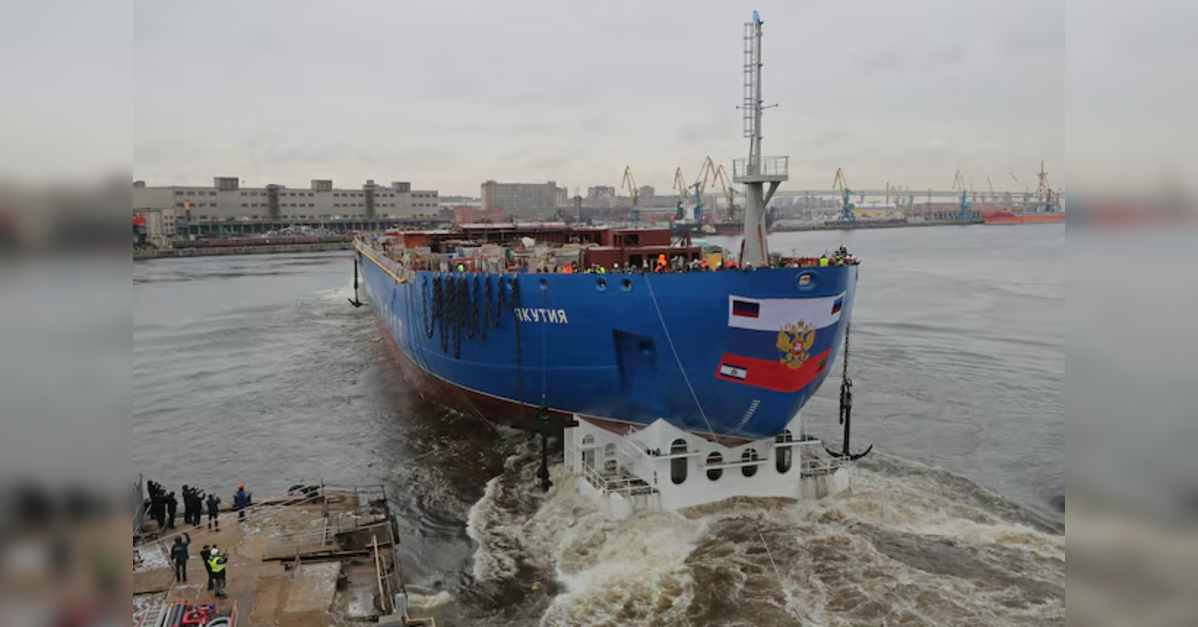
The core of the icebreaker discussion lies in the unparalleled capabilities of Russia’s nuclear-powered fleet. These aren’t just any ships; they represent the world’s only operational fleet of such vessels, critical for maintaining year-round navigation along the Northern Sea Route. For Alaska’s remote northern regions, where infrastructure is severely limited and weather conditions are notoriously harsh, access is everything. The proposed $44 billion Alaska LNG project, with its ambitious 800-mile pipeline, and Qilak LNG, targeting 4 million tons per annum (mtpa) of liquefied natural gas, both aim to transport gas to energy-hungry Asian markets. Nuclear icebreakers could not only ensure the continuous flow of LNG but also crucially facilitate the transport of construction materials and heavy equipment necessary to build and maintain these vast facilities. Without such specialized logistical support, the sheer scale and complexity of developing these resources become exponentially more challenging, directly impacting project timelines and costs.
Investor Sentiment and Future Catalysts for Arctic Energy
Reflecting broader market anxieties and strategic positioning, investors are actively seeking clarity on the future of energy markets. Our proprietary intent data shows significant interest in the future trajectory of oil prices, with many questioning whether WTI will see upward or downward movement and what the price of oil per barrel will be by the end of 2026. This forward-looking sentiment underscores the importance of long-term strategic projects like Alaskan LNG, which, if realized, could reshape global gas supply dynamics. While the specific utility of Russian icebreakers for these projects has been debated, with figures like Qilak LNG founder Mead Treadwell acknowledging the possibility without specific requests, the mere discussion highlights the critical infrastructure gaps in the Arctic. Investors should monitor upcoming energy events closely. The OPEC+ JMMC Meeting today, April 21st, will provide immediate insights into supply-side management, while the EIA Weekly Petroleum Status Reports (April 22nd, April 29th) and Baker Hughes Rig Counts (April 24th, May 1st) will offer crucial snapshots of market fundamentals. Furthermore, the EIA’s Short-Term Energy Outlook on May 2nd will be a key publication for refining long-term price expectations and assessing the broader investment climate for ambitious energy ventures in challenging environments like the Arctic.


