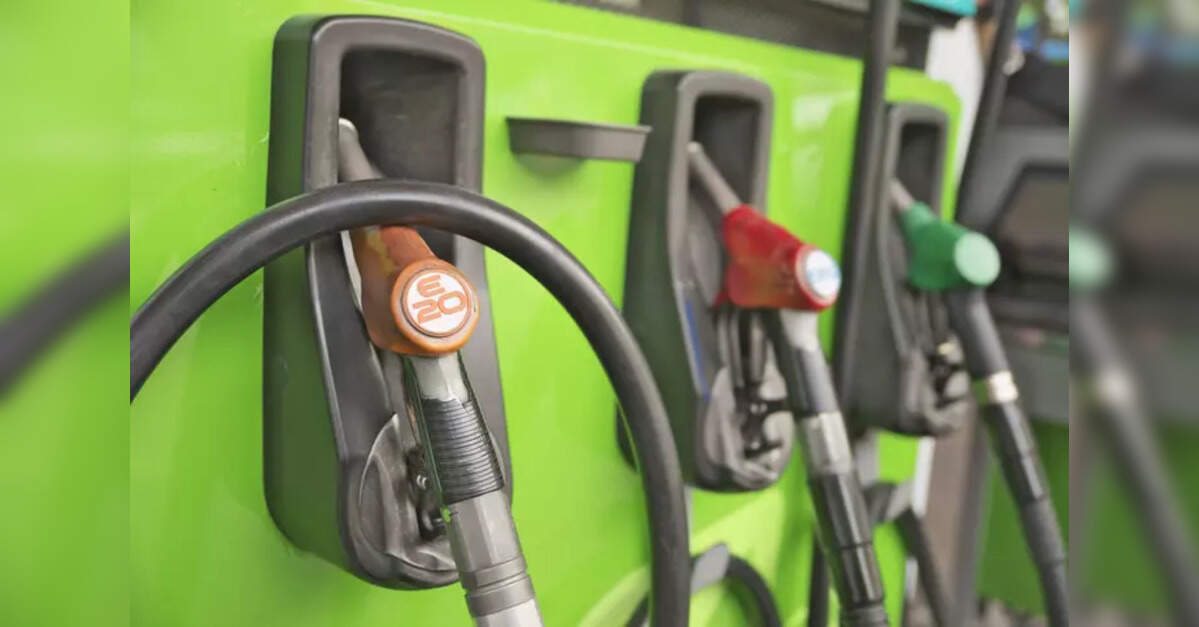
The global energy landscape is a complex tapestry woven from geopolitical shifts, technological advancements, and, crucially, consumer behavior. Often, seemingly minor domestic issues can ripple outwards, influencing international commodity markets and investor sentiment. A prime example is unfolding in India, where a national push for ethanol-blended fuel, specifically E20 petrol containing 20% ethanol, is encountering unexpected friction on the ground. This transition, while environmentally driven, is revealing a significant disconnect between policy and practical implementation, leading to widespread vehicle underperformance and, paradoxically, a potential increase in effective fuel demand. For astute oil and gas investors, this scenario presents both challenges and opportunities, demanding a close examination of its implications for crude prices, refinery margins, and the future of energy consumption in one of the world’s largest growth markets.
The E20 Conundrum: Unintended Consequences for Fuel Efficiency
India’s ambitious ethanol blending program aimed to reduce reliance on crude imports and lower emissions. The government mandated E20 fuel availability nationwide well over two years ago, with all new vehicles required to be E20-compliant from April 2023, and stricter enforcement slated for April 2025. However, a critical oversight has emerged: an estimated nine out of ten cars currently on Indian roads are only E10-ready, meaning they are designed to handle a maximum of 10% ethanol. When these vehicles are fueled with E20, the consequences are immediate and detrimental. Owners are reporting significant drops in fuel efficiency, with mileage falling from typical ranges like 11-12 kilometers per liter to a mere 7-8 kmpl – a reduction of over 30%. Others observe mileage declines exceeding a fifth of their previous performance. This isn’t just about consumer inconvenience; the technical reasons are clear. Ethanol-sensitive components such as rubber seals, fuel lines, and gaskets degrade, and engines, uncalibrated for the higher ethanol content, underperform, leading to issues like jerky drives, poor pick-up, sluggish acceleration, and even rough idling or knocking. While fixes, including replacing critical parts and ECU tuning, can restore performance, the widespread nature of this problem means that for every kilometer driven, a non-compliant vehicle consumes more fuel. This effectively translates to higher overall gasoline demand for the same amount of travel, directly counteracting the intended efficiency gains of ethanol blending and creating an unforeseen upward pressure on refined product consumption.
India’s Demand Dynamics and Global Crude Prices
The operational challenges of India’s E20 transition, when scaled across a nation of over 1.4 billion people and a rapidly growing vehicle fleet, have tangible implications for global crude markets. As of today, Brent crude trades at $94.25 per barrel, reflecting a 1.29% drop within the day, with a range between $93.98 and $95.69. WTI crude also saw a decline, settling at $85.90, down 1.74% and trading between $85.50 and $86.78. This softness in current prices follows a notable 14-day trend where Brent crude has retreated from $118.35 on March 31st to $94.86 yesterday, a significant drop of nearly 20%. While broader macroeconomic concerns and supply dynamics have driven this recent decline, the underlying demand picture remains critical. The higher effective fuel consumption from non-E20 compliant vehicles in India, despite the ethanol blend, could act as a subtle but persistent bullish factor for gasoline demand. Currently, gasoline is trading at $3.01, down 0.66% for the day. For investors asking about the direction of WTI or broader oil prices, understanding these nuanced regional demand signals is crucial. India’s mileage drop issue suggests that even as global oil prices have softened, the fundamental demand for gasoline in a key emerging market may be more robust than headline figures suggest, providing a floor to prices that might otherwise continue to fall. This complex interplay of internal policy and external market forces underscores the delicate balance in energy investing.
Navigating Future Market Signals: Key Events on the Horizon
For investors monitoring the unfolding dynamics, several upcoming energy events will offer critical insights into how these demand pressures might manifest and be interpreted by market participants. The OPEC+ Joint Ministerial Monitoring Committee (JMMC) Meeting scheduled for April 21st, tomorrow, is particularly relevant. Any commentary or production decisions from this influential group could reflect their assessment of global demand, potentially incorporating subtle shifts from major consumers like India. Will the JMMC acknowledge these regional consumption quirks, or will they focus purely on broader macroeconomic trends? Furthermore, the EIA Weekly Petroleum Status Reports on April 22nd and April 29th, alongside the API Weekly Crude Inventory releases on April 28th and May 5th, will provide crucial data on crude and product inventories. A sustained drawdown in gasoline stocks, particularly if demand outpaces expectations, could signal the impact of factors like India’s E20 challenges. Perhaps the most significant forward-looking event is the EIA Short-Term Energy Outlook (STEO) due on May 2nd. This comprehensive report offers revised forecasts for supply, demand, and prices. Investors should scrutinize the STEO for any adjustments to demand projections for Asia, especially India, to see if the real-world implications of the ethanol transition are being factored into official outlooks. The Baker Hughes Rig Count reports on April 24th and May 1st, while focused on the supply side, will also be watched for any shifts in drilling activity that could reflect long-term supply responses to perceived demand strength or weakness.
Investor Sentiment and the Long-Term Outlook for Energy
The situation in India highlights a broader theme relevant to oil and gas investors: the complexities and potential pitfalls of energy transitions. Our reader intent data shows investors are keenly interested in long-term price predictions, with questions like “what do you predict the price of oil per barrel will be by end of 2026?” This illustrates a desire to understand the durability of current trends. The Indian E20 scenario reveals that even well-intentioned policies can have unforeseen consequences that impact demand. The “glaring gap in awareness” among consumers and the finger-pointing between automakers (OEMs), oil companies, and lawmakers create an environment of uncertainty. For OEMs, this means a pressing need to accelerate the production and promotion of E20-compliant vehicles and potentially offer more robust aftermarket solutions. For domestic Indian oil companies, the challenge is to manage fuel supply effectively, potentially navigating increased domestic gasoline consumption alongside mandated blending targets. Globally, this incident provides a cautionary tale for other nations pursuing rapid energy transitions, suggesting that the “last mile” of consumer adoption and vehicle compatibility is paramount. From an investment perspective, this reinforces the need for due diligence on companies exposed to emerging markets and their specific regulatory environments. While a single country’s mileage issue might seem minor, its collective impact in a market the size of India can significantly alter global demand trajectories, making it a crucial factor in shaping the long-term price of oil and the profitability of energy investments well into 2026 and beyond.


