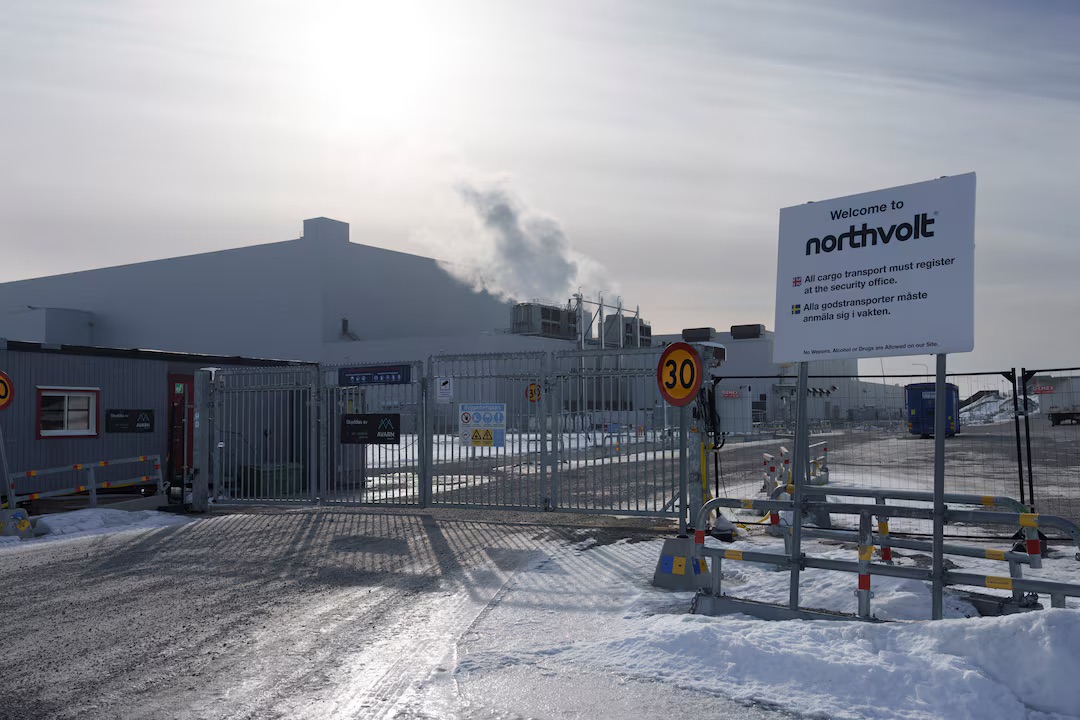
The recent acquisition of Northvolt’s assets by US-based Lyten marks a critical turning point for European battery manufacturing ambitions and the broader global energy transition. After Northvolt’s highly publicized bankruptcy, which saw the Swedish company, once hailed as Europe’s answer to Asian battery giants, collapse under the weight of unfulfilled promises and quality control issues, Lyten’s intervention offers a pathway to revival. This strategic move by the Silicon Valley startup, known for its innovative lithium-sulphur battery technology and backed by automotive powerhouse Stellantis and logistics giant FedEx, is not merely a corporate rescue; it represents a significant bet on the future of localized, sustainable energy storage and electric vehicle supply chains, particularly in a global energy market grappling with fluctuating commodity prices and an urgent drive for independence.
Reviving Europe’s Battery Ambition Amidst Market Volatility
Northvolt’s March bankruptcy filing, Sweden’s largest corporate failure in recent memory, sent shockwaves through the European industrial landscape, underscoring the formidable challenges of scaling advanced manufacturing. Lyten’s CEO, Dan Cook, confirmed the acquisition was made at a “substantial discount” to the original asset value, positioning Lyten to “pick up where the Northvolt team left off.” This deal is particularly pertinent given the current dynamics in the global energy markets. As of today, Brent Crude trades at $90.38 per barrel, reflecting a notable 9.07% decline on the day. Similarly, WTI Crude has seen a sharp drop, trading at $82.59, down 9.41% within the daily range of $78.97-$90.34. This immediate downturn follows a more significant trend over the past two weeks, with Brent having fallen by $20.91, or 18.5%, from $112.78 on March 30th to $91.87 just yesterday. Such pronounced volatility in traditional fossil fuel markets inherently amplifies the strategic appeal of stable, locally sourced energy solutions like advanced battery technologies. Investors are increasingly seeking hedges against the unpredictable nature of oil and gas, making ventures into domestic battery production a compelling alternative, especially in regions striving for greater energy autonomy.
Lyten’s Strategic Play: Technology, Markets, and Capital
Lyten’s acquisition encompasses Northvolt’s key projects in Sweden and Germany, its valuable intellectual property, and a pending acquisition of its Canadian unit, alongside the energy storage business in Poland secured in July. This comprehensive takeover signals Lyten’s intent to rapidly consolidate assets and expertise. The company aims to restart the flagship Skelleftea plant in northern Sweden and resume deliveries of lithium-ion battery cells by 2026. While Lyten itself is a pioneer in lithium-sulphur technology, this move demonstrates a pragmatic approach to leveraging existing infrastructure to meet immediate market demands for lithium-ion while simultaneously advancing its proprietary solutions. Lyten’s strategic targets span the high-growth automotive, defense, and energy storage sectors, positioning it at the nexus of several critical industries. The company’s focus on “locally sourced, locally manufactured batteries for both the North American and European markets” directly addresses geopolitical calls for supply chain resilience and reduced reliance on distant, often volatile, production hubs. This ambitious expansion is backed by over $200 million in additional equity investment secured in July, affirming strong investor confidence in Lyten’s vision and capacity to execute where Northvolt struggled.
Investor Outlook: Reclaiming Trust and Future Deliverables
A central challenge for Lyten will be to overcome the reputational shadow cast by Northvolt’s collapse, particularly with former customers like Scania, BMW, Volkswagen, and Audi, whose combined order book once topped $50 billion. Investors are keenly watching how Lyten plans to restore confidence and deliver on promises that Northvolt could not. Our proprietary reader intent data reveals a significant investor focus on long-term energy price stability, with common queries like “what do you predict the price of oil per barrel will be by end of 2026?” underscoring a desire for clarity amidst market fluctuations. Lyten’s CEO, Dan Cook, directly addresses this by stating the company will “prove its worth” by initially focusing on “providing high yields to a single customer.” This strategy suggests a deliberate, quality-first approach designed to re-establish trust and demonstrate reliability before scaling. While Scania’s head of ventures, Gustaf Sundell, indicated it’s “too early to say” if orders would be placed, the sentiment of being “happy with the outcome” suggests an openness to Lyten. Cook remains optimistic, believing former customers “will come back, perhaps quicker than people believe,” banking on the strategic imperative for local battery supply and Lyten’s renewed operational focus. For investors, success here would validate the strategic pivot to advanced battery technologies as a robust long-term play against the backdrop of traditional energy market uncertainties.
The Road Ahead: Upcoming Events and the Geopolitical Chessboard
Lyten’s ambitious 2026 restart target for the Skelleftea plant places it firmly on the timeline for Europe’s energy independence goals, a sentiment echoed by Sweden’s Deputy Prime Minister Ebba Busch, who stated the deal positions the country “as key to Europe’s energy independence.” The coming weeks will see a flurry of activity in the broader energy sector that, while not directly impacting Lyten’s operations, will certainly shape the macroeconomic environment for all energy-related investments. Key events include the OPEC+ Joint Ministerial Monitoring Committee (JMMC) meeting tomorrow, April 18th, followed by the Full Ministerial OPEC+ Meeting on April 19th. These gatherings are crucial for setting global oil production quotas and will undoubtedly influence future crude price trajectories, a factor investors frequently monitor as they evaluate the competitive landscape for alternative energy solutions. Further insights into traditional energy supply and demand will come from the API Weekly Crude Inventory and EIA Weekly Petroleum Status Reports on April 21st and 22nd, respectively, along with the Baker Hughes Rig Count on April 24th. For Lyten, navigating this dynamic energy landscape means capitalizing on the strategic demand for domestic battery production. The integration of Northvolt’s former management, with the exception of its founder, suggests a continuity of operational knowledge, while Lyten’s innovative technology promises to address past quality shortcomings. The successful integration and operationalization of these assets will be a critical barometer for Lyten’s ability to fulfill the promise of a resilient, independent, and technologically advanced energy future for both Europe and North America.


