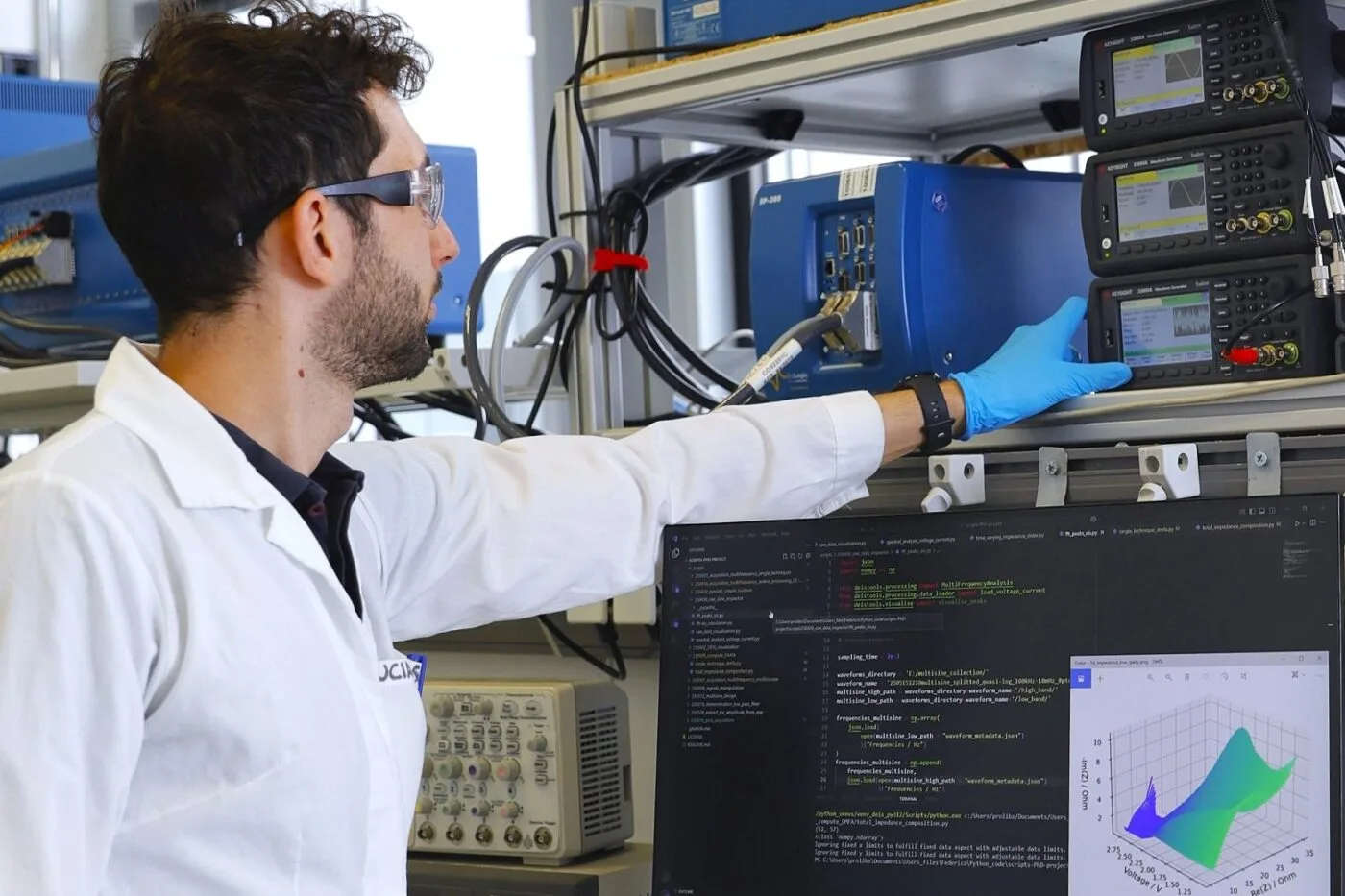
The energy transition continues to accelerate, driven by relentless innovation in renewable energy and electrification. A recent breakthrough from Fraunhofer IFAM in real-time impedance spectroscopy for lithium-ion batteries marks a significant leap forward, promising to enhance the safety, longevity, and overall performance of electric vehicles (EVs) and other battery-powered systems. This development is not just a technical upgrade; it represents a fundamental shift in battery management that could significantly de-risk investments in the burgeoning EV sector and reshape long-term demand dynamics across the broader energy landscape, compelling traditional oil and gas investors to reassess their strategic positioning.
The New Frontier in Battery Management: Real-Time Intelligence
For years, a key challenge in battery technology, particularly for safety-critical applications, has been the inability to accurately monitor internal battery conditions in real-time during active use. Traditional impedance spectroscopy, a vital diagnostic tool for assessing state of charge (SoC), state of health (SoH), and internal safety, required batteries to be at rest, with measurement cycles often stretching up to 20 minutes. This limitation has historically constrained the optimization of battery performance and the expansion into more demanding sectors. The Fraunhofer IFAM’s new method, spearheaded by Fabio La Mantia and Hermann Pleteit, eradicates this bottleneck. By overlaying a multi-frequency test signal onto the battery’s charging or discharging current and sampling responses at up to one million times per second, the technology provides an immediate, detailed profile of the battery’s internal condition. This real-time intelligence allows battery management systems (BMS) to detect localized overheating events instantly and respond by disabling or throttling affected cells before irreversible damage occurs. This capability not only significantly enhances operational safety by moving beyond slow external temperature sensors but also promises to extend battery lifespan, unlocking new possibilities for performance optimization and paving the way for lithium-ion batteries in safety-critical applications such as electric aircraft and maritime vessels. Such advancements are crucial for investor confidence, addressing long-standing concerns about EV battery reliability and durability.
Navigating the Volatile Crude Market Amidst Transition
While cutting-edge battery technology pushes the energy transition forward, investors in the traditional oil and gas sector must contend with an inherently volatile crude market. As of today, April 16th, 2026, Brent Crude is trading at $99.6 per barrel, showing a robust daily gain of 4.92%, with its daily range spanning $94.42 to $99.73. Similarly, WTI Crude stands at $91.52, up 3.85%. This strong rebound follows a notable downturn over the past two weeks, where Brent crude futures declined from $108.01 on March 26th to $94.58 on April 15th, representing a significant 12.4% drop. Gasoline prices, currently at $3.08, also reflect today’s upward price movement in crude. This short-term volatility underscores the ongoing geopolitical and supply-demand pressures that continue to characterize the global oil market. For investors, these price swings directly influence the economic calculus of the energy transition. Higher crude prices generally make EV adoption more attractive and accelerate investment into alternative energy solutions. Conversely, periods of lower prices can temporarily ease the pressure to transition, though the long-term trend towards decarbonization remains undeniable. The Fraunhofer innovation, by making EVs safer and more reliable, strengthens the long-term investment thesis for electrification, regardless of short-term crude fluctuations.
Strategic Implications for Energy Investors: Upcoming Events and Forward Outlook
The immediate horizon holds several critical events that will significantly shape the crude market and, by extension, the competitive landscape for energy transition technologies. Investors are keenly awaiting the OPEC+ Joint Ministerial Monitoring Committee (JMMC) meeting on April 18th, followed by the full OPEC+ Ministerial Meeting on April 20th. These gatherings are pivotal, as any decisions regarding production quotas will directly impact global supply and price stability. A concerted effort to maintain production cuts could lend support to crude prices, potentially slowing the immediate economic impetus for EV adoption, while an unexpected increase in supply could exert downward pressure. Beyond OPEC+, the consistent flow of data from the API Weekly Crude Inventory reports (April 21st, April 28th) and the EIA Weekly Petroleum Status Reports (April 22nd, April 29th) will provide crucial insights into demand and inventory levels in the world’s largest consumer. Furthermore, the Baker Hughes Rig Count reports (April 17th, April 24th) offer a gauge of North American drilling activity. Our forward-looking analysis indicates that strong inventory builds or an unexpected easing of OPEC+ cuts could push Brent back towards the lower end of its recent range. However, any supply disruptions or robust demand signals could quickly reverse the recent decline. For investors evaluating the energy transition, understanding these near-term crude market dynamics is essential, as the relative economics of traditional fuels versus emerging technologies like advanced batteries are constantly in flux.
Addressing Investor Concerns: Longevity, Safety, and the 2026 Brent Forecast
Our proprietary reader intent data reveals a consistent theme among investors this week: a focus on crude price forecasts, particularly building a base-case Brent price forecast for the next quarter and the consensus 2026 Brent forecast. While these questions typically revolve around supply-side geopolitics and macroeconomic demand, the advancements in battery technology offer a critical, albeit longer-term, demand-side perspective. The Fraunhofer IFAM’s real-time monitoring directly addresses two major concerns that have historically dampened investor enthusiasm for EV companies: battery longevity and safety. By extending battery lifespan and preventing thermal incidents, this technology de-risks EV investments, making them more attractive and accelerating mass adoption. This improved reliability and performance will translate into a faster penetration of EVs into the global fleet, gradually eroding demand for gasoline and, eventually, crude oil. Therefore, when investors ask about the 2026 Brent forecast, they must integrate the accelerating pace of technological innovation in the energy transition. Our analysis suggests that while short-term crude prices will remain reactive to OPEC+ decisions and inventory data, the enhanced viability of EVs due to breakthroughs like real-time impedance spectroscopy introduces a structural headwind to long-term oil demand growth. This necessitates a more nuanced and potentially conservative long-term Brent outlook, as the market begins to factor in a more robust and reliable EV ecosystem.
Broadening Horizons: Battery Tech Beyond the Road
The implications of real-time battery impedance spectroscopy extend far beyond the electric vehicle market, opening up significant investment opportunities in other sectors critical to the energy transition. The Fraunhofer IFAM researchers explicitly highlight potential applications in future aviation and maritime industries, sectors where battery safety and reliability are paramount. “These kinds of systems could be used in eco-friendly electric aircraft, for example,” notes Hermann Pleteit, emphasizing a market still in its infancy but with immense growth potential. The shipping industry, too, has signaled interest, driven by increasing environmental regulations and the quest for cleaner propulsion. Moreover, the technology offers significant advantages for integrating renewable energy systems, enabling real-time control of battery modules to enhance grid stability. This capability is vital for managing the intermittent nature of solar and wind power, making renewable grids more robust and efficient. For investors, this diversification of application areas means a broader addressable market for companies developing and implementing this technology. It expands the investment thesis beyond simply EVs to encompass grid modernization, sustainable transportation, and industrial electrification, creating a fertile ground for growth in the coming decades. The advancement serves as a foundational element, enhancing the viability and safety of electrification efforts across the entire energy complex and solidifying the ongoing, irreversible shift towards a decarbonized future.