VinFast India EV Output: New Headwind for Oil
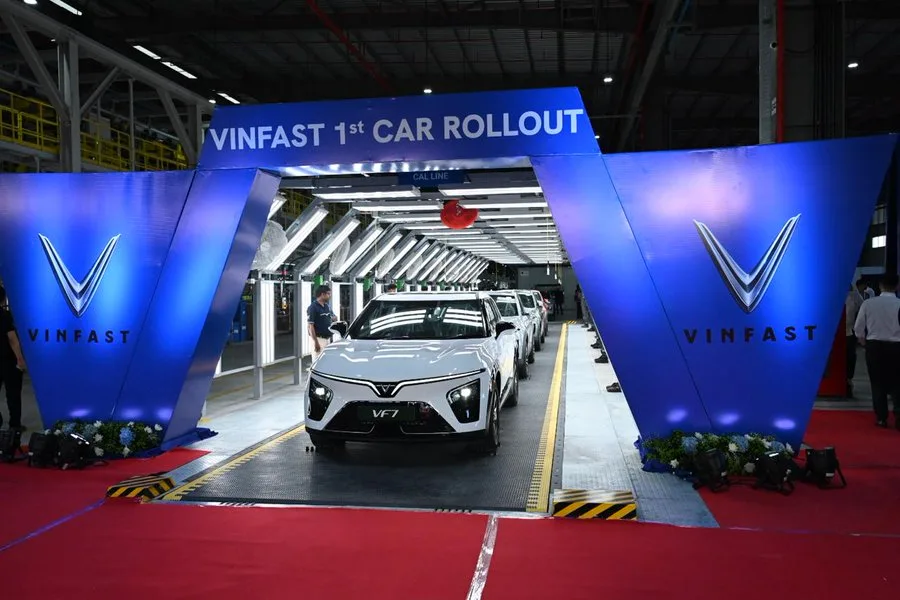
The global energy landscape continues its dynamic shift, with electric vehicle (EV) adoption emerging as a persistent, long-term headwind for crude oil demand. The latest significant development reinforcing this trend comes from VinFast, the Vietnamese EV manufacturer, which has commenced commercial operations at its first overseas production facility in Thoothukudi, Tamil Nadu, India. This strategic move marks VinFast’s third global plant and its entry into one of the world’s most populous and rapidly motorizing nations, signaling an acceleration in the energy transition that warrants close attention from oil and gas investors.
VinFast’s Strategic India Entry Fuels EV Momentum
VinFast’s new EV production facility in Thoothukudi, a critical port city in Southern India, represents a substantial commitment to the burgeoning Indian automotive market. The company first announced its plans in January of last year and has now brought this vision to fruition on a 408-acre site. Initial reports indicate an investment of 11.2 billion rupees (approximately 110 million euros) in the first phase, dedicated to CKD (Completely Knocked Down) operations across 114 acres. This initial outlay is just the beginning; VinFast has confirmed plans for a 40 billion rupee (approximately 395 million euros) investment over five years, with an ambitious target to eventually quadruple that amount to 160 billion rupees (approximately 1.6 billion euros). These substantial future investments aim to upgrade the facility to a full-fledged manufacturing unit, significantly boosting local content and production capabilities.
The Thoothukudi plant initially focuses on assembling the VF 6 and VF 7 models, targeting an annual production capacity of 50,000 units. The company intends to scale this capacity to 150,000 units in the future, positioning the facility not only for the Indian domestic market but also as an export hub for South Asia, the Middle East, and Africa. Early success is already evident, with the factory receiving orders from neighboring countries such as Nepal, Sri Lanka, and Mauritius. With pre-orders for the VF 6 and VF 7 already underway in India since mid-July, offering competitive features like Level 2 ADAS, panoramic glass roofs, and advanced battery packs (59.6 kWh for VF 6, 70.8 kWh for VF 7), VinFast is directly challenging established players like Hyundai’s Creta Electric and Tata Motors’ Harrier.ev. This aggressive market entry and long-term investment plan underscore the structural shift away from internal combustion engine vehicles, gradually eroding future gasoline demand.
Crude Volatility Persists Amidst Emerging Demand Pressures
While geopolitical tensions and supply-side dynamics often dominate short-term crude price movements, the accelerating pace of EV adoption, exemplified by VinFast’s expansion, represents a fundamental and growing pressure on long-term oil demand. As of today, Brent crude trades at $90.38 per barrel, reflecting a significant daily decline of 9.07%. Similarly, WTI crude stands at $82.59, down 9.41% within the day’s trading range. This recent sharp downturn follows a broader trend; Brent has shed $20.91, or 18.5%, over the past 14 days, falling from $112.78 on March 30th to $91.87 on April 17th. Gasoline prices are also feeling the pinch, currently at $2.93, a 5.18% decrease today. These price movements are influenced by a complex interplay of factors, but the underlying narrative of peak oil demand being within sight, driven by electrification, cannot be ignored. The entry of major EV players into high-growth markets like India directly contributes to this sentiment, adding a structural bearish tilt to future crude pricing models.
Forward Outlook: EV Growth and Upcoming Market Signals
The long-term implications of VinFast’s expansion extend far beyond its immediate production numbers. This significant investment in India by a dedicated EV manufacturer highlights a global commitment to electrification that will increasingly factor into critical energy decisions. Investors are keenly watching how major oil producers and market analysts will integrate this accelerating EV trend into their forecasts. With the OPEC+ Joint Ministerial Monitoring Committee (JMMC) and the Full Ministerial Meeting scheduled for April 18th and 19th respectively, discussions around global oil demand and production quotas will inevitably confront the rising tide of EV adoption. The collective impact of ventures like VinFast’s in India will challenge traditional demand growth assumptions, potentially influencing OPEC+’s strategic decisions on supply management.
Furthermore, upcoming data releases, such as the API Weekly Crude Inventory (April 21st, April 28th) and the EIA Weekly Petroleum Status Reports (April 22nd, April 29th), will offer snapshots of current demand and inventory levels. While these reports reflect immediate market conditions, the underlying structural changes driven by EV expansion in populous nations like India will gradually manifest in these figures over time. The sustained investment in EV infrastructure and manufacturing, as demonstrated by VinFast’s multi-billion rupee commitment, ensures that the energy transition is not a temporary phenomenon but a deepening trend that will reshape the global energy balance for years to come.
Addressing Investor Concerns: Oil Price Trajectory and OPEC+ Strategy
A recurring question among our investor base this week revolves around the projected price of oil per barrel by the end of 2026. While short-term volatility is a given in commodity markets, developments such as VinFast’s aggressive foray into the Indian EV market provide concrete evidence of the structural headwinds challenging crude oil demand in the medium to long term. Each new EV plant, particularly one targeting 150,000 units annually in a market as vast as India, represents a tangible reduction in future gasoline consumption. This incremental erosion, compounded globally, makes a sustained return to exceptionally high crude prices increasingly challenging without significant, unforeseen supply disruptions.
Another pertinent question from our readers focuses on OPEC+’s current production quotas and how these might evolve. As EV adoption accelerates in key growth markets, OPEC+ nations face the complex task of balancing market stability with the long-term imperative to manage their resource base in a world transitioning away from fossil fuels. The strategic investments by companies like VinFast underscore that the demand side of the energy equation is undergoing a profound, irreversible transformation. This will necessitate ongoing adjustments to production strategies by major oil exporters, as they contend with a future where a significant portion of transportation demand shifts to electricity. Investors must factor these structural changes into their long-term models for oil and gas equities, recognizing that while short-term gains may exist, the underlying demand fundamentals are steadily being reshaped by the global push towards electrification.