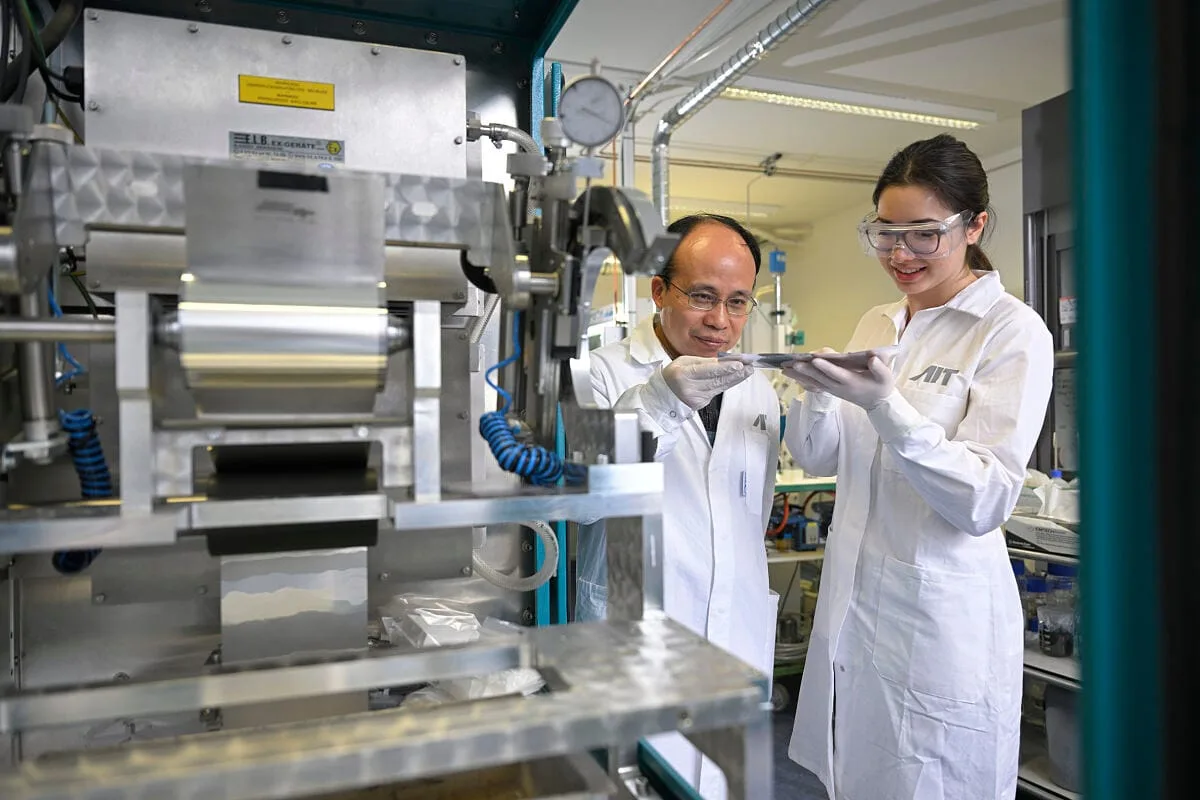
While the oil markets continue their daily dance of supply and demand, a quiet revolution in battery technology is brewing in European laboratories, holding significant long-term implications for global energy consumption. A consortium led by the AIT Austrian Institute of Technology is pushing the boundaries of lithium-ion battery anodes, developing materials that promise higher energy density, extended lifespan, and improved sustainability. For astute oil and gas investors, understanding these advancements is crucial. While immediate market catalysts like OPEC+ decisions and inventory reports dominate short-term trading, foundational shifts in energy storage technology represent a fundamental threat to future hydrocarbon demand. This analysis delves into the AIT’s RESTINA project, examining its potential to accelerate the energy transition and reshape the investment landscape, all while contextualizing against current market realities and upcoming events.
Next-Generation Anodes: A Silent Disruptor to Future Oil Demand
The RESTINA research project is a prime example of how materials science innovation can profoundly impact the energy sector. By focusing on silicon and tin sulphide nanocomposites, the AIT-led consortium aims to deliver a “Generation 3b” lithium-ion battery. What does this mean for investors in the oil and gas space? It signifies batteries with superior energy density, slower degradation, and more charging cycles than current electric vehicle (EV) batteries. The material mix, combining recycled silicon from disused photovoltaic modules with tin sulphide, not only enhances performance but also addresses critical environmental and sustainability concerns – factors increasingly driving consumer and regulatory decisions. Improved battery performance directly translates to more attractive EVs, extending ranges, reducing charging anxiety, and ultimately accelerating the global shift away from internal combustion engines. While seemingly distant from the daily crude trade, such breakthroughs lay the groundwork for a future with significantly reduced demand for gasoline and diesel, a long-term demand destruction scenario that must be factored into any forward-looking energy portfolio strategy.
Current Market Resilience vs. Long-Term Technological Headwinds
The immediate outlook for crude oil appears robust, demonstrating a resilience that might seem to belie the long-term threats posed by advancements like the RESTINA project. As of today, Brent Crude trades at $99.46, marking a strong +4.77% gain for the day, with its range stretching from $94.42 to $99.65. WTI Crude mirrors this strength, sitting at $91.23, up +3.52%, after moving between $87.32 and $91.29. Gasoline prices also reflect this upward momentum, currently at $3.08, up +2.66%. This current market strength is a notable rebound, especially considering the 14-day trend for Brent, which saw prices decline from $108.01 on March 26th to $94.58 yesterday, April 15th – a drop of over 12%. This recent volatility underscores the immediate impact of geopolitical tensions, supply concerns, and inventory shifts. However, for investors with a multi-year horizon, the fundamental question remains: how long can this market strength persist in the face of relentless technological progress in electrification? The robust short-term performance should not overshadow the creeping influence of innovations that promise to make electric transportation more ubiquitous and efficient, ultimately compressing long-term demand growth for crude.
Upcoming Catalysts and the Evolving Demand Picture
Oil & gas investors are always looking for clarity on the next quarter’s Brent price forecast, and the consensus 2026 Brent forecast remains a hot topic, as indicated by our reader intent data. While these forecasts are heavily influenced by immediate supply-demand dynamics, the underlying technological shifts are increasingly important to consider. The next two weeks bring a flurry of critical market events that will undoubtedly shape short-term price action. We have the Baker Hughes Rig Count on April 17th and 24th, offering insights into drilling activity. More significantly, the OPEC+ Joint Ministerial Monitoring Committee (JMMC) meets on April 18th, followed by the Full Ministerial OPEC+ Meeting on April 20th. These gatherings are pivotal, as any adjustments to production quotas will directly impact global supply. Furthermore, the API Weekly Crude Inventory (April 21st, 28th) and the EIA Weekly Petroleum Status Report (April 22nd, 29th) will provide crucial snapshots of U.S. inventory levels, a key driver for WTI and global sentiment. While these events are critical for navigating the immediate future of crude prices, investors must ask themselves: how do decisions made in Vienna or changes in U.S. shale production factor into a world where EVs, powered by advanced batteries from projects like RESTINA, are becoming the default transportation option? The impact of such battery research, while not an agenda item for OPEC+, is a silent factor that will increasingly influence the long-term demand side of the equation, making aggressive investment in upstream oil & gas increasingly risky beyond the current decade.
Investment Strategy: Adapting to the Pace of Energy Transition
The development of high-performance, sustainable anode materials like those envisioned by the AIT-led RESTINA project serves as a clear signal for oil and gas investors to reassess their long-term strategies. The project’s emphasis on recycled silicon and tin sulphide nanocomposites for Generation 3b batteries directly targets the weaknesses of current EV technology, promising to deliver batteries that are not only more powerful but also more environmentally friendly. This dual focus accelerates both performance improvements and public acceptance of EVs. For those building a base-case Brent price forecast for the next quarter and beyond, it’s no longer sufficient to solely analyze geopolitical risks, production cuts, or inventory draws. The pace of innovation in battery technology is a tangible force that will contribute to a flattening, and eventually declining, global oil demand curve. Smart money in the energy sector is increasingly looking towards diversification, investing in integrated energy companies that are actively building out renewable portfolios, carbon capture technologies, or even direct stakes in advanced materials research. Pure-play upstream producers face an existential challenge in the coming decades, making a careful assessment of asset longevity, cost structures, and exit strategies paramount. The advancements from projects like RESTINA underscore that the energy transition is not a distant aspiration but a rapidly unfolding reality, requiring a proactive and adaptable investment approach.