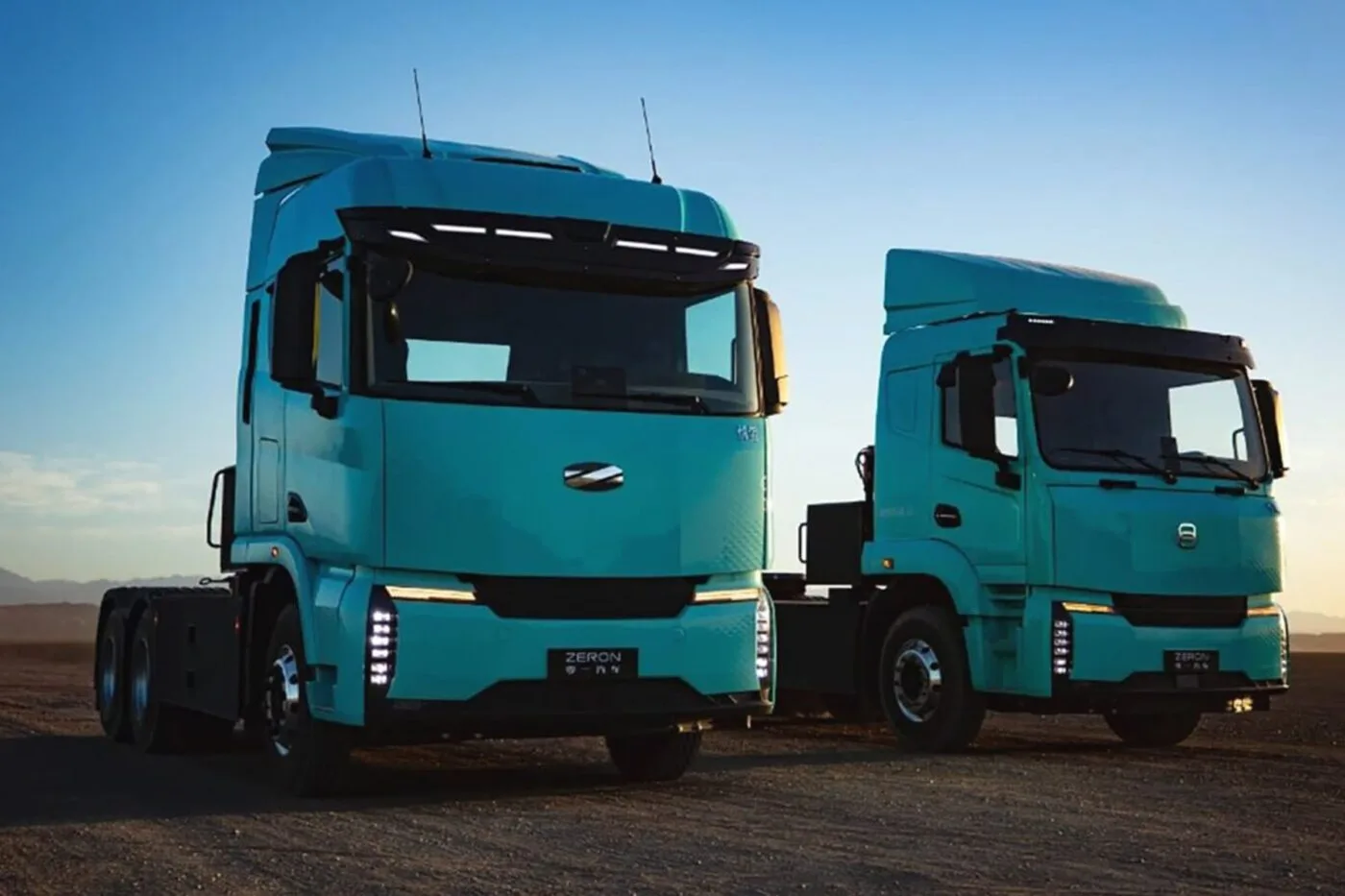
The recent Series A financing round for Chinese electric heavy goods vehicle (EHDV) startup Zeron, securing 500 million yuan (approximately 60 million euros), marks a significant event for investors tracking the energy transition. This capital injection, notably from autonomous driving specialist Momenta, highlights a deepening commitment to electrifying and automating heavy transport. For oil and gas investors, this development is more than just a headline; it signals an accelerating shift in a crucial demand segment, demanding careful consideration of long-term market dynamics amidst current price volatility.
The Rising Tide of Electric Heavy-Duty Vehicles in China
Zeron, founded in April 2022 by former executives from TuSimple and Sany Truck, is rapidly carving out a niche in the EHDV market. With nearly 700 units of its Jingzhe and Xiaoman models already delivered, and an ambitious target of 1,500 heavy-duty electric trucks for this year, the company’s growth trajectory is unmistakable. These vehicles, designed with proprietary powertrains, thermal management, and E/E architecture, boast impressive specifications: the Xiaoman features a 350 kWh LFP battery with a peak output of 480 kW, while the Jingzhe ups the ante with 385 kWh and 630 kW peak output, capable of rapid charging in under 35 minutes with dual charging points. The 700 units delivered have already covered over 25 million kilometers, demonstrating real-world operational viability. This aggressive push into EHDVs in China, a global leader in energy consumption and industrial output, directly challenges traditional diesel demand. As the adoption of these more efficient, lower-emission alternatives scales, investors must factor in the potential for a structural erosion of demand for refined petroleum products, particularly diesel, over the coming years.
Autonomous Technology: An Accelerator for Energy Transition
Momenta’s investment in Zeron is particularly telling. Momenta, a leading developer of AI-supported autonomous driving systems in China, is known for its cutting-edge technology, recently partnering with BMW for its New Class electric cars. This marks Momenta’s initial foray into the heavy commercial vehicle sector, driven partly by the long-standing professional relationship between Momenta CEO Cao Xudong and Zeron co-founder Huang Zhehua. The integration of advanced autonomous driving capabilities, which Zeron is developing through its own ZSD system, promises to be a game-changer. Autonomous EHDVs offer the potential for optimized routes, reduced human error, and improved fuel (or electricity) efficiency, thereby lowering operational costs and accelerating the economic case for electrification. For oil and gas investors, this convergence of electrification and autonomy represents a powerful force multiplier. It doesn’t just replace a diesel engine with an electric motor; it fundamentally re-engineers the logistics chain, making the shift away from fossil fuels more compelling and potentially faster than many traditional models currently predict. This is a critical element when considering long-term oil price forecasts, a topic keenly followed by our readers who are asking about oil price predictions for the end of 2026.
Navigating Current Volatility Amidst Structural Shifts
The momentum behind Zeron and the broader EHDV sector offers a striking contrast to the immediate volatility in crude markets. As of today, Brent crude trades at $90.38, reflecting a significant 9.07% decline within the day, with a range spanning $86.08 to $98.97. WTI crude similarly saw a steep drop to $82.59, down 9.41%. This immediate market turbulence, following a 14-day trend that saw Brent fall from $112.78 on March 30th to $91.87 just yesterday, often dominates investor attention. However, while these short-term price swings are driven by supply-demand imbalances, geopolitical tensions, or macroeconomic indicators, the advancements in EHDVs like Zeron represent a slower, but ultimately more profound, structural shift in energy demand. Investors are right to ask about the end-of-year oil price, but understanding the underlying forces reshaping consumption patterns—such as the growth of electric transport—is equally vital to position portfolios for the future. The success of companies like Zeron in key markets like China will gradually, but inevitably, alter the global demand curve for crude oil, especially diesel, impacting long-term price ceilings and overall consumption forecasts.
Strategic Implications and Upcoming Market Signals
For oil and gas investors, the rise of companies like Zeron necessitates a dual focus: managing short-term market dynamics while strategically positioning for the long-term energy transition. The upcoming OPEC+ Joint Ministerial Monitoring Committee (JMMC) and Full Ministerial meetings on April 18th and 19th will be crucial for understanding immediate supply-side responses to current price pressures. Similarly, the API and EIA Weekly Crude Inventory reports on April 21st and 22nd, respectively, will provide critical insights into present demand and inventory levels. However, these supply-side management efforts and weekly data points exist in a world where demand is increasingly being challenged by electrification. The sustained growth of EHDVs, particularly in a market as vast as China, puts long-term pressure on OPEC+ strategies, raising questions about future production quotas and the ultimate ceiling for global oil demand. Investors should consider how their portfolios are diversified against this evolving landscape, perhaps exploring opportunities in infrastructure supporting the energy transition, or companies within the oil and gas sector that are actively investing in new energy ventures. Ignoring the accelerating shift in heavy-duty transport, driven by technological innovation and significant capital, would be a critical oversight for any investor focused on the future of energy markets.


