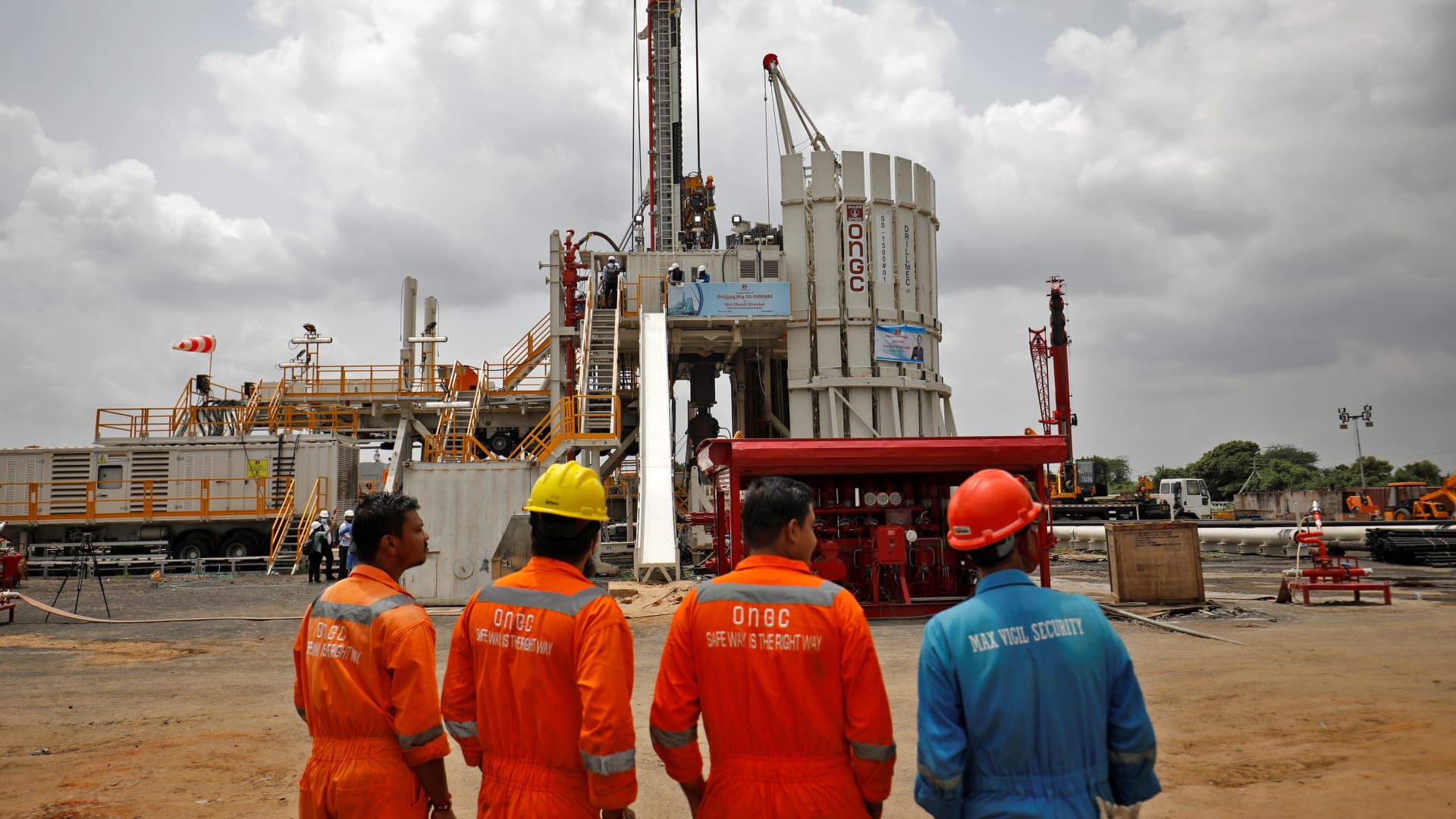
The intricate dance of global energy markets has taken another politically charged turn, with the United States escalating pressure on India over its substantial crude oil imports from Russia. In a move sending ripples through commodity circles, the U.S. has imposed an additional 25% tariff on Indian goods, bringing total levies against the significant trading partner to a striking 50%. This aggressive stance stems from accusations that India is “directly or indirectly importing Russian Federation oil,” thereby “fueling” Russia’s ongoing conflict.
This development introduces considerable uncertainty for investors closely monitoring crude oil prices and the stability of global supply chains. The immediate concern among industry experts is the potential for a sharp spike in international crude prices should India succumb to this pressure and significantly curtail its Russian oil purchases. Such a scenario would inevitably reverberate across the global energy landscape, impacting everything from refining margins to consumer costs and the broader economic outlook.
Geopolitical Whiplash and Market Confusion
The current U.S. position on Indian crude imports from Russia presents a stark contrast to previous encouragement. Remarkably, in the immediate aftermath of the Ukraine invasion, U.S. officials actively urged India to increase its uptake of Russian crude to help stabilize global energy prices, which were then soaring. Unlike liquefied natural gas (LNG), Russian crude itself is not subject to outright sanctions but rather traded under a price cap mechanism designed to limit Moscow’s revenue. This historical context creates a sense of “confusion” within New Delhi, as noted by Bob McNally, president of Rapidan Energy Group and a former White House energy advisor.
India, a crucial player in the world’s energy consumption landscape, emerged as one of the largest buyers of Russian oil following the shift in global trade flows. Data from Kpler reveals that Russia’s total crude exports hover around 3.35 million barrels per day (mbpd). Of this significant volume, India accounts for approximately 1.7 mbpd, while China takes about 1.1 mbpd. This makes India’s role absolutely critical in absorbing a substantial portion of Russian production that might otherwise struggle to find a market.
India’s Defense and the Global Energy Equation
Sources within the Indian petroleum sector vehemently defend the nation’s procurement strategy, asserting that India has scrupulously adhered to all international sanctions. They argue that India’s continued purchase of Russian crude oil serves a vital function in the global economy by preventing an even greater supply glut and, consequently, stabilizing international crude prices. The underlying argument is that if India were to abruptly cease these imports, a substantial volume of oil would be displaced from the market, potentially leading to unprecedented price volatility.
New Delhi contends that any directive to cut Russian oil imports must be accompanied by a meticulously crafted plan to stabilize energy markets and a robust contingency strategy to fill the ensuing supply shortfall. Without such measures, the withdrawal of Russian barrels could trigger a severe disruption in global supply, with far-reaching economic consequences. Investors must consider this perspective carefully, as it highlights the systemic risk inherent in sudden policy shifts without adequate market preparation.
Supply Dynamics and the Risk of Price Spikes
Russia stands as the world’s third-largest crude producer, trailing only the United States and Saudi Arabia, with an impressive output of nearly 11 mbpd, according to the U.S. Energy Information Administration. India’s reliance on Russian crude has grown significantly, with Russian oil constituting 38% of its total crude imports in both 2023 and 2024. Currently, this figure stands at 36% for 2025, even as India’s overall crude imports continue to climb year-on-year due to surging domestic demand. In fact, 2025 is on track to be India’s strongest annual pace yet for Russian crude imports.
The implications of India withdrawing from the Russian crude market are profound. As Giovanni Staunovo, a commodity analyst at UBS, suggests, Indian refineries would likely pivot to alternative sources, primarily from the Middle East, a region they historically relied upon before 2022. However, the critical challenge lies in whether other major buyers would step in to absorb the redirected Russian barrels. The consensus is that new buyers would be unlikely to fully compensate for India’s absence, leaving a substantial portion of Russian oil without a clear market. This scenario would inevitably lead to a supply crunch in the broader global market, driving crude prices significantly higher.
Investment Outlook: Navigating Volatility and Supply Shocks
For energy investors, the escalating geopolitical tensions around India’s crude imports represent a significant factor influencing market dynamics. The threat of a sudden removal of 1.7 mbpd of Russian crude from the global supply chain, coupled with increasing Indian demand, points to a potential for heightened price volatility in benchmark crude contracts like Brent and WTI. Companies engaged in exploration and production (E&P) activities could see improved profitability if prices surge, but refiners might face increased input costs and squeezed margins.
Furthermore, the situation underscores the fragility of global energy security. Diversification of supply, strategic reserves, and investment in alternative energy sources become even more critical considerations for long-term portfolio planning. Investors should closely monitor policy pronouncements from Washington and New Delhi, as well as shifts in global crude inventories and refining utilization rates. The current political pressure on India serves as a potent reminder that geopolitical events can rapidly reshape market fundamentals and necessitate agile investment strategies within the oil and gas sector.
In conclusion, the U.S. tariff hike and calls for India to cease Russian oil imports introduce a complex layer of risk and opportunity for the global energy market. India’s pivotal role in balancing Russian supply and its commitment to market stability will continue to be a focal point. How this geopolitical chess match unfolds will undoubtedly dictate the trajectory of crude oil prices and the broader investment landscape in the months to come.

