The global energy landscape is undergoing a profound transformation, and while much of the focus remains on land-based electrification in transportation and industry, a significant, often underestimated, shift is quietly gaining momentum at sea. Marine electrification, once a niche concept, is now manifesting in large-scale projects that present a tangible, long-term headwind to global oil demand. The recent contract awarded to Incat Tasmania to construct two, potentially three, battery-powered catamarans for Danish ferry operator Molslinjen serves as a potent case study, signaling a future where significant portions of maritime transport could operate without conventional fuels. For investors in oil and gas, understanding these emerging structural shifts is critical for accurately modeling long-term demand and assessing market risk.
The Maritime Shift: Decarbonization Accelerates
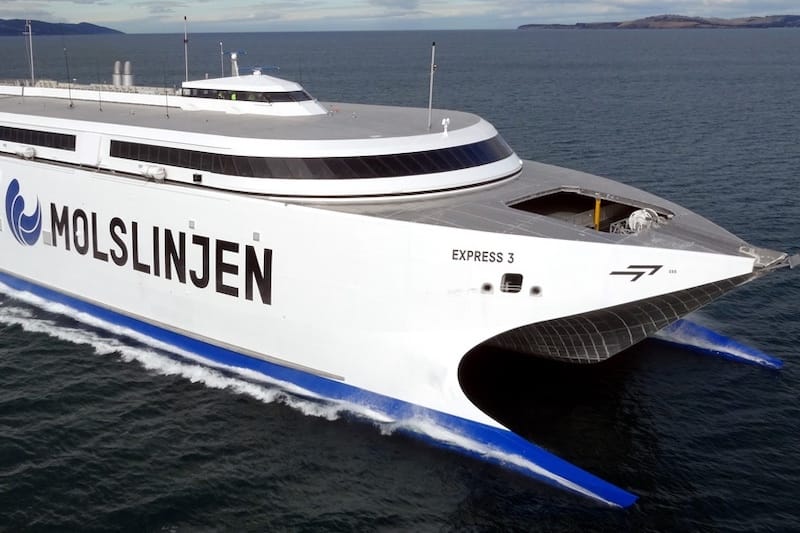
The Molslinjen project represents a monumental step forward in maritime decarbonization. Incat Tasmania will deliver two 129-meter battery-electric catamarans for operation on the notoriously busy Kattegat route between Jutland and Zealand. These vessels are not merely symbolic; they are engineered for substantial operational capacity, designed to transport up to 1483 passengers and 500 cars at speeds exceeding 40 knots across the Kattegat Sea. Each ferry will be equipped with an impressive battery system boasting approximately 45,000 kWh of capacity, making it one of the largest marine electrification endeavors globally. The first two ferries are slated for completion by the start of 2028, with a third vessel reportedly under discussion, signifying a firm commitment to this transformative strategy. This initiative is expected to reduce Molslinjen’s annual climate impact by a remarkable 132,000 tons of CO2, demonstrating the environmental and operational benefits driving this transition. Furthermore, these new catamarans will be 11 percent larger than the current world’s largest catamaran by vehicle capacity, underscoring the scale and ambition of this move away from traditional marine fuels.
Navigating Market Currents: Oil Prices and Long-Term Demand Erosion
While the maritime industry undergoes this gradual but significant shift, the broader oil market continues to react to immediate supply-demand dynamics. As of today, April 16th, Brent crude trades at $94.88 per barrel, reflecting a marginal dip of 0.05% within a volatile daily range of $94.42 to $95.01. WTI crude, meanwhile, stands at $91.31. This snapshot of relative near-term stability, however, masks a more significant downward trend observed over the past two weeks, where Brent crude prices have fallen by 12.4%, from $108.01 on March 26th to $94.58 yesterday, April 15th. This short-term volatility, influenced by geopolitical factors and inventory data, often overshadows the longer-term structural headwinds gathering force. Projects like Molslinjen’s battery-electric ferries directly displace conventional fuel-powered vessels—indeed, Molslinjen previously operated Incat-built fuel-powered ships on the very same route. Each such electrification initiative, while regional in scope, cumulatively chips away at the global demand for marine bunker fuels. As more busy routes adopt similar electric or alternative-fuel solutions, the incremental loss of demand will become increasingly material for oil producers and refiners, impacting the delicate balance of the global oil market.
Investor Focus: Beyond the Near-Term Volatility
Our proprietary reader intent data provides valuable insight into what occupies the minds of oil and gas investors, revealing a strong emphasis on future price trajectories. Investors are actively seeking a “base-case Brent price forecast for next quarter” and keenly interested in the “consensus 2026 Brent forecast.” These questions highlight the market’s need to understand both immediate and medium-term price movements. The Molslinjen project, with its 2028 completion target, falls squarely into the timeframe that demands a re-evaluation of these forecasts. While the immediate impact on global oil demand from two or three ferries is not cataclysmic, the strategic commitment and financial investment—approximately 3.5 billion Danish kroner (€468 million) for the vessels and associated land infrastructure—signal a broader trend. This capital allocation away from fossil fuel-dependent assets by major operators, coupled with Incat’s expansion to double its production capacity and workforce within three years, indicates a robust, accelerating shift. Savvy investors must consider how these tangible projects, setting technological precedents and economies of scale, will progressively flatten the long-term oil demand curve, challenging traditional growth assumptions that underpin existing price forecasts for 2026 and beyond.
The Road Ahead: Policy, Technology, and Upcoming Catalysts
The pace of marine electrification will be influenced by a confluence of technological advancements, supportive policies, and economic incentives. On the immediate horizon, several key calendar events will shape market sentiment and potentially introduce short-term volatility. The OPEC+ Joint Ministerial Monitoring Committee (JMMC) meeting on April 18th, followed by the full Ministerial meeting on April 20th, will be crucial for insights into potential production policy adjustments from the world’s leading oil producers. Additionally, the regular API Weekly Crude Inventory report on April 21st and the EIA Weekly Petroleum Status Report on April 22nd will offer fresh data on U.S. supply and demand dynamics, providing immediate trading cues. While these events will dictate the market’s pulse in the coming days, the strategic pivot towards electrification, exemplified by projects like Molslinjen’s, represents a structural force that oil and gas investors cannot afford to overlook. The expansion of Incat’s production facilities at Prince of Wales Bay in Tasmania, designed to double its capacity, underscores industry confidence in the scalability and commercial viability of these high-speed, low-emission vessels. As battery technology improves, charging infrastructure expands, and stricter environmental regulations from bodies like the IMO take hold, the momentum behind marine electrification is poised to accelerate, further eroding a segment of traditional oil demand and necessitating a more nuanced, forward-looking investment strategy.