Australia’s Off-Grid EV Fleet: A Microcosm of Diesel’s Evolving Demand Landscape
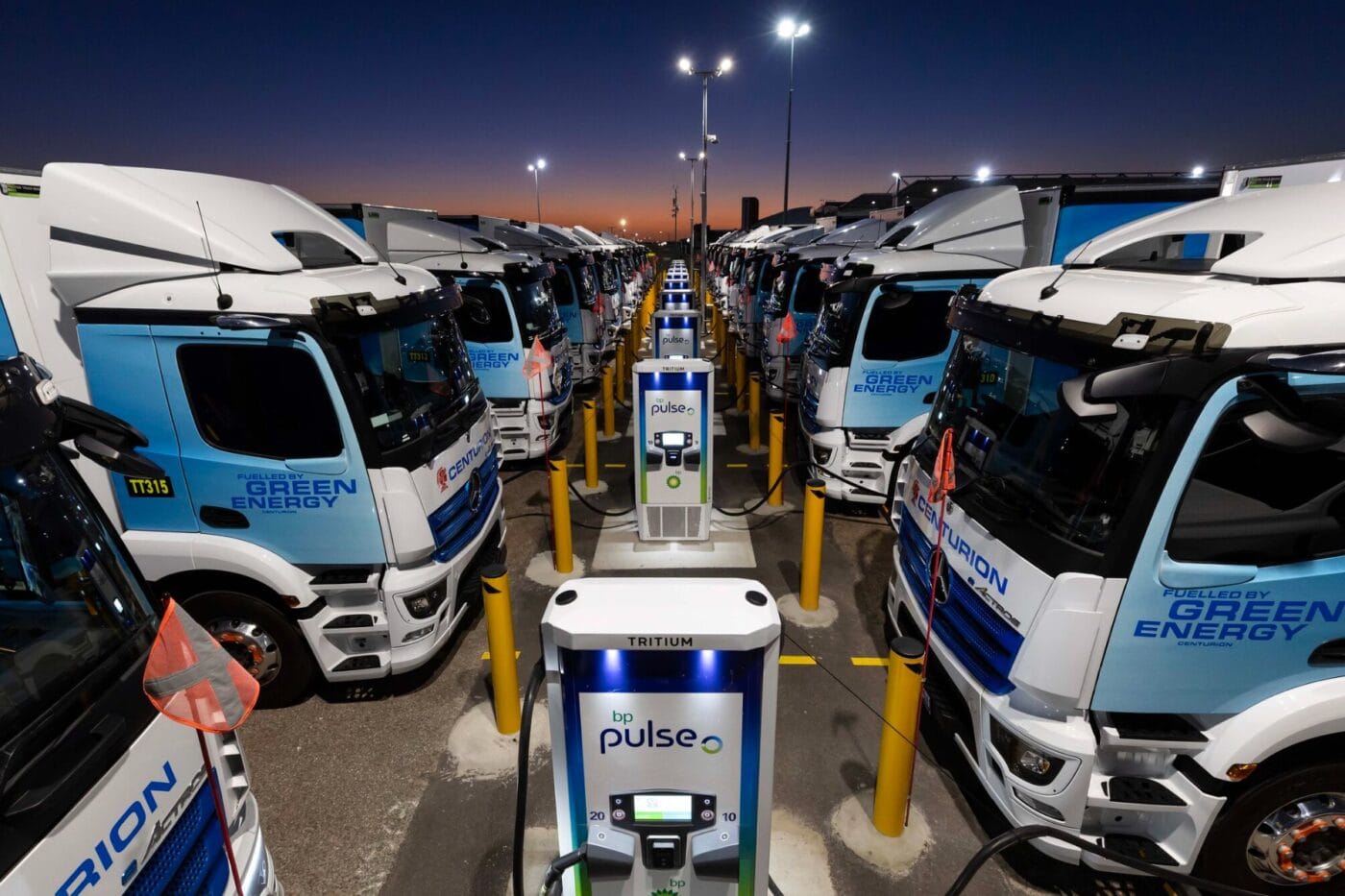
The recent announcement of Centurion’s fully operational ‘off-grid’ electric truck fleet in Australia marks a significant milestone in heavy-duty logistics decarbonization. Comprising 30 Mercedes-Benz eActros vehicles supported by a sophisticated solar, battery, and hydrotreated vegetable oil (HVO) backup charging infrastructure, this project offers critical insights for oil and gas investors. While the immediate impact on global diesel demand is negligible, the initiative serves as a powerful case study for the viable, albeit capital-intensive, pathways emerging for electrifying commercial transport. This development signals a subtle but persistent shift in the demand side of the energy equation, prompting a re-evaluation of long-term petroleum consumption forecasts, particularly for refined products like diesel.
Deciphering the Australian Electrification Blueprint and its Diesel Implications
Centurion’s $36 million AUD investment, significantly bolstered by $15.8 million AUD from the Australian Renewable Energy Agency (ARENA), showcases a tangible commitment to sustainable freight. The core of the operation lies in two charging hubs at Perth Airport, integrating 4.4MW of rooftop solar and 10.3MWh of battery storage. What truly captures the attention of energy market analysts, however, is the inclusion of HVO-powered backup generators. This detail is crucial: it means the fleet is ‘off-grid’ from conventional electricity sources, but not entirely divorced from liquid fuels. The reliance on HVO, a biofuel, for backup charging represents a strategic pivot rather than a complete abandonment of liquid energy. For oil and gas investors, this underscores a nuanced transition where traditional diesel demand isn’t simply eliminated but rather transforms into demand for advanced biofuels, creating new market segments and value chains within the broader energy complex. This hybrid approach demonstrates a pragmatic pathway for heavy transport electrification, particularly in remote regions or where grid reliability is a concern, suggesting a future where alternative fuels and electricity co-exist in logistics.
Market Dynamics and Investor Focus: Diesel Demand in a Shifting Landscape
Against the backdrop of such operational shifts, investors are actively seeking clarity on the future of energy markets. Our proprietary reader intent data reveals a strong focus on “base-case Brent price forecasts for next quarter” and the “consensus 2026 Brent forecast.” These questions highlight a market grappling with both immediate volatility and long-term structural changes. As of today, Brent Crude trades at $94.64, experiencing a marginal decline of 0.31% within a tight day range of $94.42-$94.91. WTI Crude similarly sits at $90.9, down 0.43%. This stability contrasts with a more significant 14-day trend, where Brent has seen a notable drop from $108.01 on March 26th to $94.58 on April 15th, representing a 12.4% decrease. While these price movements reflect broader geopolitical and economic concerns, the operationalization of projects like Centurion’s adds a subtle but persistent demand-side pressure. The displacement of conventional diesel, even by HVO, directly impacts refining margins and the overall demand for crude oil, especially as investors build out their 2026 models. Gasoline prices, currently at $2.99, also reflect a market under various demand pressures, though less directly linked to heavy transport electrification. These localized, yet scalable, electrification initiatives contribute to the mosaic of factors shaping future demand projections, urging investors to factor in the gradual erosion of traditional petroleum product consumption.
Catalysts and Calendar Events: Shaping Future Energy Investment Decisions
Looking ahead, the energy market remains highly sensitive to both demand-side innovations and critical supply-side signals. Investors navigating the evolving landscape, influenced by developments like Australia’s off-grid EV fleet, must also monitor upcoming market catalysts closely. The next 14 days bring several key events, starting with the Baker Hughes Rig Count on April 17th, offering insights into drilling activity and potential future production. More significantly, the OPEC+ Joint Ministerial Monitoring Committee (JMMC) meeting on April 18th, followed by the Full Ministerial meeting on April 20th, will provide crucial updates on global crude supply strategy. Any decisions regarding production quotas or market rebalancing will directly impact the forward Brent curve, influencing the economic viability of both conventional liquid fuels and their alternatives, including HVO. Further insights into immediate supply and demand balances will come from the API Weekly Crude Inventory on April 21st and the EIA Weekly Petroleum Status Report on April 22nd, with subsequent releases on April 28th and 29th, respectively. These reports, combined with the Baker Hughes Rig Count on April 24th, offer continuous data points for assessing market tightness. The ongoing operational expansion of heavy-duty EV fleets, even with HVO backups, signals a persistent, albeit slow, erosion of future conventional diesel demand projections, a factor that will increasingly weigh on long-term oil price forecasts currently being built by our readers for the next quarter and into 2026, regardless of short-term market volatility from OPEC+ decisions or inventory swings.