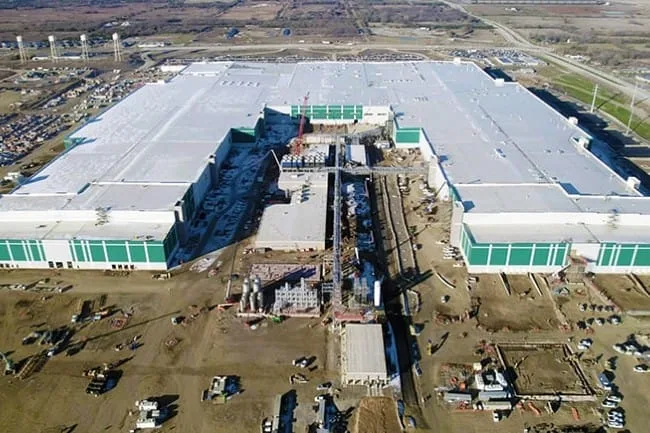
The recent grand opening of Panasonic’s new electric vehicle (EV) battery production facility in Kansas marks a significant milestone in the ongoing energy transition. This second US-based plant for the Japanese manufacturer, representing a substantial $4 billion investment and promising 4,000 direct jobs, underscores the long-term strategic commitment to electrifying transportation. With series production of 2170 cylindrical cells already underway, primarily destined for a major EV maker, the facility is poised to add an annual capacity of approximately 32 GWh to the North American market. However, a deeper dive into the nuances surrounding this expansion reveals a complex narrative for energy investors, one characterized by ambitious long-term visions tempered by immediate market realities and policy uncertainties.
EV Ambition Meets Market Reality: A Demand Check
While the physical inauguration of such a large-scale manufacturing plant signals an undeniable push towards electric mobility, the underlying details paint a more cautious picture. Panasonic, a key supplier to one of the largest EV manufacturers, has reportedly adjusted its internal timelines for reaching its 30 GWh annual production target in Kansas, pushing back the previously stated March 2027 goal. This recalibration is attributed to softening sales figures from its primary customer and concerns over evolving US policy stances towards electric vehicles. For oil and gas investors, this delay in EV scaling, even if temporary, introduces an element of uncertainty into the long-term crude demand outlook. It suggests that while the energy transition is inevitable, its pace is not always linear and can be heavily influenced by consumer adoption rates and political currents. The substantial capital flowing into EV infrastructure, such as this $4 billion investment, indicates a strong conviction in the ultimate shift, but the immediate path remains bumpy.
Crude Markets React: More Than Just EV Headlines
The interplay between long-term EV growth projections and short-term oil market dynamics is a constant balancing act for investors. As of today, Brent crude trades at $94.58 per barrel, experiencing a modest intraday dip of 0.37% from its range. More significantly, this represents a notable decline of 12.4% from its level of $108.01 just two weeks prior. Similarly, WTI crude is priced at $90.85, down 0.48% for the day. While the long-term trajectory of EV adoption certainly exerts downward pressure on oil demand forecasts, these recent price movements in crude are primarily driven by a confluence of macroeconomic factors, geopolitical tensions, and immediate supply-demand fundamentals, rather than the nuances of battery plant timelines. Gasoline prices, currently at $2.99 per gallon, reflect these underlying crude movements and consumer demand patterns. Investors must continue to monitor the immediate market signals, recognizing that while EV expansion is a structural change, crude pricing remains highly sensitive to a broader array of global events and supply decisions in the near term.
Strategic Scaling and Technological Edge
Despite the revised internal timelines, Panasonic’s long-term vision for EV battery production in the US remains robust. The company aims for a combined annual capacity of 73 GWh across its Kansas and Nevada facilities. While a specific timeframe for achieving this ambitious target is no longer publicly stated, the strategic direction is clear. Critically, Panasonic is not just expanding capacity but also focusing on technological advancements to enhance efficiency and performance. The new Kansas plant is designed to incorporate “labor-saving production lines,” projected to achieve approximately 20% higher productivity compared to its Nevada predecessor. Furthermore, the company plans to introduce cells utilizing “advanced materials” capable of increasing cell capacity by around five percent, having already secured silicon anodes from Nexeon. These technological leaps are crucial for driving down EV costs and improving range, making electric vehicles more competitive and accelerating their market penetration over the longer term. For oil and gas investors, this means that even if the immediate pace of EV adoption faces headwinds, the underlying technological progress continues to chip away at the fundamental demand for internal combustion engine vehicles.
Navigating Investor Questions and Future Catalysts
Our proprietary market intelligence indicates that investors are keenly focused on understanding the future trajectory of crude prices, with frequent inquiries regarding a base-case Brent price forecast for the next quarter and the consensus 2026 outlook. This reflects the ongoing challenge of integrating macro trends like EV growth with immediate market forces. The Panasonic news, with its mixed signals of long-term commitment and near-term caution, feeds directly into this complex forecasting exercise. The immediate future for crude prices, however, will be shaped by more traditional and tangible catalysts. Investors will be closely watching the upcoming OPEC+ Joint Ministerial Monitoring Committee (JMMC) meeting on April 18th, followed by the Full Ministerial meeting on April 20th. These gatherings have the potential to introduce significant supply adjustments, directly influencing the “base-case Brent forecast” our readers are seeking. Further insights into supply-side activity and short-term demand will come from the regular Baker Hughes Rig Count reports on April 17th and April 24th, alongside the crucial weekly API and EIA inventory data releases beginning April 21st. These scheduled events provide critical market data points that will help investors refine their short to medium-term price models, even as they keep a watchful eye on the evolving landscape of EV adoption and its long-term implications for global oil demand.
Policy Shifts and the Path Forward for Energy Investors
The reported influence of “anti-electric car policies” on Panasonic’s revised production timelines highlights a significant political risk factor for the energy transition. Policy decisions, particularly those related to consumer incentives, infrastructure development, and manufacturing support, can profoundly impact the speed and scale of EV adoption. A potential shift in US policy, for example, could create volatility in the growth trajectory of the EV market, subsequently altering forecasts for gasoline and diesel demand. For oil and gas investors, this underscores the importance of monitoring not just technological advancements and consumer trends, but also the shifting political winds that can accelerate or decelerate the transition away from fossil fuels. While the long-term trend towards electrification appears irreversible due to technological progress and environmental mandates, the precise timing and scale of peak oil demand remain highly sensitive to these policy currents. Strategic investors in the oil and gas sector must therefore adopt a nuanced approach, balancing robust analysis of traditional supply-demand fundamentals with a keen awareness of evolving geopolitical and policy landscapes that shape the energy future.


