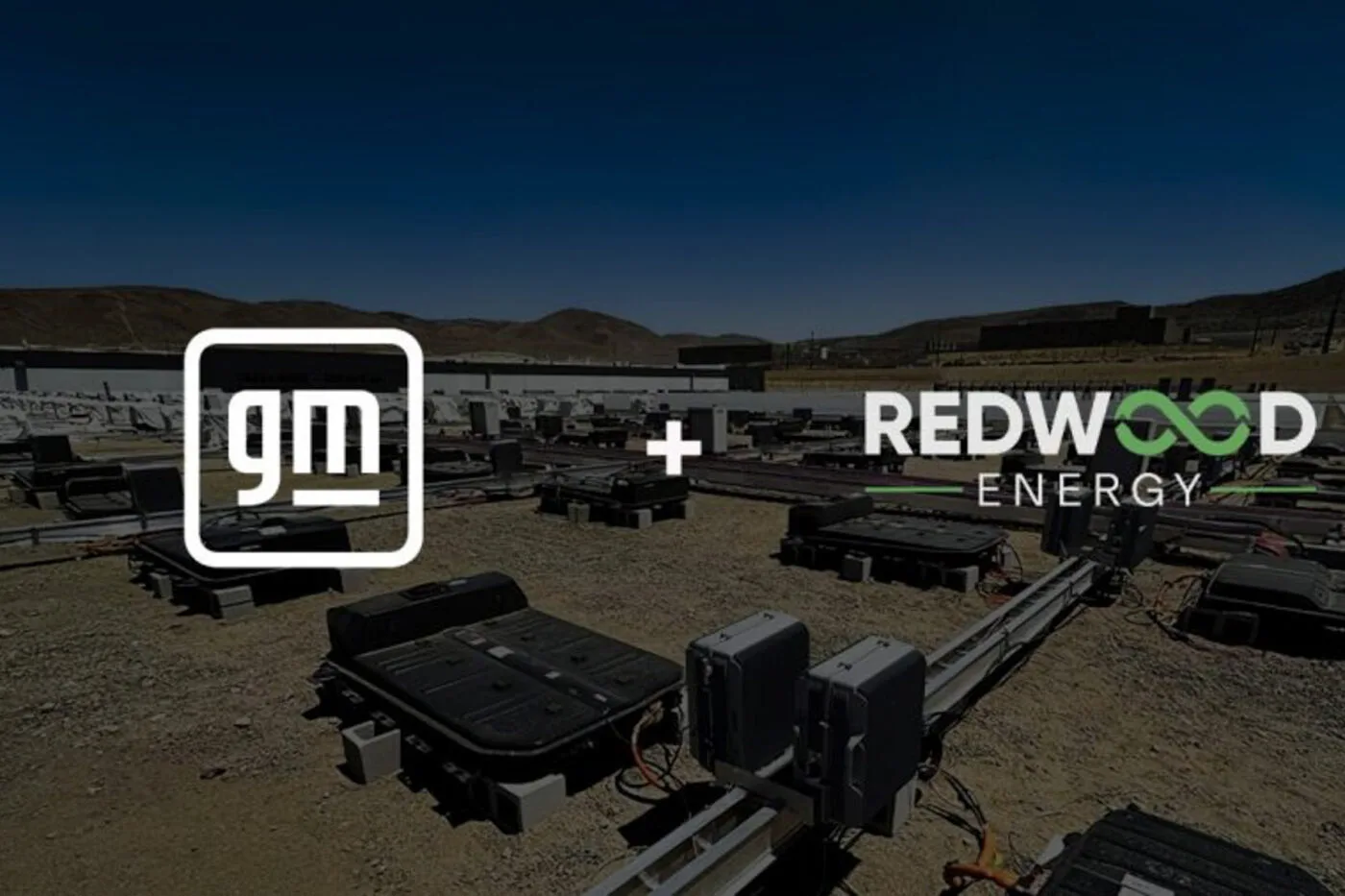
The energy landscape is in constant flux, but recent developments highlight a critical acceleration in the transition towards a more diversified and sustainable future. General Motors, a titan of the automotive industry, has inked a non-binding letter of intent with Redwood Materials and its subsidiary, Redwood Energy, to deploy stationary energy storage systems. This partnership, which will utilize both new GM batteries and end-of-life battery packs from GM electric vehicles, marks a significant stride in closing the loop on battery lifecycles. For oil and gas investors, this isn’t merely an electrification footnote; it signifies an evolving energy infrastructure that will invariably influence long-term demand dynamics for traditional fuels, while simultaneously creating new investment avenues in grid stability and critical minerals.
The Expanding Battery Value Chain and its Implications for Energy Demand
The collaboration between GM and Redwood Materials is a powerful testament to the growing focus on circular economy principles within the energy sector. Redwood Energy, launched in late June, specializes in giving second life to batteries that are still in good condition but no longer suitable for automotive applications. This strategy minimizes waste and maximizes the utility of advanced battery technology. Their inaugural project, a 12 MW output and 63 MWh capacity storage system in Nevada for an AI infrastructure company’s data center, already leverages decommissioned GM batteries. This move exemplifies how energy assets are being optimized across their entire lifecycle, from vehicle propulsion to grid-scale storage and backup power.
The rationale behind this expansion is clear: electricity demand is surging. As Kurt Kelty, GM’s Vice President of Batteries, Powertrain and Sustainability, noted, the market for grid-scale batteries is becoming essential infrastructure, driven by the rapid electrification of transportation and industry. JB Straubel, founder and CEO of Redwood Materials, echoed this, specifically citing AI’s escalating energy requirements. For oil and gas investors, this trend towards increased electricity consumption, fueled by technological advancements and widespread electrification, suggests a long-term shift in energy mix. While the immediate impact on crude demand may seem distant, the proliferation of such storage solutions underpins a future less reliant on intermittent power sources, and increasingly on resilient, distributed energy systems that complement, and in some cases, compete with, traditional energy provision.
Market Volatility and the Strategic Shift Towards Energy Resilience
The urgency for energy resilience is underscored by the inherent volatility of global commodity markets. As of today, Brent Crude trades at $90.38 per barrel, marking a sharp 9.07% decline from its previous close, with its day range stretching from $86.08 to $98.97. Similarly, WTI Crude has fallen to $82.59, down 9.41%, trading between $78.97 and $90.34. Gasoline prices have also dipped to $2.93, a 5.18% drop for the day. This daily fluctuation is not an isolated event; over the past two weeks, Brent has shed $20.91, or 18.5%, moving from $112.78 on March 30th to $91.87 on April 17th. Such dramatic swings highlight the geopolitical sensitivities and demand uncertainties that can impact traditional energy investments.
Against this backdrop of price instability, the GM-Redwood partnership offers a glimpse into a future where energy supply is more stable and domestically sourced. By deploying energy storage solutions made in the U.S. using American-manufactured batteries, the initiative aims to buffer against external market shocks and enhance national energy security. This strategic pivot towards localized, resilient energy infrastructure, while not directly influencing today’s crude prices, represents a critical long-term hedge for the broader economy against the very volatility currently observed in the oil markets. For investors, understanding this interplay between traditional energy market dynamics and the accelerating build-out of alternative energy infrastructure is paramount for making informed capital allocation decisions.
Navigating Future Energy Policy and Investor Outlook
The coming weeks present several key events that will shape the immediate future of the oil and gas sector, requiring careful attention from investors. This Saturday, April 18th, and Sunday, April 19th, will see the critical OPEC+ Joint Ministerial Monitoring Committee (JMMC) and full Ministerial Meetings. Given the recent significant decline in crude prices, market participants will be keenly watching for any indications of production quota adjustments. A decision by OPEC+ to maintain current quotas or, more drastically, to increase supply could further pressure prices, while a move towards deeper cuts could provide some stabilization. These decisions will have immediate repercussions across the oil and gas value chain.
Further insights into market fundamentals will arrive with the API Weekly Crude Inventory report on April 21st and 28th, followed by the EIA Weekly Petroleum Status Report on April 22nd and 29th. These reports offer crucial data on U.S. supply, demand, and inventory levels, which are significant drivers of short-term price movements. Concurrently, the Baker Hughes Rig Count on April 24th and May 1st will provide an indication of future drilling activity and potential production trends. While these events focus squarely on traditional energy, the long-term implications of partnerships like GM and Redwood, with further details expected in 2025, suggest a gradual, yet persistent, shift in the energy demand landscape. Investors must consider how the growing deployment of stationary storage could, over time, influence the overall energy mix and the strategic importance of traditional fossil fuel assets.
Investor Sentiment: Beyond Crude Prices and Towards Diversification
Our proprietary reader intent data reveals a strong and consistent focus among investors on core oil and gas metrics. This week, many are asking about specific company performance, such as “How well do you think Repsol will end in April 2026?”—a clear indication of interest in operational and financial health within the sector. A dominant theme remains the fundamental commodity price outlook, with questions like “What do you predict the price of oil per barrel will be by end of 2026?” reflecting a desire for long-term price certainty. Furthermore, “What are OPEC+ current production quotas?” underscores the ongoing importance of global supply-side dynamics to investment strategies.
While these questions are critical for navigating the traditional energy market, the GM-Redwood partnership offers a compelling counter-narrative for expanding investor horizons. The significant investment in battery lifecycle management and stationary storage signals a growing opportunity in adjacent energy sectors. As electricity demand accelerates due to AI and electrification, the need for robust, resilient energy infrastructure—including recycling and second-life battery systems—will only intensify. Investors should consider how these developments, focused on “made in America” solutions and energy independence, fit into a diversified portfolio strategy. The long-term trajectory points towards increasing integration of renewable energy and storage, creating new value chains that complement, and in some cases, offer alternatives to, traditional oil and gas investments, demanding a broader perspective than just crude price forecasts and production quotas.


