A New Spark in Energy Storage: Lithium-Metal Batteries and the Long-Term Oil Outlook
While the immediate focus of oil and gas investors often gravitates towards geopolitical tensions, supply quotas, and inventory fluctuations, a silent revolution in energy storage continues to reshape the long-term demand landscape. A recent breakthrough in lithium-metal battery technology, addressing a critical safety concern, serves as a powerful reminder that technological innovation remains a potent force in the broader energy transition. For astute investors, understanding these advancements is crucial for navigating future market dynamics, even as daily crude prices capture headlines.
Flame Retardant Technology: A Game Changer for High-Density Batteries
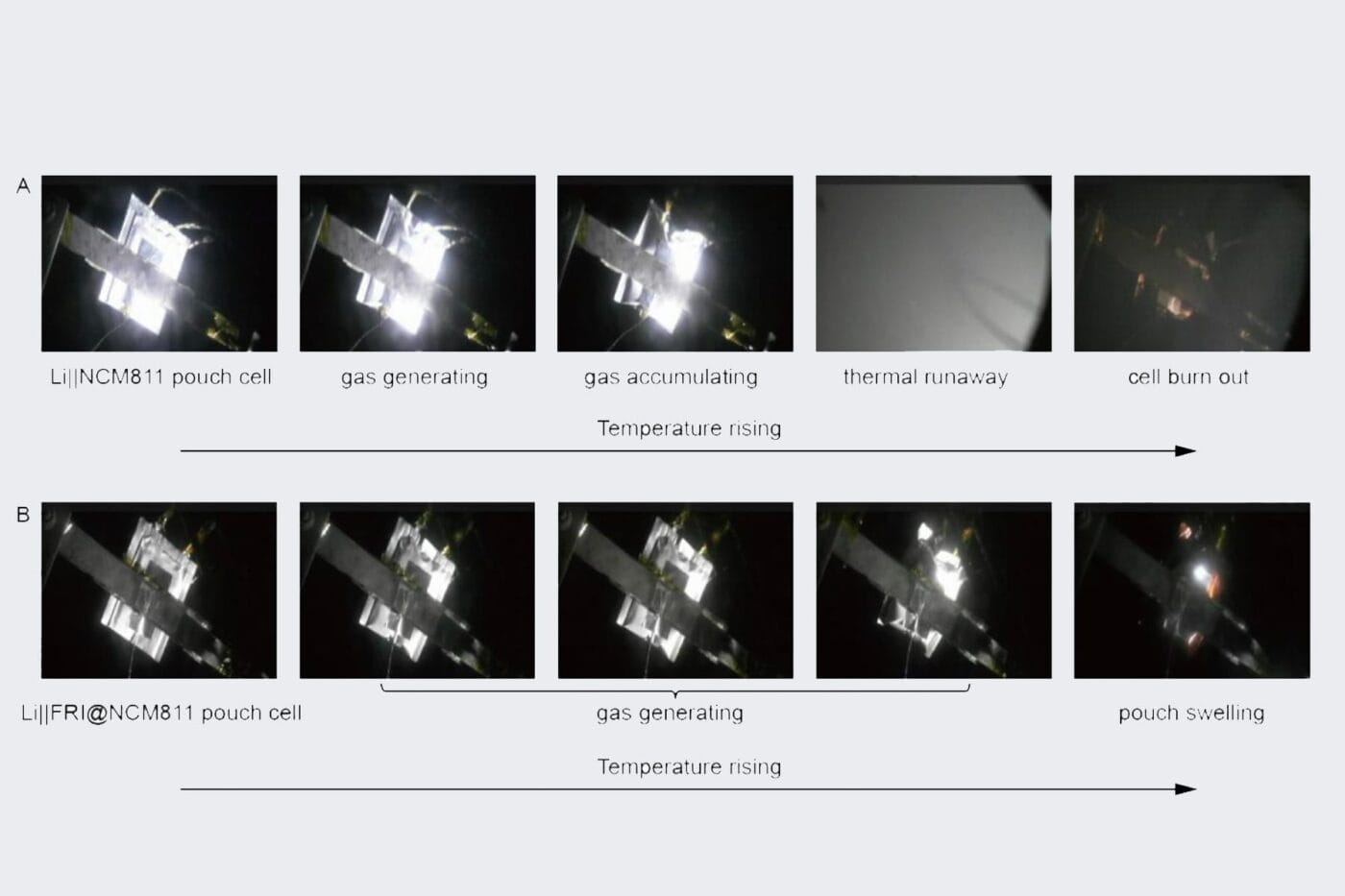
The core challenge for lithium-metal batteries, despite their significantly higher energy density compared to conventional lithium-ion counterparts, has been safety. The generation of flammable gases during thermal runaway presented a substantial barrier to widespread adoption, particularly in applications like electric vehicles. This hurdle now appears to be significantly mitigated by the introduction of flame retardant interfaces (FRIs) within the cathode. Researchers have demonstrated that integrating a polymer into the cathode that releases fire-retardant chemicals upon temperature increase drastically enhances safety.
Under testing, these improved cells not only matched the thermal resilience of lithium-ion batteries but also withstood temperatures up to 220°C without ignition, far exceeding the failure point of their conventional counterparts. The key lies in the FRIs’ ability to reduce oxygen release at the cathode and alter the overall gas composition, thereby suppressing gas generation and lowering flammability. This “smart gas management strategy” has resulted in a staggering four orders of magnitude reduction in the self-heating rate of improved cells, achieving zero thermal runaway in pouch cells. Crucially, this innovation is described as being integrable with minimal changes to existing production processes, making high-energy-density, fire-safe lithium-metal batteries a more tangible reality for large-scale applications like electric vehicles. For oil and gas investors, this translates into an accelerated timeline for EV performance improvements and, consequently, a potentially faster erosion of demand for refined petroleum products in transportation.
Navigating Immediate Volatility Amidst Long-Term Shifts
The broader energy market currently presents a picture of notable volatility, underscoring the complexities investors face. As of today, Brent crude trades at $90.38, reflecting a significant 9.07% decline within the day, while WTI crude stands at $82.59, down 9.41%. The daily range has been considerable, with Brent swinging from $86.08 to $98.97 and WTI from $78.97 to $90.34. This sharp downturn is also evident in the two-week trend, where Brent has shed over $20 per barrel, falling from $112.78 on March 30th to $91.87 just yesterday. Gasoline prices have followed suit, dropping to $2.93, a 5.18% decrease today. While these immediate price movements are driven by a confluence of short-term supply-demand imbalances, inventory reports, or macroeconomic signals, the persistent march of energy transition technologies, exemplified by the Li-metal battery advancement, provides a crucial long-term counter-narrative. Investors must weigh the immediate profit-taking and market corrections against the backdrop of fundamental shifts in energy consumption patterns.
Investor Focus: Future Oil Prices and Technology’s Influence
Our proprietary reader intent data highlights a consistent investor focus on the future trajectory of oil prices, with a recurring question being, “What do you predict the price of oil per barrel will be by end of 2026?” This question, while seemingly straightforward, encapsulates the intricate interplay between immediate market forces and long-term technological disruption. While factors like OPEC+ production quotas and global economic growth will heavily influence short-term and mid-term prices, breakthroughs in battery technology, making high-density Li-metal cells viable and safe, introduce a powerful bearish long-term vector. The prospect of “fire-safe Li metal batteries for advanced energy storage applications” directly accelerates the viability and attractiveness of electric vehicles, potentially pulling forward peak oil demand scenarios. Therefore, any robust forecast for 2026 and beyond must integrate the accelerating pace of energy transition technologies, recognizing that fundamental demand destruction, rather than just supply management, will increasingly dictate the market ceiling.
Upcoming Events and the Shifting Demand Horizon
The next two weeks are replete with critical events that will undoubtedly influence short-term oil price movements and demand sentiment. Investors will closely monitor the OPEC+ Joint Ministerial Monitoring Committee (JMMC) meeting tomorrow, April 18th, followed by the full Ministerial meeting on April 19th. These meetings are pivotal for understanding potential adjustments to production quotas and their immediate impact on global supply. Furthermore, the API Weekly Crude Inventory reports on April 21st and 28th, alongside the EIA Weekly Petroleum Status Reports on April 22nd and 29th, will provide essential real-time data on supply-demand balances and inventory levels. The Baker Hughes Rig Count reports on April 24th and May 1st will offer insights into North American production activity. While these upcoming events will shape the immediate trading environment, their impact must be viewed through the lens of a rapidly evolving energy landscape. The long-term implications of advancements like safer, higher-density batteries for EVs continue to build a compelling case for a gradual, but inevitable, shift in global energy demand away from traditional fossil fuels. Strategic oil and gas investors must balance the tactical responses to these near-term calendar events with a proactive recognition of the transformative power of technological innovation.