India’s LNG Backbone Strengthened: Petronet’s New Regasification Deal Signals Strategic Stability
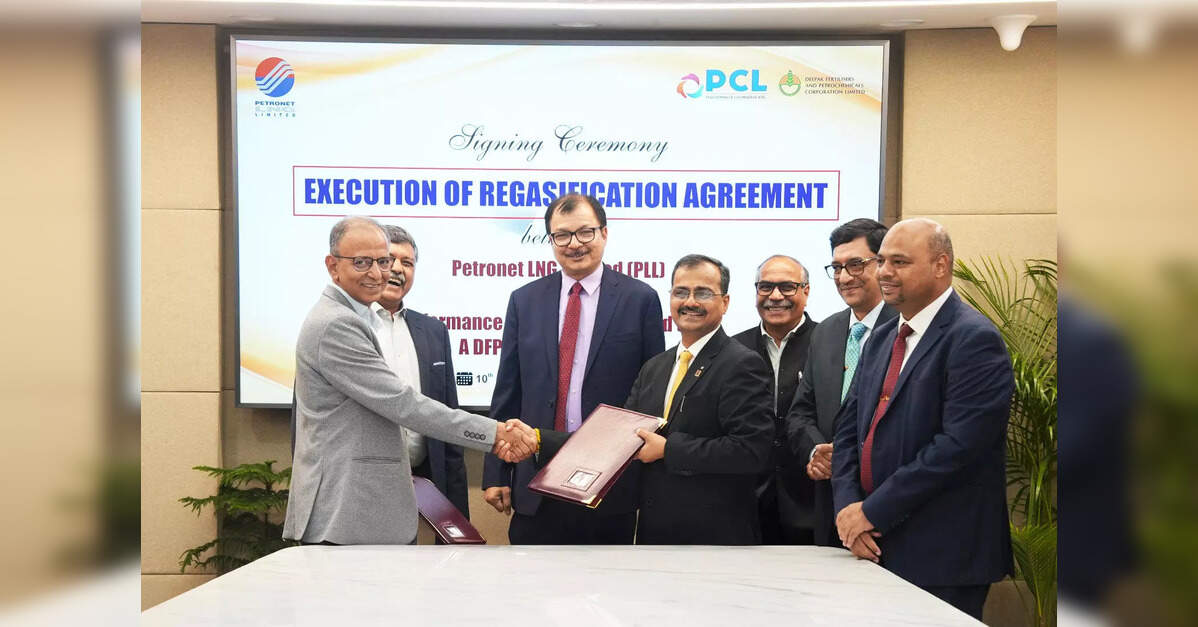
In a significant move for India’s burgeoning energy sector, Petronet LNG has secured a substantial regasification agreement valued at ₹1200 crore over 5.5 years with Performance Chemiserve Ltd (PCL), a subsidiary of the Deepak Fertilisers and Petrochemicals Corporation Ltd (DFPCL) group. This long-term contract, signed on July 10, 2025, underscores the critical role of robust LNG import infrastructure in fueling the nation’s industrial growth and energy security. As global energy markets continue to navigate periods of volatility, such foundational agreements provide crucial revenue predictability for infrastructure players and secure vital feedstock for industrial consumers, offering a compelling case for investors seeking stability within the broader energy complex.
The Strategic Value of Long-Term Regasification: Unpacking the Petronet-PCL Agreement
This latest agreement commits Petronet to receiving, storing, and regasifying approximately 25.6 trillion British thermal units (TBTUs) of imported liquefied natural gas annually at its flagship Dahej terminal in Gujarat. Operations are slated to commence between May and July 2026, following an initial ramp-up, and will extend until December 31, 2031. For Petronet, this deal is not merely about capacity utilization; it represents a significant revenue stream, projected to generate up to 20% beyond the base ₹1200 crore over the agreement period. This long-term commitment from a major industrial consumer like DFPCL, which relies on natural gas as a feedstock for its fertilizer and industrial chemical manufacturing units, validates the strategic importance and reliability of Petronet’s infrastructure. DFPCL’s prior LNG supply pact with Norway’s Equinor further highlights its commitment to securing stable gas sourcing, making this regasification deal a crucial link in their integrated supply chain. Petronet, already a dominant player handling approximately 18 million tonnes per annum (MMTPA) of LNG in FY2024-25, representing about 66% of India’s LNG imports, continues to leverage its expanded capacity, which stands at a combined 22.5 MMTPA across its Dahej and Kochi terminals, cementing its position as a cornerstone of India’s energy strategy.
Navigating Energy Market Swings: LNG’s Stability Amidst Crude Volatility
Investors are keenly observing the broader energy landscape, with many asking for a base-case Brent price forecast for the next quarter. As of today, Brent Crude trades at $94.94, up a modest 0.16% for the day, while WTI Crude stands at $91.42. However, this masks a recent downward trend; Brent has seen a notable decline of approximately $9, or 8.8%, from $102.22 on March 25, 2026, to $93.22 on April 14, 2026. This recent crude price volatility, coupled with sustained investor interest in understanding what’s driving Asian LNG spot prices, underscores the appeal of stable, long-term contracts in the midstream LNG sector. Unlike the direct exposure to commodity price swings seen in upstream oil and gas, Petronet’s business model, centered on fixed-fee regasification, offers a predictable revenue stream largely insulated from the day-to-day fluctuations of crude benchmarks. This stability is a significant draw for investors looking to de-risk their energy portfolios, especially as global demand for natural gas continues to grow, driven by industrialization and energy transition efforts in major economies like India.
Forward-Looking Catalysts: India’s Demand and Upcoming Market Signals
The timing of this regasification agreement aligns perfectly with India’s ambitious industrial expansion goals, positioning Petronet to capitalize on sustained domestic demand. DFPCL’s commitment to securing regasification capacity for its Taloja manufacturing units exemplifies the ongoing need for reliable energy infrastructure. Looking ahead, the broader energy market will be influenced by several key upcoming events. The OPEC+ Joint Ministerial Monitoring Committee (JMMC) meeting on April 18 and the subsequent Full Ministerial Meeting on April 20 are critical for setting crude production policies, which can indirectly impact LNG competitiveness by influencing the overall energy price deck. Furthermore, weekly data points like the Baker Hughes Rig Count, API Weekly Crude Inventory, and EIA Weekly Petroleum Status Report will provide continuous insights into supply-demand dynamics and overall market health. These macro events, while not directly impacting Petronet’s regasification fees, shape the strategic environment in which LNG operators function. Stronger global energy demand, potentially signaled by OPEC+ decisions or inventory drawdowns, will only reinforce the strategic value of secured, long-term regasification capacity, making Petronet’s existing contracts even more valuable and bolstering the company’s long-term growth trajectory in a rapidly expanding energy market.


