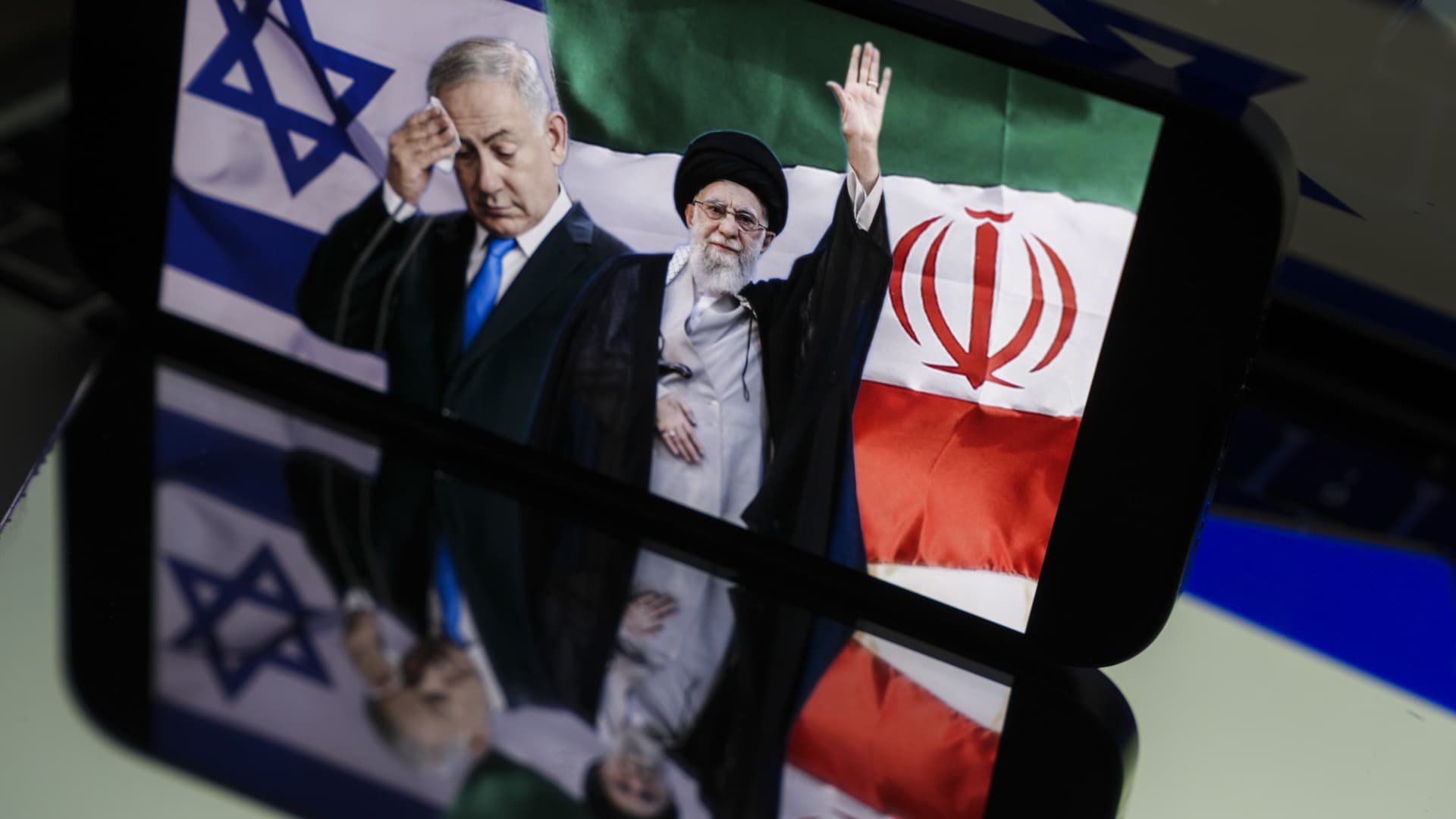
The global oil market consistently grapples with a complex interplay of supply, demand, and geopolitical risk. Few nations embody this volatility more acutely than Iran, a crucial player in the influential OPEC alliance. Recent hostilities involving Tehran and its regional adversaries have starkly underscored how swiftly stability can erode, sending ripples of uncertainty through crude prices. While a Washington-brokered ceasefire has offered some immediate relief, the underlying tensions surrounding Iran’s nuclear ambitions and its strategic position remain a persistent “black swan” for investors. Understanding these dynamics, coupled with a close eye on market data and upcoming events, is paramount for navigating the evolving landscape of oil and gas investment.
Geopolitical Shocks and Current Market Realities
The recent 12-day period of direct hostilities between Iran and Israel served as a potent reminder of geopolitical events’ immediate and dramatic impact on crude valuations. During this escalation, oil prices predictably soared as fears of widespread supply disruptions intensified. The subsequent ceasefire, implemented on June 24th, provided a much-needed easing of those anxieties, allowing prices to retreat amid broader concerns over long-term demand and increasing output from some OPEC producers.
As of today, Brent crude trades at $94.92, showing a marginal +0.14% gain for the session, with its daily range spanning from $91 to $96.89. West Texas Intermediate (WTI) crude, meanwhile, sits at $91.14, registering a slight -0.15% dip, having traded between $86.96 and $93.3 today. Gasoline prices also reflect this cautious sentiment, currently at $2.99, up 0.67% within a $2.93-$3.03 daily range. This current snapshot contrasts sharply with the market’s reaction during peak tensions. Brent’s recent trajectory further illustrates this sensitivity, retreating approximately 8.8% from $102.22 on March 25th to $93.22 by April 14th, primarily driven by the de-escalation narrative and demand-side anxieties. This volatility highlights the imperative for investors to remain vigilant, as the underlying geopolitical fault lines persist, threatening to re-ignite price spikes at any moment.
Iran’s Pivotal Role in Global Supply Stability
Iran’s significance in the global energy equation cannot be overstated. As the third-largest producer within OPEC, Tehran averaged 3.3 million barrels per day (bpd) in May, a substantial volume that underscores its influence on global supply. Beyond its production capacity, Iran holds the rotating one-year presidency of OPEC in 2025, granting it an even more prominent voice in the organization’s strategic decisions. Iran’s oil minister recently articulated a clear stance at the OPEC seminar, criticizing “war-led disruptions” to oil markets and emphasizing the complications imposed on energy producers and national economies by any aggression that obstructs oil and gas supplies.
This rhetoric, coming weeks after its own direct engagement in hostilities, highlights a complex geopolitical reality. While Iran advocates for market stability, its own actions and the security of its supplies remain a central concern for the wider OPEC+ alliance when formulating output strategies. For investors, this creates a challenging environment where a substantial portion of global supply is inherently linked to a region prone to political and military tensions. Any perceived threat to Iranian output, whether from internal instability or external confrontation, carries the potential to significantly tighten global markets and drive prices upward, regardless of broader demand trends.
Navigating Future Uncertainty: Diplomatic Pathways vs. Escalation
The current ceasefire, while welcome, does not resolve the fundamental questions surrounding Iran’s nuclear program, which U.S. and Israeli officials have cited as the primary driver behind recent offensive actions. Investors are keenly asking for a base-case Brent price forecast for the next quarter, and a consensus 2026 outlook. The answers largely hinge on the trajectory of this unresolved nuclear issue. The market faces a critical juncture: either a diplomatic breakthrough leading to a lifting of sanctions and a more benign scenario, or a descent into further conflict. The latter, as one energy expert noted, suggests “the last 20 years of just sort of kicking the can down the road with Iran is likely to come to an end.”
For investors, two distinct scenarios emerge with vastly different implications for crude prices. A diplomatic deal, potentially under renewed U.S. leadership keen on achieving an elusive nuclear agreement, could see Iranian oil return to the market more freely, easing supply concerns and potentially capping upward price movements. Under such a sustained de-escalation scenario, the recent retreat in Brent, which saw prices drop by nearly 9% over the past two weeks, could continue, with prices finding a new equilibrium potentially in the low $90s or even upper $80s as more supply certainty emerges. Conversely, a failure of diplomacy and a resumption of tensions or military action, particularly given Iran’s recent parliamentary approval of a bill suspending cooperation with the IAEA, could quickly push Brent back toward the upper end of its recent $91-$96.89 daily range, or even beyond the $100 mark seen in late March, creating significant upside risk for crude prices but also considerable market volatility.
Key Events on the Horizon for Oil Investors
As we look ahead, the immediate focus for oil investors must pivot to the upcoming OPEC+ Joint Ministerial Monitoring Committee (JMMC) meeting on April 18th, followed by the full Ministerial meeting on April 20th. These gatherings will provide crucial insights into the alliance’s production strategy, where Iran’s geopolitical standing and the security of its supplies will undoubtedly feature in discussions. Any signals regarding output adjustments, particularly concerning the existing voluntary cuts, will directly influence market sentiment and price direction.
Beyond OPEC+, other key data releases warrant close attention. The Baker Hughes Rig Count, scheduled for April 17th and again on April 24th, offers a leading indicator of U.S. production trends, providing context for global supply. Furthermore, the weekly API Crude Inventory reports (April 21st, April 28th) and the EIA Weekly Petroleum Status Reports (April 22nd, April 29th) will offer granular data on U.S. supply and demand balances, including crucial insights into refinery activity and gasoline inventories. Given the current gasoline price hovering near $3.00, these inventory figures will be particularly scrutinized for any signs of tightening supply or robust demand. Collectively, these upcoming events will shape the near-term market narrative, providing critical data points for investors assessing risk and opportunity in the volatile world of oil and gas.

