The ambitious trajectory of a UK-based energy challenger, once valued at an estimated $10 billion, has dramatically faltered, culminating in the insolvency of its parent entity and the critical Lindsey oil refinery. This sudden collapse, putting over 400 jobs at risk, sends a stark warning to investors about the perils of rapid expansion in the complex and capital-intensive oil and gas sector, particularly when operational and financial fundamentals may be overlooked.
From “Formidable Force” to Financial Ruin
Just months ago, in November, Prax Group’s founder and chief executive, Sanjeev Kumar Soosaipillai, confidently projected his company as a rapidly evolving “formidable force” within the energy industry. In the company’s annual report, Soosaipillai articulated a vision of a business that had grown “much bigger, stronger, better” over 25 years. These aspirational statements, however, now stand in stark contrast to the company’s current predicament. The parent company, along with its significant refinery asset in north-eastern England, has plunged into insolvency, triggering an immediate and fierce backlash from the UK government. Authorities have demanded an investigation into the conduct of the “wealthy owner,” citing insufficient time to react to the unfolding crisis.
The Critical Role of Lindsey Refinery and UK Energy Security
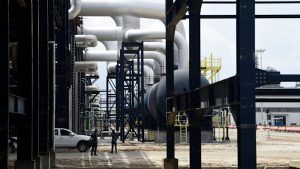
The Lindsey refinery is not just another industrial asset; it represents a crucial component of the United Kingdom’s energy infrastructure. Responsible for processing approximately one-tenth of the nation’s total fuel supply, it is one of only five such facilities remaining in the country. Its sudden commercial difficulties and subsequent insolvency present a significant challenge to UK energy security. Industry observers and insiders are pointing to this incident as a profound cautionary tale – a prime example of a company attempting to scale too quickly without adequate foundational support, and a reflection of a critical domestic industry that perhaps hasn’t received sufficient strategic oversight from government bodies.
Operational Missteps and Financial Strain Emerge
Sources familiar with Prax’s operations have shed light on potential underlying issues that contributed to the downfall. A key concern raised was the perceived absence of specialized personnel equipped to manage the inherent complexities and substantial risks associated with operating a wholly-owned refinery. Furthermore, questions have been raised about the financial capacity of the group, led by Soosaipillai and his wife Arani, to sustain such a “cash-hungry” enterprise. The journey began modestly in 1999 with a single petrol station, a testament to entrepreneurial spirit, but the leap to managing a multi-billion dollar refining operation clearly presented a different magnitude of challenge.
Government Engagement and Communication Gaps
The timeline of events leading to the insolvency reveals a concerning communication gap. UK government officials reportedly became aware of the commercial difficulties at the Lindsey facility towards the end of April. By mid-May, Energy Secretary Ed Miliband had met with Soosaipillai to explore potential avenues for government support. Despite these high-level engagements, the company continued to reassure stakeholders, with UK Under-Secretary for Energy Michael Shanks noting that Prax maintained until very recently that the Humber river facility was not at risk of closure. This discrepancy between internal struggles and external assurances has undoubtedly fueled government frustration and raises questions for investors about transparency in corporate communications during times of distress.
“Smoke and Mirrors”: An Aggressive Acquisition Strategy Under Scrutiny
For several years leading up to this crisis, Prax Group was known for its aggressive acquisition strategy, steadily expanding its portfolio. However, executives within the commodity industry have described the company’s financial footing as precarious, suggesting a struggle to balance its books even as it pursued one acquisition after another. One senior industry figure expressed little surprise at the turn of events, questioning the rationale behind Prax’s consistent bids for “fancy assets in other jurisdictions” while its core refinery operation was reportedly struggling. This observation highlights a critical lesson for investors: rapid growth via acquisition, while often celebrated, must be underpinned by robust operational integration and sound financial management, especially in capital-intensive sectors like oil and gas refining.
The Founders’ Ambitious Ascent and the Inevitable Crash
The story of Prax Group began with Sanjeev and Arani Soosaipillai, who met as accountancy students at the University of Kent. In 1999, the Sri Lankan-born couple, then in their twenties, acquired their first petrol station near St Albans. Over the next decade, their growth was fueled by personal sacrifice, including selling homes and mortgaging family properties to expand their network of outlets and acquire a storage site in east London. A pivotal moment arrived in 2015 with the transformative acquisition of Harvest Energy, including its network of UK forecourts, for $22.6 million. This initial success and rapid ascent underscored their ambition, but the sheer scale and complexity of managing a major refinery, particularly in a volatile market, ultimately proved to be an insurmountable hurdle.
Investment Implications: Lessons in Due Diligence and Governance
The dramatic collapse of Prax Group’s parent entity and the Lindsey refinery serves as a potent reminder for investors in the oil and gas sector. It underscores the critical importance of rigorous due diligence extending beyond glossy annual reports and ambitious growth narratives. Investors must scrutinize the operational expertise and financial resilience of companies managing complex, high-risk assets like refineries. The incident highlights the necessity of robust corporate governance, transparent communication, and a realistic assessment of a company’s capacity to manage both its existing operations and its growth ambitions. In an industry defined by significant capital expenditures and fluctuating commodity prices, unchecked expansion without a solid operational and financial bedrock can lead to swift and devastating consequences, impacting not just shareholders but also regional energy security and employment.