Nigeria’s relationship with its vast crude oil reserves has long been a study in paradox. Despite being a major producer, the nation has historically struggled to add value to its primary export, often resorting to the expensive and undignified practice of exporting crude only to import refined fuels. This pattern, marked by mismanaged windfalls and idle state-owned refineries, has hindered economic diversification and energy security. However, the recent commissioning of the Dangote Refinery in the Lekki Free Zone outside Lagos marks a pivotal moment, signaling a potential paradigm shift that could fundamentally reshape Nigeria’s position in the global oil market and offer compelling new investment opportunities.
Transforming Nigeria’s Downstream Landscape
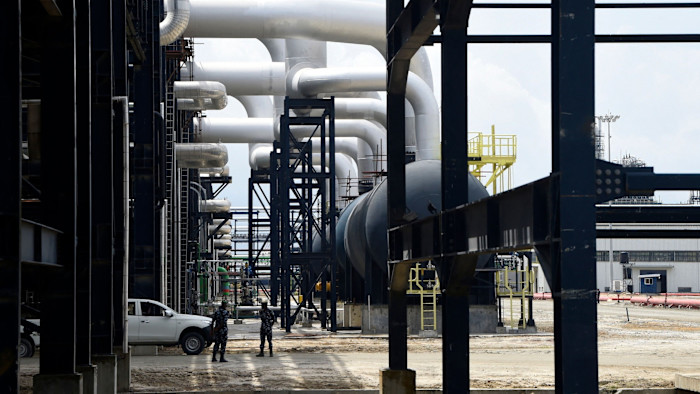
For decades, Nigeria has grappled with the debilitating issue of its dilapidated state-owned refineries, which, despite repeated turnaround efforts, have largely remained non-operational. A 2023 parliamentary report revealed a staggering N11.35 trillion ($25 billion) spent over the past ten years attempting to revive these facilities, with little to show for it. This chronic underperformance has cemented Nigeria’s dependence on imported refined products, costing both dollars and dignity. The Dangote Refinery, with its massive 650,000 barrels per day (bpd) capacity and plans to expand to 1.4 million bpd by 2028, stands as a direct challenge to this entrenched problem. Costing $20 billion, this 2,635-hectare facility is billed as the world’s largest single-train refinery and represents a monumental leap towards domestic value addition. Its consistent operation could not only satisfy Nigeria’s entire demand for refined products but also position the nation as a net exporter, fundamentally altering regional energy trade flows and offering a more robust economic foundation.
Market Dynamics and Investor Sentiment Amidst Price Swings
The operational ramp-up of a refinery of this magnitude comes at a critical juncture for global energy markets. As of today, Brent crude trades at $92.92, reflecting a marginal dip of 0.34% within a daily range of $92.57 to $94.21. This modest fluctuation follows a more pronounced trend over the past two weeks, where Brent has seen a decline of approximately 7%, moving from $101.16 on April 1st to $94.09 on April 21st. Our internal data indicates that investors are keenly observing these price movements, frequently asking questions about the trajectory of crude prices and specific energy stocks like Repsol. While the immediate outlook for WTI or Brent is a constant subject of debate among our readers, the long-term strategic value of a project like the Dangote Refinery transcends daily price swings. For Nigeria, reducing import dependency means less exposure to the volatility of global refined product markets, offering greater energy security and a more stable economic outlook, irrespective of short-term crude price predictions for the end of 2026. This shift from “crude out, refined fuel in” is a structural change that adds resilience and long-term value, qualities highly attractive to discerning energy investors.
The Ambitious Financing Behind a National Imperative
The sheer scale of the Dangote Refinery project demanded an equally robust and innovative financing architecture, involving both state backing and significant market participation. The initial financing in 2013 saw the closure of a $3.3 billion syndicated facility, spearheaded by Standard Chartered and GTBank, with the involvement of eight other Nigerian banks. The central bank played a crucial role, reportedly offering guarantees of approximately N575 billion over ten years and allocating $2.7 billion in foreign exchange for construction. Furthermore, the state-owned oil company, NNPC, committed a $2.7 billion investment for a 20 percent stake in 2021, though this holding was later adjusted to 7.2 percent due to remittance issues. This blend of public and private capital underscores the national strategic importance of the refinery. For investors, this model highlights the potential for large-scale infrastructure development in emerging markets, where government support can de-risk projects while still offering substantial returns. The success of this financing structure provides a blueprint for future industrial ventures in Nigeria, demonstrating a unique capacity for domestic financial institutions to support projects of global significance.
Navigating Future Catalysts and Operational Realities
The true measure of the Dangote Refinery’s impact will lie in its sustained operational consistency and its ability to integrate seamlessly into Nigeria’s energy ecosystem. Upcoming calendar events, while global in nature, will provide the macro backdrop against which the refinery’s domestic contribution will be assessed. For instance, the weekly EIA Petroleum Status Reports (scheduled for April 29th and May 6th), along with the EIA Short-Term Energy Outlook on May 2nd, will offer insights into global supply-demand balances, refining utilization rates, and inventory levels. While not directly measuring Nigerian refined product output, these reports will inform the broader market conditions that the refinery will operate within. Similarly, the Baker Hughes Rig Count on May 1st will reflect upstream activity, which is crucial for feedstock security. A significant forward-looking policy signal came in October 2025, when the presidency approved a 15 percent policy shift focused on downstream sector development around the plant, indicating a clear governmental pivot. Investors will be closely monitoring the refinery’s feedstock procurement, distribution logistics, and its impact on local gasoline and diesel prices. Challenges such as ensuring uninterrupted crude supply, optimizing operational efficiency, and navigating potential competition from existing import channels will be critical factors in determining its long-term success and its ability to consistently deliver on its transformative promise.