Navigating the New Frontier: Quantifying Biodiversity Risk in Oil & Gas Investment
The landscape of oil and gas investment is undergoing a profound transformation, driven not only by traditional supply-demand dynamics but also by an accelerating focus on environmental, social, and governance (ESG) factors. Among these, biodiversity risk has emerged from the shadows to become a critical, yet often unquantified, element of financial assessment. For too long, the intricate web of natural capital has been a “blind spot” for capital markets, presenting an unmitigated risk to long-term asset value and investor returns. However, the introduction of sophisticated new platforms designed to measure nature-related impacts at the asset level is poised to revolutionize how financial institutions evaluate and allocate capital in the energy sector, offering a much-needed lens for integrating these complex risks into investment decisions.
The Imperative of Biodiversity: From Environmental Concern to Financial Risk
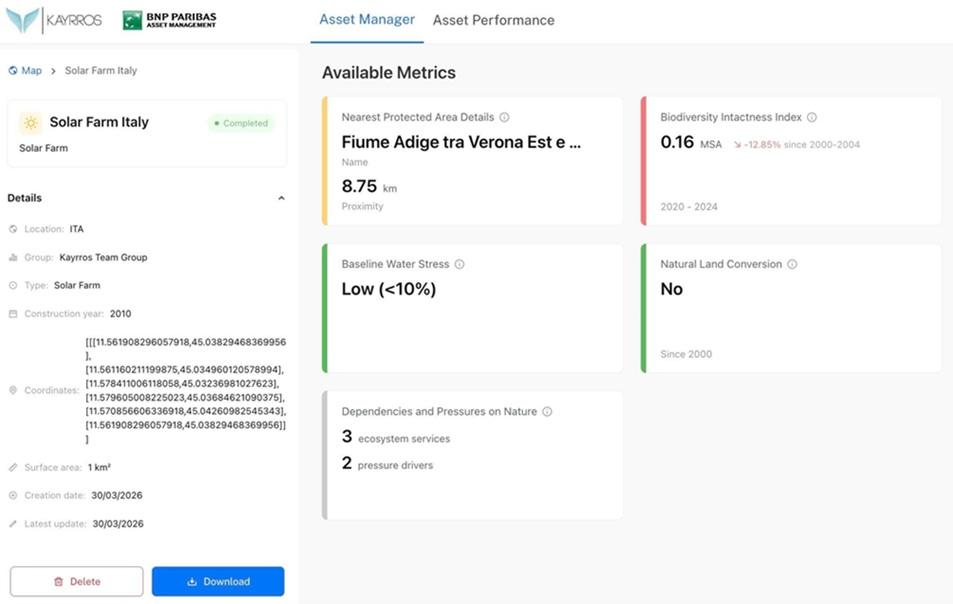
The concept of biodiversity, once primarily the domain of environmental conservationists, is now firmly entrenched in financial discourse. This shift is not merely ethical but fundamentally economic. Ecosystem degradation, habitat loss, and species extinction pose tangible threats to operational continuity, regulatory compliance, and social license for energy projects. As global regulatory frameworks rapidly evolve, including initiatives like the Taskforce on Nature-related Financial Disclosures (TNFD), the EU’s Sustainable Finance Disclosure Regulation (SFDR), the Corporate Sustainability Reporting Directive (CSRD), and France’s pioneering Article 29, financial institutions are facing undeniable pressure to integrate measurable biodiversity metrics into their investment processes. The challenge, historically, has been the fragmented and incomplete nature of the data itself. Addressing this critical gap, an innovative new platform leverages machine learning, satellite imagery, and geospatial data to deliver granular, up-to-date nature impact insights at the individual asset level. This allows investors to embed biodiversity considerations directly into due diligence, portfolio construction, and mandatory reporting, transforming an abstract concept into a strategic decision factor.
Market Realities and the Search for Deeper Value
In a market characterized by persistent volatility, the ability to identify and quantify all forms of risk is paramount for investors. As of today, Brent Crude trades at $93.11, down a marginal 0.14% within a daily range of $91.39 to $94.21. Similarly, WTI Crude stands at $89.3, experiencing a 0.41% dip today. This recent softness follows a more pronounced trend, with Brent having declined by approximately 7% over the past two weeks, dropping from $101.16 on April 1st to $94.09 by April 21st. Such daily fluctuations and short-term trends often dominate headlines and trading strategies. However, beneath this surface-level volatility, a more profound shift is underway. The emergence of tools that quantify biodiversity risk signifies a maturation of the investment landscape, pushing asset managers to look beyond immediate price movements and toward the long-term sustainability and resilience of their portfolios. Integrating these environmental metrics provides a new dimension for assessing intrinsic value, mitigating future liabilities, and securing capital in an increasingly scrutinized global economy.
Beyond Price Prediction: What Investors are Truly Asking
Our proprietary reader intent data reveals a diverse range of investor concerns, from immediate price speculation to long-term strategic positioning. While many are keenly focused on questions like “is WTI going up or down?” or seeking precise year-end oil price predictions, there’s also a significant underlying demand for comprehensive, forward-looking risk assessment. Investors are asking about individual company performance, such as “How well do you think Repsol will end in April 2026,” indicating a desire for deep dives into specific assets and their future trajectories. This signals a market moving beyond simple directional bets to one that values robust fundamental analysis, including non-traditional risk factors. A platform that provides asset-level biodiversity impact analysis directly addresses this nuanced demand. By making nature measurable and integrating it into financial models, it offers a new form of “prediction”—not of price, but of future risk exposure and potential for value erosion or creation. This empowers investors to make more informed decisions, aligning capital with projects that demonstrate environmental stewardship and long-term viability, thus satisfying the deeper strategic questions guiding serious capital allocation.
Upcoming Catalysts and the Future of Sustainable Energy Investment
The energy calendar is punctuated by regular data releases that provide crucial short-term market signals. In the coming days and weeks, investors will be closely monitoring the EIA Weekly Petroleum Status Report (due April 22nd, April 29th, and May 6th), the Baker Hughes Rig Count (April 24th and May 1st), and the API Weekly Crude Inventory (April 28th and May 5th). These reports offer snapshots of supply, demand, and drilling activity, influencing immediate trading strategies. However, the structural shift towards integrating biodiversity risk represents a longer-term catalyst that will increasingly shape capital flows irrespective of short-term inventory changes. The successful piloting of a new nature impact platform by a major financial institution across a range of real asset classes, including solar farms, data centers, and traditional energy utilities, underscores its practical utility. This real-world application has already demonstrated its capacity for faster impact analysis, improved project selection, and enhanced capital allocation by identifying ecologically sensitive zones. As the EIA prepares its Short-Term Energy Outlook on May 2nd, the market should consider how such innovative risk assessment tools will indirectly influence future supply projections and investment patterns. By fostering improved project selection and capital allocation based on environmental impact, these platforms will likely favor sustainable projects, gradually reshaping the energy mix and ensuring a more resilient, environmentally conscious industry for decades to come.


