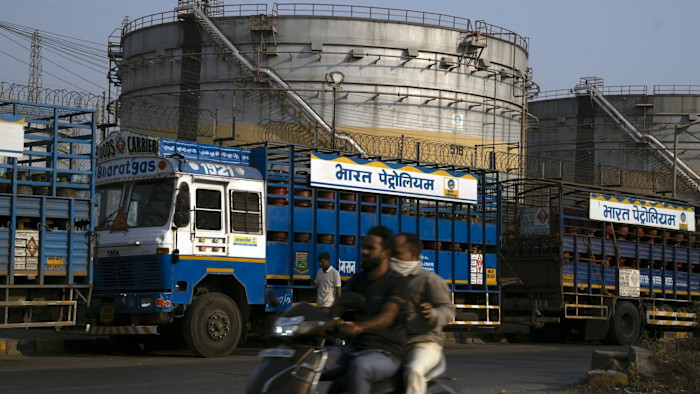
India, a colossal energy consumer, recently received a limited reprieve through a U.S. waiver allowing the purchase of Russian crude loaded before March 5th. While seemingly a positive development aimed at easing immediate supply pressures, a deeper analysis reveals this measure offers little beyond a temporary balm. For investors tracking global energy markets, particularly those with exposure to Asian refining and supply chains, understanding the true, limited scope of this waiver is crucial. This move is more a tactical intervention to prevent market disruption than a fundamental shift in supply dynamics, leaving India, and by extension the global market, exposed to ongoing geopolitical and supply chain vulnerabilities.
The Waiver’s Superficial Relief Amid Deeper Challenges
The U.S. waiver, a month-long exception, was anticipated to unlock approximately 20 million to 30 million barrels of Russian crude already at sea for Indian refiners. While this volume might sound substantial, our analysis, corroborated by industry intelligence, shows it equates to roughly four days of India’s immense crude demand. India, dependent on imports for a staggering 90 percent of its oil and natural gas needs, consumed crude worth $100 billion between April and January alone. Thus, the available Russian crude represents a mere “drop in the ocean” against its persistent energy requirements. This short-term measure helps clear some existing Russian crude inventories and might delay deeper upstream shut-ins in Russia, but it fails to materially offset the global supply shock that continues to ripple through the market. For investors, this signals that fundamental supply-demand imbalances, rather than such tactical waivers, will dictate longer-term price trajectories and refiner profitability.
Persistent Geopolitical Risks and Supply Chain Vulnerabilities
India’s energy security remains precariously balanced, largely due to its overwhelming reliance on Middle Eastern crude, which historically accounts for nearly half of its imports. A significant portion of these vital supplies transits through the Strait of Hormuz, a choke point that recently experienced severe disruptions, effectively blocking crude flows. This logistical vulnerability, rather than the price of a specific crude origin, is the primary driver of India’s supply anxiety. The U.S. waiver on Russian oil does not, and cannot, address the inherent risks associated with such critical maritime routes. For energy investors, this highlights the continued importance of geopolitical stability in the Middle East and the resilience of global shipping lanes. Any further escalation or disruption in these regions could quickly erase the minor benefits of the Russian waiver and send ripples across the entire oil and gas investment landscape, impacting refining margins and trade flows.
Market Reaction and Investor Sentiment Signals Ongoing Uncertainty
Despite the ostensible relief offered by the waiver, the broader market reaction underscores a prevailing sense of uncertainty. Shares in India’s major government-owned refiners, including the largest domestic player, Indian Oil, saw significant declines, with some tumbling more than 4 percent on the day the waiver was announced. Indian Oil’s share price has depreciated about 15 percent since the broader conflict began. This negative investor sentiment, even with a theoretical increase in available crude, reflects deeper concerns about sustained high oil prices and squeezed refining margins. As of today, Brent Crude trades at $92.89, down 0.38% within a day range of $92.57-$94.21, while WTI Crude stands at $89.51, down 0.18%. Our proprietary market data shows Brent has declined by over 7% in the last 14 days, from $101.16 on April 1st to $94.09 on April 21st, indicating that while prices have pulled back from recent peaks, volatility remains a key characteristic. Our reader intent data at OilMarketCap.com reveals a strong investor focus on price direction, with frequent queries like “Is WTI going up or down?” and “What do you predict the price of oil per barrel will be by end of 2026?” These questions highlight a market grappling with persistent supply concerns, geopolitical risks, and the effectiveness of policy interventions like this waiver, which ultimately failed to calm broader fears.
Forward Outlook: Diversification and Strategic Reserves as Key Levers
Looking ahead, the limited impact of this waiver reinforces the necessity for India to pursue long-term strategic solutions rather than relying on short-term tactical reprieves. India’s strategic petroleum reserves, which cover approximately eight weeks of imports, offer a crucial buffer that can “buy policymakers time” during severe price shocks. However, these reserves are not a permanent solution to structural supply deficits. Investors should closely monitor upcoming energy reports for clearer signals on global supply-demand balances. The EIA Weekly Petroleum Status Reports on April 22nd, 29th, and May 6th, along with API Weekly Crude Inventory data on April 28th and May 5th, will provide critical insights into U.S. crude stocks, which often influence global sentiment. Furthermore, the Baker Hughes Rig Count on April 24th and May 1st will indicate future production trends. Perhaps most importantly, the EIA Short-Term Energy Outlook on May 2nd will offer a more comprehensive forecast, directly addressing investor concerns about the trajectory of oil prices into late 2026 and beyond. For investors, the key takeaway is that India’s energy future, and by extension the stability of a significant global demand center, hinges on successful diversification of supply sources and robust strategic planning, far beyond the scope of a temporary waiver.