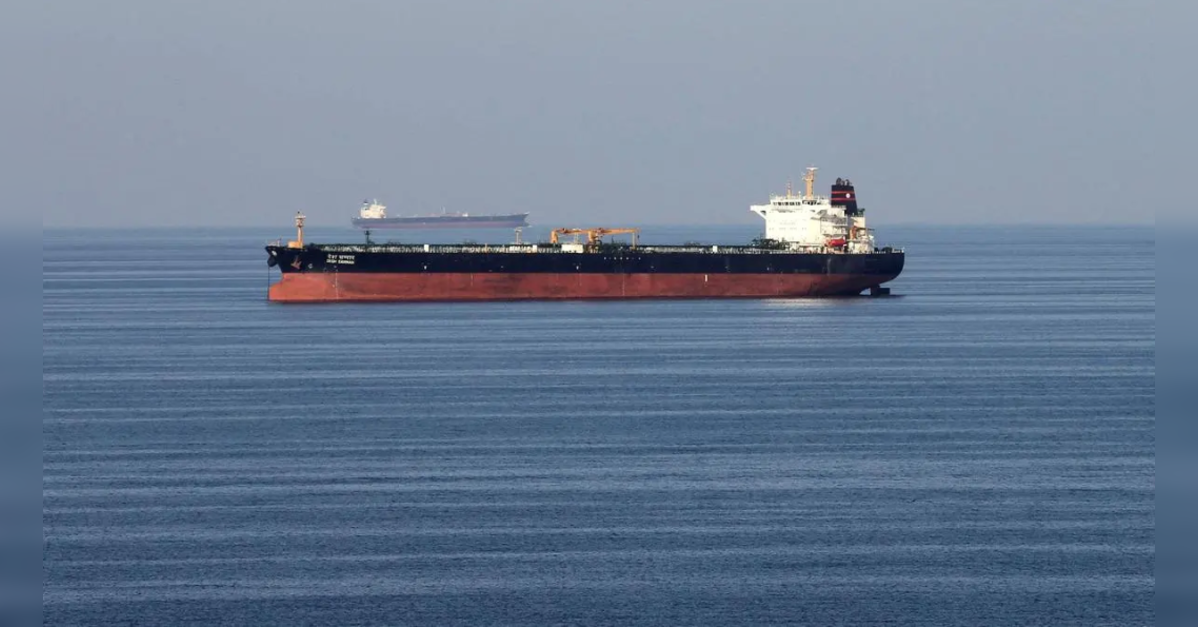
The geopolitical landscape of the Middle East has once again sent ripples through global energy markets, with recent US military actions targeting Iranian nuclear facilities intensifying concerns over the security of the Strait of Hormuz. This critical maritime chokepoint, a narrow passage connecting the Persian Gulf to the Arabian Sea, remains a linchpin for global oil and gas flows. With a fifth of the world’s supply transiting its waters, any threat of disruption immediately elevates market volatility, prompting investors to reassess supply-side risks and their potential impact on crude benchmarks and broader energy equities. As tensions escalate, understanding the complex interplay of geography, supply chains, and market sentiment becomes paramount for informed investment decisions.
The Strategic Imperative of the Strait of Hormuz
The Strait of Hormuz is more than just a geographical feature; it is the maritime artery sustaining a significant portion of the world’s energy needs. Geographically, this approximately 21-mile wide channel, separating Iran from the Arabian Peninsula, becomes even more constrained for shipping, narrowing to just two miles in each direction. This inherent bottleneck renders it acutely vulnerable to geopolitical tensions and potential blockades. In 2024, an average of 20.3 million barrels of oil and 290 million cubic meters of liquefied natural gas (LNG) traversed this waterway daily. Major regional producers including Saudi Arabia, Iraq, the UAE, Qatar, Iran, and Kuwait rely almost entirely on this passage for their crude and gas exports. The strategic importance extends beyond mere volume; the sheer concentration of supply from some of the world’s largest exporters means any closure, even temporary, would have immediate and severe global ramifications.
Current Market Dynamics Reflecting Geopolitical Premium
The specter of a Hormuz disruption invariably injects a significant geopolitical premium into crude prices. As of today, Brent crude trades at $95.01, showing a modest increase of 0.23% within a daily range of $91 to $96.89. WTI crude also reflects this tension, priced at $91.56, up 0.31% within its range of $86.96 to $93.30. This current upward pressure comes after Brent experienced an 8.8% decline over the past two weeks, dropping from $102.22 on March 25th to $93.22 on April 14th, indicating that the recent escalation has reversed a downward trend. While analysts had previously indicated that a disruption could push prices towards $80 a barrel, current market prices already reflect a higher baseline of concern, suggesting that the market has swiftly priced in a significant risk premium. Should a direct threat to the Strait materialise, the market could witness price surges well beyond current levels, challenging the stability of global energy costs and impacting gasoline prices, which currently stand at $2.99, up 0.67%.
Diversification Efforts and Supply Chain Resilience
While the global market remains sensitive to Hormuz disruptions, individual nations have made strides in diversifying their energy supply chains. India serves as a prime example. Despite approximately 2 million barrels per day (bpd) of its 5.5 million bpd crude imports transiting the Strait of Hormuz, New Delhi has proactively secured alternative sources. Crude flows from Russia, for instance, utilize routes logistically detached from Hormuz, such as the Suez Canal, the Cape of Good Hope, or the Pacific Ocean. Furthermore, supplies from the US, West Africa, and Latin America offer increasingly viable backup options, albeit often at a higher cost. On the natural gas front, India’s principal LNG supplier, Qatar, does not route its shipments to India via Hormuz, and supplies from Australia, Russia, and the US would similarly remain untouched. This strategic diversification, replicated to varying degrees by other major consumers, suggests that while the global price impact of a Hormuz closure would be profound, the direct supply security for some nations has improved, with China now emerging as the most exposed to Persian Gulf energy flows.
Navigating Forward: Investor Questions and Upcoming Catalysts
In this heightened state of uncertainty, investors are keenly focused on understanding future price trajectories and identifying catalysts that could either exacerbate or alleviate market volatility. A common inquiry among our readership revolves around building a base-case Brent price forecast for the next quarter and what the consensus 2026 Brent forecast entails. The current geopolitical premium makes such forecasts inherently challenging, but upcoming events will offer crucial directional signals. The OPEC+ Joint Ministerial Monitoring Committee (JMMC) meeting on April 18th, followed by the full Ministerial meeting on April 20th, will be pivotal. These sessions will reveal whether major producers plan any adjustments to output levels in response to market tightness or geopolitical risks, directly impacting supply expectations. Furthermore, the regular flow of inventory data, with API Weekly Crude Inventory reports on April 21st and 28th, and EIA Weekly Petroleum Status Reports on April 22nd and 29th, will provide real-time insights into demand and supply balances, particularly in the US. The Baker Hughes Rig Count on April 17th and 24th will offer a forward look into future production trends. Beyond these, investors are also keenly observing indicators like Chinese teapot refinery runs and Asian LNG spot prices, recognizing China’s growing role as a primary consumer of Persian Gulf energy, which will inevitably shape the broader energy market outlook for the remainder of the year and into 2026.


