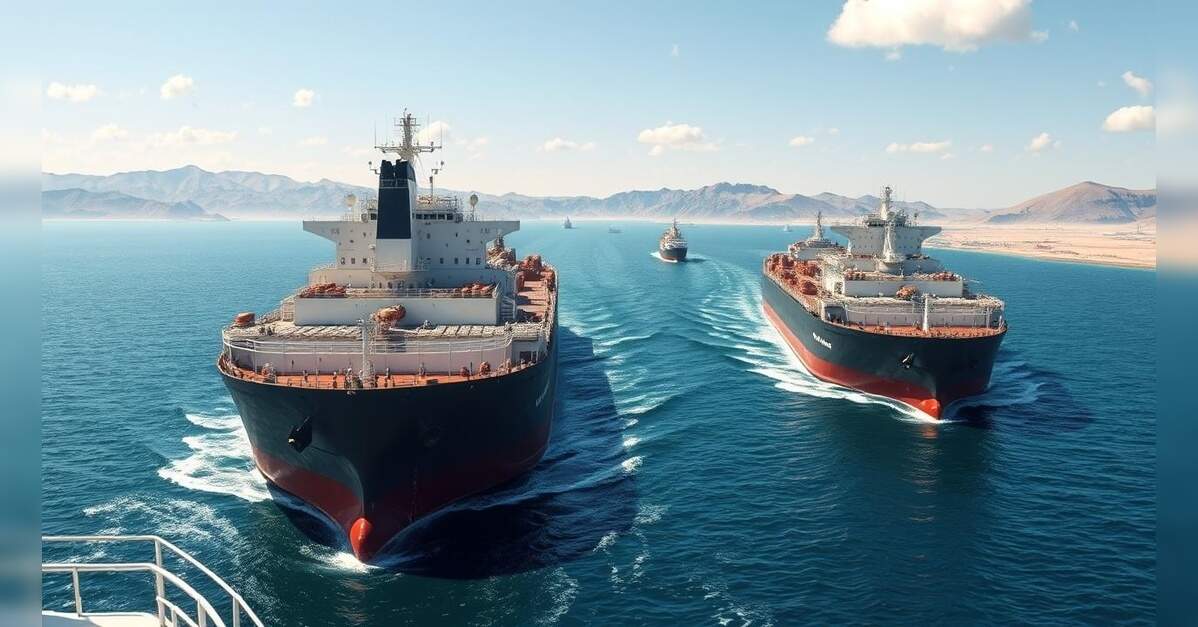
The geopolitical chessboard in the Middle East has once again sent ripples through global energy markets, highlighted by an extraordinary maneuver in the Strait of Hormuz. Following targeted U.S. airstrikes on Iranian nuclear facilities, two supertankers, each with a capacity of approximately 2 million barrels of crude, executed abrupt U-turns after entering the critical waterway. This unprecedented reversal, tracked through proprietary vessel data, marks a tangible shift in shipping behavior and signals a palpable increase in supply volatility for oil and gas investors. While tankers have continued transiting the strait despite previous signal interference and attempts to avoid the Iranian coastline, this incident represents the first concrete indication of potential re-routing and a broader re-evaluation of risk by vessel owners and traders. The stakes are undeniably high, with Iran openly considering the option of closing the Strait of Hormuz, a chokepoint through which a significant portion of the world’s seaborne oil supply flows.
Market Swings Reflect Deepening Geopolitical Unease
The immediate market reaction to the escalating tensions has been characterized by extreme volatility, underscoring the deep uncertainty gripping investors. As of today, Brent Crude trades at $90.38 per barrel, marking a significant 9.07% decline within the day, while WTI Crude stands at $82.59, down 9.41%. These sharp daily drops, occurring within a day range for Brent stretching from $86.08 to $98.97, illustrate a market battling conflicting signals. Despite the clear threat of supply disruption posed by the Hormuz situation, broader macroeconomic concerns and a potential ‘risk-off’ sentiment appear to be exerting downward pressure, or perhaps initial fears quickly gave way to profit-taking and skepticism regarding Iran’s immediate capabilities or willingness to sustain a closure. This daily turbulence follows a broader bearish trend for Brent, which has fallen from $112.78 on March 30th to $91.87 just yesterday, a substantial 18.5% decline over the past two weeks. Investors must recognize that while the immediate headlines point to supply risk, the market’s current trajectory suggests a complex interplay of supply fears, demand anxieties, and global economic sentiment. The Greek shipping ministry’s advisory for its vessels to seek safe harbor further emphasizes the industry’s heightened caution, directly translating into increased operational costs and potential delays for crude shipments.
Shipping Lanes Under Duress: The Cost of Uncertainty
The decision by the Coswisdom Lake and South Loyalty to reverse course is more than just an isolated incident; it’s a stark indicator of the rapidly evolving risk landscape for global shipping. Even before the recent airstrikes, benchmark tanker earnings had surged by nearly 90%, reflecting growing concerns over Middle Eastern stability. Now, with the possibility of the Strait of Hormuz being compromised, freight derivatives have seen a further surge, signaling market expectations of significant disruption. This translates directly into higher costs for oil traders and ultimately, consumers. The increased jamming of ship signals and electronics in the Persian Gulf, a trend observed since mid-June, further complicates navigation and adds to operational risks. Tanker owners are now faced with a difficult calculus: proceeding through a potentially hostile chokepoint or undertaking costly and time-consuming alternative routes, which could involve longer voyages around the Arabian Peninsula. This shift in shipping dynamics is not merely theoretical; it directly impacts the speed and cost of bringing crude to market, creating a structural component of price support, even if the headline crude prices are currently experiencing downward volatility from other factors.
Forward Outlook: Navigating Upcoming Critical Events
The unfolding situation around the Strait of Hormuz casts a long shadow over several critical upcoming energy events, demanding close attention from investors. This Saturday, April 18th, the OPEC+ Joint Ministerial Monitoring Committee (JMMC) convenes, followed by the full OPEC+ Ministerial Meeting on Sunday, April 19th. The tanker reversals and Iran’s overt threats to close Hormuz introduce an urgent and unpredictable variable into their deliberations. Will OPEC+ consider increasing production to stabilize markets in the face of potential supply disruptions, or will they maintain their current quotas, perhaps banking on geopolitical risk to support prices amidst broader demand concerns? Their decisions will be heavily influenced by the perceived credibility of Iran’s threat and the actual impact on global crude flows. Furthermore, the API Weekly Crude Inventory report on April 21st and the EIA Weekly Petroleum Status Report on April 22nd will provide crucial insights into the immediate supply-demand balance. Any unexpected drawdowns or builds in U.S. crude stocks could exacerbate market reactions, especially if linked to perceived disruptions in global supply chains originating from the Middle East. The Baker Hughes Rig Count reports on April 24th and May 1st will also be closely scrutinized for signs of how North American producers are responding to this heightened volatility and the prevailing price environment.
Investor Focus: Pricing Risk in an Unpredictable Landscape
Our proprietary reader intent data reveals that investors are keenly focused on understanding future oil price trajectories and the implications for specific energy companies. Questions such as “What do you predict the price of oil per barrel will be by end of 2026?” underscore the pervasive uncertainty. While specific predictions remain elusive in such a volatile environment, the current Hormuz situation injects significant upside risk into longer-term price forecasts. A sustained disruption, even partial, could rapidly deplete global inventories and send prices soaring beyond current levels. For companies operating in the energy sector, particularly exploration and production (E&P) firms, this geopolitical premium can offer a buffer against demand-side headwinds, but also introduces operational risks and potential for revenue volatility. Investors are also inquiring about the performance outlook for specific companies like Repsol in April 2026. While we do not offer individual stock advice, it is clear that companies with significant exposure to Middle Eastern crude supplies, either through refining operations or trading, will face increased scrutiny regarding their supply chain resilience and contingency plans. The ability of these firms to navigate escalating freight costs, potential re-routing, and insurance premiums will be paramount. In this environment, a disciplined investment approach, focused on companies with strong balance sheets, diversified asset bases, and robust risk management strategies, is more critical than ever.


