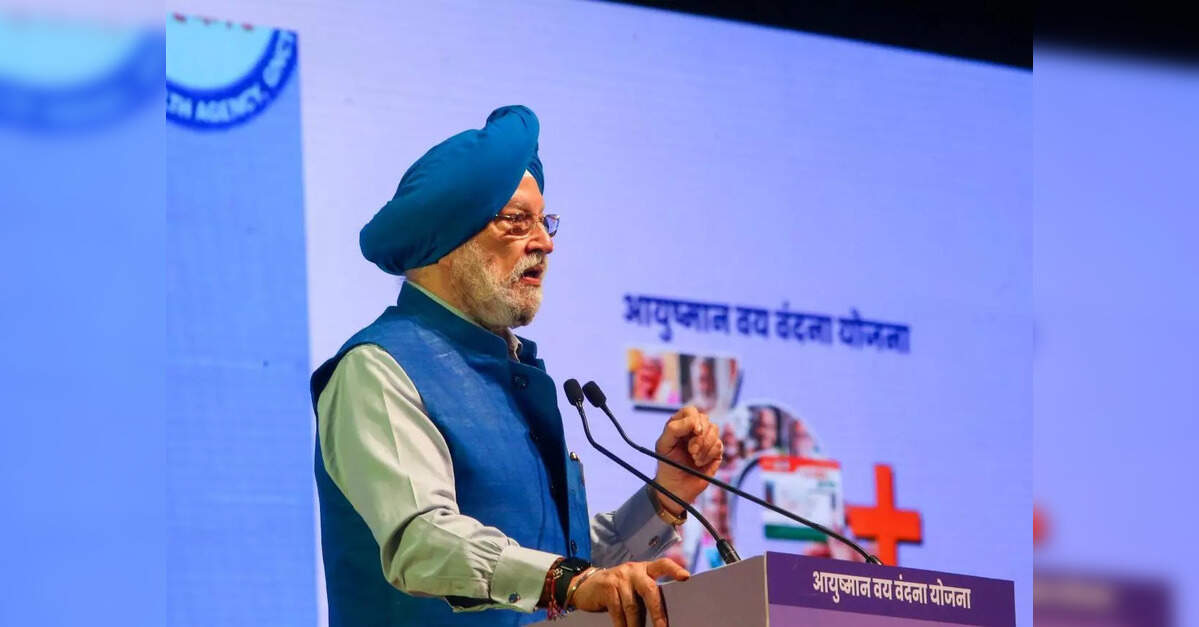
The global oil market faces renewed volatility as geopolitical tensions in the Middle East escalate, with Iran signaling a potential closure of the Strait of Hormuz following recent US airstrikes. This critical maritime chokepoint, through which a significant portion of the world’s crude oil passes, presents a formidable risk to global energy supply chains. Against this backdrop, India, a major energy consumer, has moved to reassure its citizens and the market, with Union Petroleum and Natural Gas Minister Hardeep Singh Puri asserting that the nation has taken “all necessary measures” to ensure stable and affordable fuel supplies. For investors, the immediate challenge is to discern the true impact of this threat on crude prices and long-term supply dynamics, particularly given the broader context of global supply and demand.
Immediate Market Reaction and Geopolitical Premium
The specter of a Hormuz closure immediately introduces a geopolitical premium into oil prices, even if the threat remains unfulfilled. As of early trading today, WTI Crude is holding at $91.28, having seen a day range of $86.96-$93.3, while gasoline futures trade at $2.96 per gallon, a slight decrease of 0.34% within a day range of $2.93-$3. This relatively stable opening, despite the weekend’s escalating rhetoric, suggests that some market participants may be factoring in a degree of political posturing, or perhaps the existing global supply cushion. However, the 14-day trend for Brent crude, which saw prices decline from $102.22 on March 25th to $93.22 on April 14th – an 8.8% drop of $9 – indicates that the market was already recalibrating lower before this specific threat emerged. This pre-existing downward momentum was likely driven by broader economic concerns or supply optimism. The key question now is whether the Hormuz threat can reverse this trend, pushing prices back towards recent highs, or if the market believes alternative supplies can absorb the shock.
India’s Strategic Diversification Mitigates Risk
India’s proactive energy strategy offers a crucial case study in mitigating regional supply risks. Minister Puri highlighted that the nation has significantly diversified its crude oil sources over recent years, with a substantial volume of its current energy imports no longer transiting the Strait of Hormuz. This strategic pivot reduces India’s direct vulnerability to any disruption in the chokepoint. Furthermore, Indian Oil Marketing Companies (OMCs) reportedly hold “supplies of several weeks” and are actively receiving crude from multiple alternative routes. This robust inventory and logistical flexibility mean that even a temporary closure would not immediately cripple India’s energy security. For investors, this underscores the growing importance of national energy resilience and diversification efforts globally, as countries seek to insulate themselves from increasingly frequent geopolitical shocks. Nations with diversified portfolios are better positioned to weather such storms, maintaining economic stability and potentially attracting more stable foreign investment.
Global Supply Dynamics and Investor Outlook
Beyond India’s immediate resilience, the broader global supply picture remains a critical factor. Minister Puri’s assertion that “enough oil is available in the global markets,” with increasing volumes from the Western Hemisphere, provides an important counter-narrative to the immediate fear of supply constriction. Major producers, including traditional suppliers, are incentivized to maintain output to secure vital revenue streams, which could help buffer any shortfalls from the Persian Gulf. This perspective aligns with investor queries we’ve observed this week, with many asking for a base-case Brent price forecast for the next quarter and the consensus 2026 Brent forecast. While providing a definitive forecast is challenging amid such volatility, the underlying theme is a search for stability. The market’s ability to absorb potential disruptions hinges on the elasticity of supply from non-OPEC+ sources and the willingness of major producers to ramp up output if needed. The current geopolitical premium must be weighed against these fundamental supply capacities and the broader global demand outlook.
Navigating Upcoming Catalysts for Informed Decisions
For investors seeking to refine their energy market strategies, the coming weeks are packed with critical events that will provide further clarity. As our proprietary event calendar shows, the OPEC+ Joint Ministerial Monitoring Committee (JMMC) is scheduled for April 18th, followed by the full OPEC+ Ministerial Meeting on April 20th. These meetings will be pivotal in assessing the cartel’s production policy, especially in light of the renewed geopolitical risks. Any signals regarding output adjustments will have an immediate impact on crude prices. Furthermore, the regular Baker Hughes Rig Count reports on April 17th and 24th will offer insights into North American production trends, while the API Weekly Crude Inventory (April 21st, 28th) and EIA Weekly Petroleum Status Report (April 22nd, 29th) will provide crucial data on US stock levels and demand. These data points, combined with an ongoing assessment of the situation in the Middle East, will be instrumental in answering key investor questions regarding the trajectory of crude prices and the stability of global energy markets through the second quarter and beyond. Investors should monitor these events closely, as they will shape the updated consensus forecasts for both Brent and WTI.


