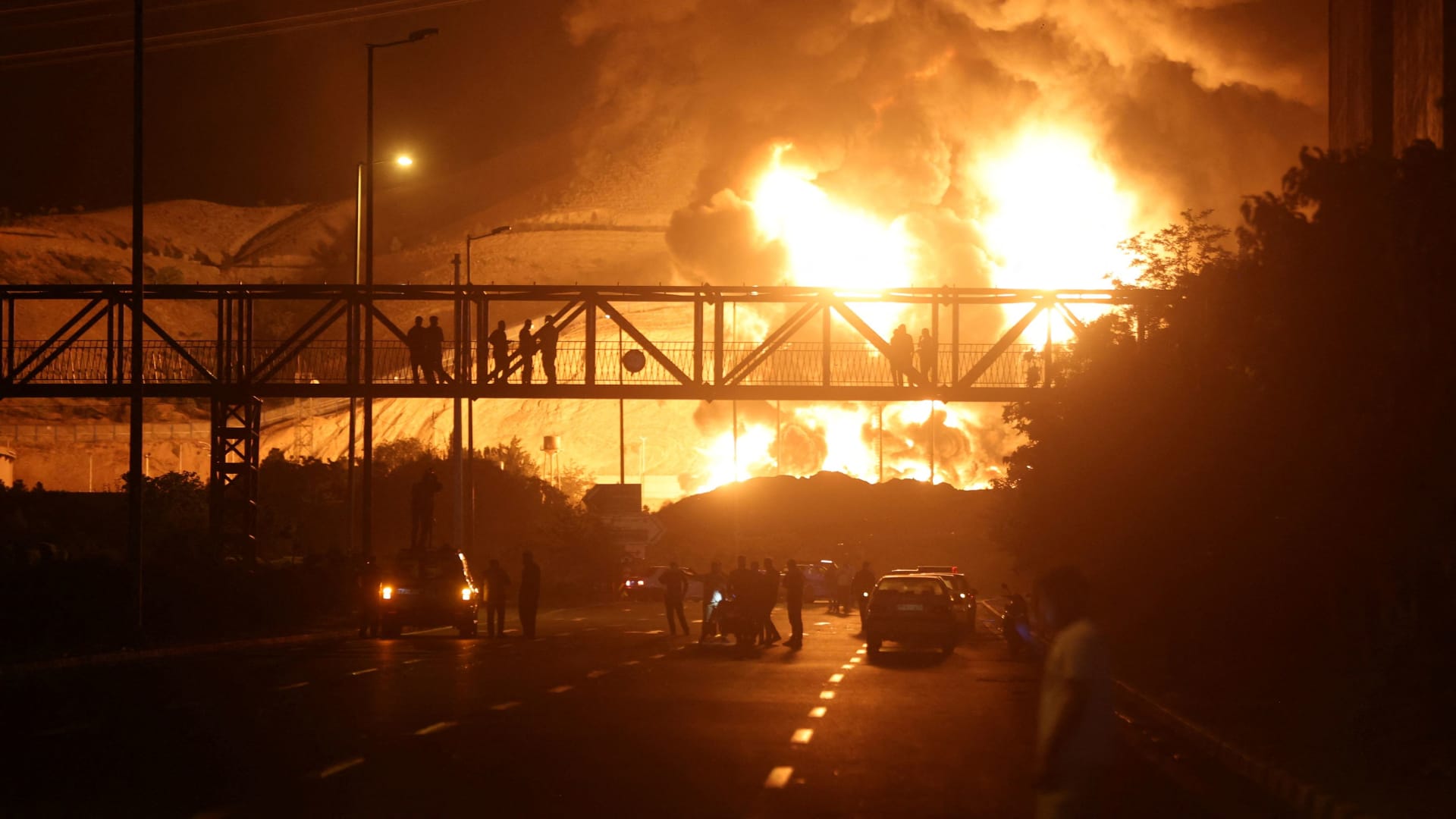
The global oil market is once again confronting a significant geopolitical flashpoint: the escalating tensions surrounding Iran. As rhetoric intensifies and the specter of military action or regime change looms, investors are keenly assessing the potential ramifications for crude supply, demand dynamics, and ultimately, oil prices. Recent analysis underscores that such a profound geopolitical shift in a major OPEC producer like Iran would not merely ripple through the market but could fundamentally reshape its landscape, potentially leading to sustained price elevations not seen in decades.
The Historical Blueprint for Oil Shocks and Regime Change
History offers a stark warning regarding the impact of regime change in major oil-producing nations. Since 1979, there have been eight significant instances where political upheaval altered a country’s leadership, and the market response was consistently dramatic. On average, crude prices spiked approximately 76% at their peak compared to pre-crisis levels. Even after initial volatility subsided, prices tended to stabilize at levels roughly 30% higher than before the respective crises, indicating a lasting fundamental shift in market equilibrium. The difficulty in quickly recovering supply losses post-disruption is a key factor supporting these elevated prices over extended periods.
A particularly salient example is the 1979 Iranian Revolution, which saw the overthrow of the Shah and the rise of the Islamic Republic. In the immediate aftermath, Iran’s crude oil exports plummeted by a staggering 4.8 million barrels per day by January 1979. While other OPEC members attempted to compensate for some of the lost supply, the market reaction was severe: oil prices more than doubled, soaring to $34 per barrel by mid-1980, triggering a worldwide economic recession. Today, Iran’s crude oil production stands at approximately 3.3 million barrels per day, a volume significantly below its pre-1979 revolution levels. This historical context highlights the immense potential for market disruption should current tensions escalate into a scenario involving significant operational impact on Iran’s existing production capacity.
Navigating Current Market Calm Amidst Rising Tensions
Despite the heightened geopolitical rhetoric, the immediate oil market has exhibited a degree of calm that might surprise some investors. As of today, Brent crude trades at $90.38 per barrel, marking a 9.07% decline from its opening. Similarly, WTI crude is priced at $82.59, down 9.41% within the trading day. This recent dip contrasts sharply with earlier volatility; Brent, for instance, had fallen by $20.91, or 18.5%, from $112.78 on March 30th to $91.87 just yesterday. The price of gasoline has also seen a decrease, currently at $2.93, a 5.18% drop.
This market behavior naturally prompts questions from investors, many of whom are asking about the trajectory of oil prices by the end of 2026 and seeking clarity on OPEC+ current production quotas. The current market resilience suggests that, for now, traders may be discounting the likelihood of a major, immediate supply disruption from Iran. Instead, broader demand concerns, strategic reserve levels, or a belief in the short-lived nature of typical conflict-related price spikes might be holding sway. However, this delicate balance could be swiftly upended. The historical precedent of significant, sustained price increases following regime changes stands in stark contrast to the market’s current composure, underscoring the potential for rapid and profound shifts should the geopolitical situation in the Middle East escalate beyond current expectations.
Geopolitical Flashpoints: Hormuz and the “Fleeting Spike” Thesis
While the threat of military action in Iran carries undeniable weight, the market’s assessment of specific risks also plays a crucial role in price formation. One of the most frequently cited, and potentially catastrophic, scenarios involves Iran attempting to block the Strait of Hormuz. Through this narrow chokepoint between Iran and Oman, approximately one-fifth of the world’s total oil supply passes daily. However, expert analysis suggests that the risk of such a blockage is considered very low. The U.S. Fifth Fleet, based in Bahrain, is tasked with protecting commercial shipping in the Persian Gulf, and any attempt to close the strait would likely be met with a swift and decisive international response, effectively deemed an act of war.
Furthermore, historical patterns suggest that oil shocks in response to conflicts involving Israel are often short-lived, with prices tending to return to fair value relatively quickly. The notable exception, of course, was the 1973 Yom Kippur War, which led to the Arab oil embargo and a prolonged period of elevated prices. This “fleeting spike” thesis provides a counter-narrative to the more alarmist predictions, suggesting that while initial volatility and price surges are probable in the event of direct conflict, a sustained, long-term disruption might depend on the scale and nature of any intervention, particularly whether it leads to a fundamental shift in Iran’s oil production capabilities rather than just temporary interruptions.
Forward-Looking Catalysts and Investor Preparedness
For investors navigating this complex landscape, staying abreast of both geopolitical developments and scheduled market events is paramount. The immediate horizon includes critical meetings and data releases that will offer further insights into global supply and demand dynamics, all of which will be re-contextualized by any developments in Iran. The OPEC+ Joint Ministerial Monitoring Committee (JMMC) and the Full Ministerial Meetings on April 18th and 19th, respectively, are particularly significant. Investors will be scrutinizing any signals regarding current production quotas or potential shifts in strategy, especially in light of potential supply disruptions from Iran. Any hint of increased production to offset future losses or, conversely, a tightening of supply, would have immediate market implications.
Beyond OPEC+, the weekly API and EIA Crude Inventory reports, scheduled for April 21st, 22nd, 28th, and 29th, will provide crucial updates on U.S. crude stock levels, offering a proxy for global supply-demand balance. Similarly, the Baker Hughes Rig Count on April 24th and May 1st will indicate the trajectory of future drilling activity and potential supply additions. While these reports typically drive short-term price movements, in a scenario of heightened Iranian tensions, their significance would amplify dramatically. A sudden supply disruption from Iran would overshadow these figures, but the existing market fundamentals revealed by these reports would dictate the baseline from which any new crisis-driven price spikes would occur. Prudent investors will monitor these scheduled events closely, understanding that their interpretation will be profoundly influenced by the evolving geopolitical narrative in the Middle East.

