

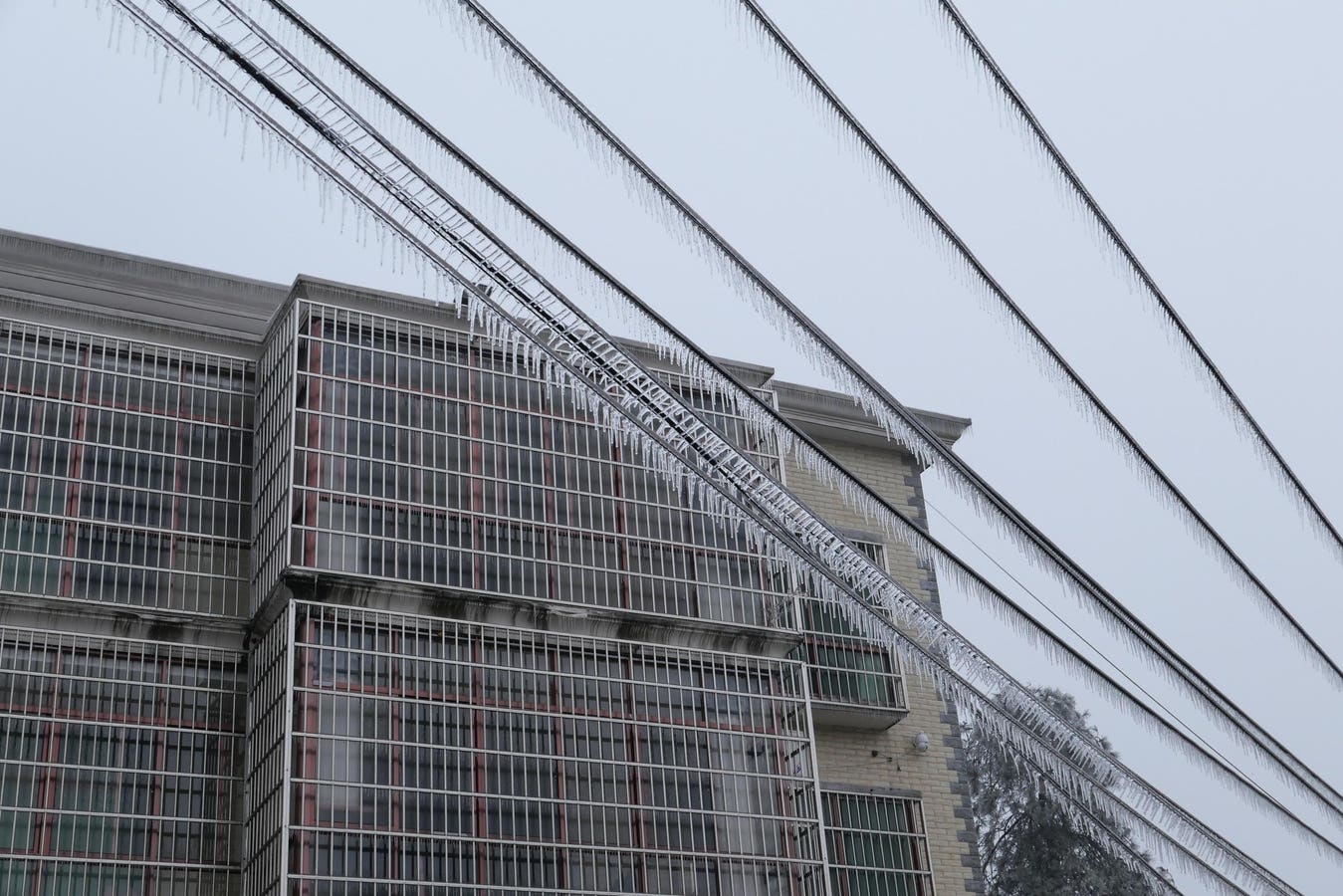

Icicles are hanging from a power supply line in a township in Yueyang, China, on February 7, 2024. (Photo by Costfoto/NurPhoto via Getty Images)
NurPhoto via Getty Images
A significant winter storm is forecasted to impact the Midwest and Eastern United States, prompting questions regarding the resilience of the power grid under extreme weather conditions. Comparisons are being drawn to the 2021 winter storm Uri, which caused widespread power outages across Texas and resulted in over 200 fatalities due to prolonged exposure to freezing temperatures.
During storm Uri, the Electric Reliability Council of Texas, the primary grid operator for Texas, experienced substantial failures as unseasonably low temperatures led to the malfunction of power plants and natural gas supply systems amid elevated electricity demand, culminating in extensive blackouts.
Why This Winter Storm Poses A Risk To The Power Grid
The southern states in the projected path of this storm are at heightened risk for power system and grid failures, as their infrastructure is not designed to withstand the forecasted extreme cold temperatures, snow, and ice. According to the National Weather Service, Texas, Louisiana, Arkansas, Mississippi, Alabama, Tennessee, Georgia, and the Carolinas face a significant threat of extended power outages due to heavy ice accumulation. This situation poses substantial danger by impeding emergency response efforts, as hazardous road conditions may prevent timely assistance.
Even if regional power generation systems remain operational during the anticipated near-zero temperatures, the predicted volume of ice is likely to bring down numerous trees and power lines, increasing the likelihood of prolonged outages.
The challenges extend beyond grid infrastructure to include locations where energy is produced, such as power generating stations and wellheads.
How Winter Storm Uri Exposed Grid Vulnerabilities
Natural gas production can be interrupted when gas freezes at the wellhead in subfreezing temperatures if appropriate safeguards are not implemented. This phenomenon contributed significantly to disruptions in Texas during winter storm Uri, given the region’s uncommon exposure to extreme cold. In many cases, operators opted to shut in wells rather than send repair crews into adverse weather conditions. The resulting decline in steady natural gas supply led to the shutdown of numerous power generating stations.
Furthermore, even non-gas systems are susceptible to failure in low temperatures, as critical components like sensors or valves may malfunction and halt operations. Overall, there are myriad potential points of failure that can interrupt power delivery to large regions.
What Grid Operators Like ERCOT Are Doing Differently
ERCOT has issued an advisory in anticipation of this weekend’s low temperatures, emphasizing that it has implemented upgrades—such as weatherization and inspections of electric generation units and transmission facilities—to prevent a recurrence of events like Winter Storm Uri.
In contrast, other southern states operate within different regional grid markets and do not have a unified response plan; while some winterization efforts have been made at larger plants and critical substations, significant improvements remain necessary. According to the National Electric Reliability Council’s 2024 reliability report, substantial portions of the central and southern United States continue to be susceptible to extreme cold and potential fuel constraints.
Tips For Surviving Severe Winter Storms
1. Emergency Supplies
One gallon of water per person per dayReady-to-eat meals and a manual can openerFirst aid kit and essential medications Battery-powered radioFlashlights with extra batteries (avoid candles)Portable phone chargers and power banksBlankets, warm clothing, hats, glovesPortable phone chargers and power banks.
2. Home Safety During Extreme Cold
Know how to shut off water valves and let faucets drip to prevent freezing.Test smoke and carbon monoxide detectors.Test smoke and carbon monoxide detectors.Never use gas ovens or stoves to heat your home.
Keep in mind that you’ll want to have a can opener and ready to eat meals in addition to water. Instead, use anything you can to insulate doors and windows. Before the storm hits make sure you’ve got all your medications and a first aid kit accessible. If you prepare in advance, your family may actually enjoy the snowy winter instead of worrying about short-term losses of power or heat. However, both state and federal leaders will need to watch grid stability (or lack thereof) over the weekend to learn which communities may need infrastructure investments.
