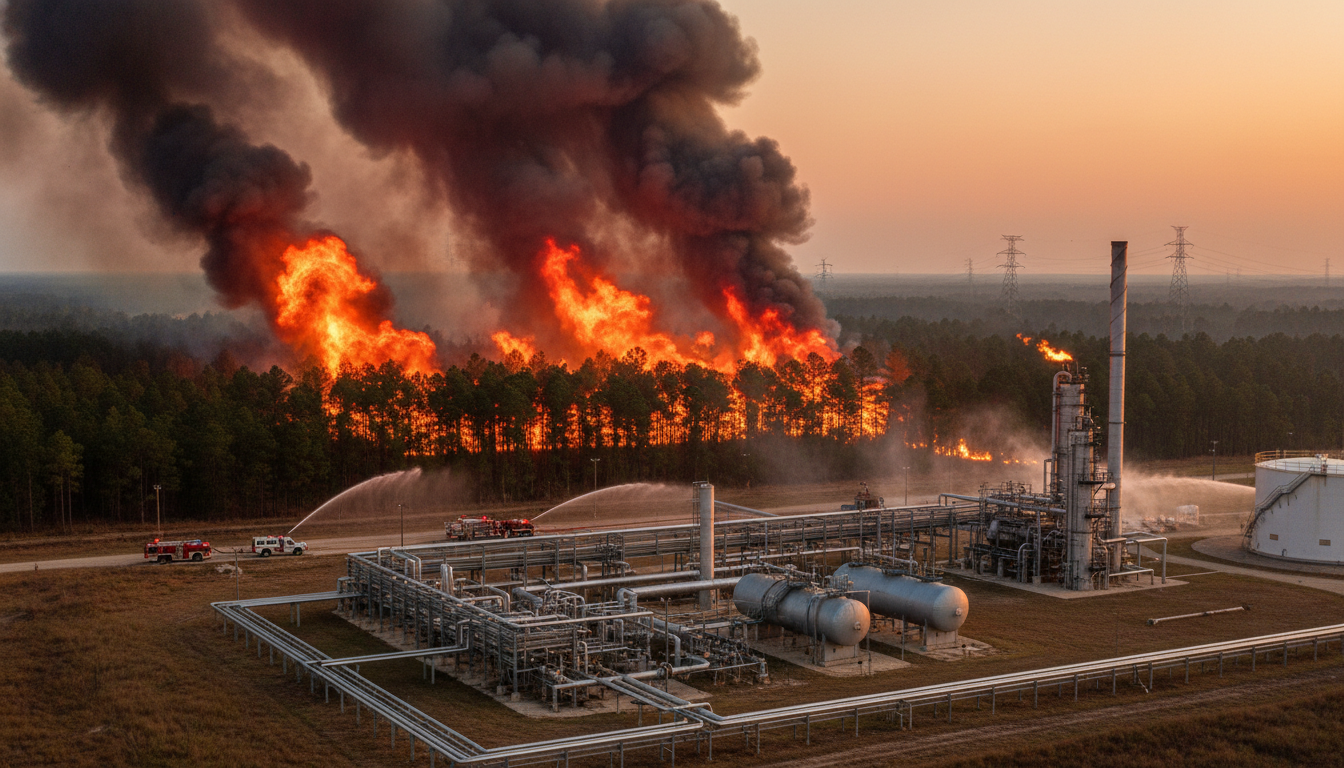
Southeast Wildfires Escalate, Posing Economic and Logistical Challenges for the Energy Sector
A rapidly intensifying wildfire crisis across the southeastern United States is creating significant economic and logistical headwinds, with investors in the energy sector closely monitoring the unfolding situation. These destructive blazes have already claimed nearly 50 residential properties in Georgia alone, triggering widespread evacuations and school closures in affected communities and signaling a prolonged period of instability across the region.
The epicenters of this environmental challenge are largely concentrated along Georgia’s coastal plains and the areas surrounding Jacksonville, Florida. Florida, in particular, is grappling with one of its most severe fire seasons in decades. While the precise origins of many fires remain under investigation, a confluence of prolonged drought conditions, critically low humidity levels, and persistently strong winds are acting as potent accelerants, exacerbating the scale and intensity of these infernos.
Georgia Confronts Expanding Blazes Amid Extreme Drought
Georgia is contending with significant wildfire activity, where the two largest ongoing incidents have collectively consumed an area exceeding 31 square miles (approximately 80 square kilometers). In addition to these major fires, the state forestry division reports at least four other smaller, localized blazes. A critical factor amplifying the danger is the severe aridity of the affected areas; the U.S. Drought Monitor categorizes the region where these worst fires are burning as experiencing either “exceptional” or “extreme drought” – the most dire classifications available.
In southeast Georgia, Brantley County faces an particularly dire situation. The fast-moving Brantley County fire, after devastating 47 homes just a day prior, continues to menace additional residential areas. County Manager Joey Cason revealed the alarming speed of the fire’s expansion, noting it had grown roughly six-fold in size in just half a day on Tuesday. A multi-agency response, involving nearly two dozen fire departments, is currently battling the blaze. The Brantley County Sheriff issued an urgent alert, advising residents to prepare for potential evacuation, citing the unpredictable and rapid shifts in wind patterns that could quickly alter the fire’s trajectory.
The Federal Emergency Management Agency (FEMA) confirms that over 800 individuals have been evacuated from Brantley County, with five emergency shelters established to accommodate displaced residents. The fire currently threatens an additional 300 homes, underscoring the severe risk to property and livelihoods. Concurrently, another large wildfire originating in Clinch County has necessitated evacuations across multiple communities. Tim Lowrimore, President and CEO of the Georgia Forestry Association, characterized the situation as “serious and evolving,” emphasizing the dynamic nature of the threat.
Florida’s Prolonged Battle and Operational Disruptions
Florida is also deep into its own struggle against widespread wildfires. As of Wednesday, firefighters were actively engaged in combating 131 distinct wildfires, which have collectively scorched an area of 34 square miles (approximately 88 square kilometers), predominantly concentrated in the northern half of the state. Florida Commissioner of Agriculture Wilton Simpson underscored the severity of the challenge, stating that the state is experiencing what may be its worst fire season in three or four decades. This extended dry period follows an 18-month drought that has impacted regions across the entire state, creating tinderbox conditions.
To enhance response capabilities, firefighting equipment and personnel are being strategically prepositioned throughout Florida, ensuring resources are closer to the immediate fire zones. The widespread nature of these fires has already caused tangible disruptions to critical infrastructure. For example, Amtrak train service in northeastern Florida experienced a temporary interruption on Monday due to wildfire activity, although service was successfully restored by Wednesday, according to Amtrak spokespersons. Such incidents highlight the potential for these environmental crises to cascade into broader logistical and economic challenges.
Investor Focus: Supply Chain Risks and Regional Economic Impact
For investors tracking the energy sector, these intensifying wildfires present a complex array of considerations, extending beyond direct asset damage. The pervasive low humidity and gusty winds are projected to maintain elevated fire danger through Friday, indicating a sustained period of risk. Furthermore, the immense scale of these blazes has generated widespread smoke plumes, significantly degrading air quality. Smoke has drifted as far as Atlanta, Savannah, Georgia, and Jacksonville, Florida. Air quality in parts of southern Georgia declined to “unhealthy” levels on Wednesday, signaling potential health impacts for all residents. While the worst fires burn over 200 miles (322 kilometers) southeast of Atlanta, smoky conditions are anticipated to linger over the metropolitan area, potentially affecting outdoor operations and regional logistics. The high fire risk is expected to persist each afternoon through Friday due to ongoing dry conditions.
The broader implications for the energy market are manifold. Regional economic activity, including construction, agriculture, and tourism, faces significant headwinds due to property destruction, business interruptions, and evacuation orders. This could translate into localized shifts in energy demand patterns. More critically, the widespread nature of the fires and associated smoke plumes pose material risks to supply chain continuity. Transportation networks, including critical road and rail routes essential for fuel delivery and other commodities, face potential disruptions from closures or reduced visibility. The deployment of extensive firefighting resources also implies an increased, albeit temporary, demand for fuel and related services to support emergency operations.
While direct damage to primary oil and gas infrastructure has not been reported, the escalating crisis underscores the growing climate-related risks that energy companies and their investors must factor into their operational and financial models. The need for resilient infrastructure, robust emergency response plans, and strategic diversification becomes ever more apparent as extreme weather events like these wildfires become more frequent and intense. Monitoring the duration of these drought conditions and the effectiveness of fire suppression efforts will be crucial for assessing the long-term economic stability of the impacted southeastern U.S. regions.