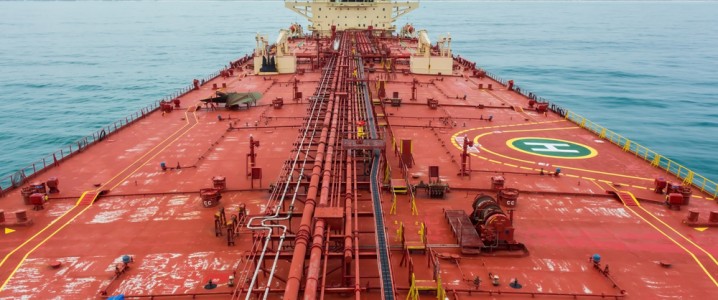
The global oil market is once again grappling with heightened supply uncertainty as U.S. forces intensify their enforcement of sanctions against Venezuela. The recent interdiction of the Panama-flagged tanker Veronica III in the Indian Ocean, following the earlier seizure of the Aquila II, signals a robust commitment by Washington to disrupt Caracas’s illicit crude exports. These actions, which are effectively a maritime blockade, introduce a significant element of geopolitical risk back into the supply-demand equation, potentially tightening global crude availability and impacting prices. For investors, understanding the implications of these escalating measures, the resilience of alternative supply channels, and the upcoming market catalysts is paramount to navigating the evolving energy landscape.
Escalating Enforcement Tightens Venezuelan Supply Outlook
The U.S. government’s recent actions, including the boarding of the Veronica III in the INDOPACOM area, underscore a renewed and expansive effort to curtail Venezuela’s sanctioned oil exports. This marks the seventh such seizure to date, demonstrating a global reach in monitoring and intercepting vessels attempting to bypass restrictions. Historically, these blockades have had a tangible impact; late last year, Venezuela’s state oil firm PDVSA was forced to shut down wells due to a critical shortage of storage capacity for its crude. While reports in January suggested PDVSA had found ways to circumvent the blockade, including the use of “dark mode” shipping, the recent interdictions confirm that these evasion tactics are not foolproof. Each successful interdiction reduces the flow of Venezuelan crude, which, although a smaller player on the global stage, still contributes to overall supply. As of today, Brent Crude trades at $92.24, marking a +2% increase on the day, with WTI Crude at $88.73, up +1.5%. This daily upward movement contrasts with a recent broader trend, where Brent saw a significant decline of $23.49, or 19.8%, from $118.35 on March 31 to $94.86 on April 20. The current daily bounce suggests that fresh supply-side concerns, like the Venezuelan tanker seizures, can still prompt an immediate market reaction, despite recent downward pressure.
The “Dark Fleet” and Persistent Supply Leakage
The challenge for sanction enforcers lies in the sheer scale of the so-called “dark fleet,” which an official estimates at approximately 800 vessels globally. While the seizure of seven tankers by U.S. forces represents a determined effort, it remains a fraction of the total fleet engaged in illicit shipping. This vast network of vessels, often operating without transparent tracking, presents a persistent challenge for fully choking off sanctioned oil flows. Investors must recognize that while the U.S. demonstrates a strong “will to do this,” as articulated by the Pentagon, a complete eradication of illicit Venezuelan exports is an extremely difficult task. The market’s reaction to these interdictions is thus a balance between the immediate reduction in observed supply and the underlying capacity for clandestine operations to continue. The ongoing cat-and-mouse game between enforcers and illicit operators means that Venezuelan crude will likely remain a volatile, albeit constrained, factor in global supply, contributing to price fluctuations as enforcement ebbs and flows.
Addressing Investor Outlook: Price Trajectories and Geopolitical Risk
Investors are keenly focused on the trajectory of crude prices, with common questions revolving around whether WTI is heading up or down, and what the price of oil per barrel might be by the end of 2026. The recent events surrounding Venezuelan crude supply provide a clear example of how geopolitical risk directly influences these dynamics. Today’s upward movement in Brent and WTI, driven partly by this supply-side news, illustrates the market’s sensitivity to disruptions. While the 14-day trend for Brent shows a significant correction, today’s rally indicates that the floor might be firmer than some anticipated when new supply risks emerge. Looking towards the end of 2026, the Venezuelan situation, alongside other geopolitical flashpoints, will remain a critical variable. Persistent enforcement of sanctions could structurally reduce global supply, supporting higher prices over the medium term. Conversely, any softening of enforcement or a broader diplomatic shift could ease pressure. Investors seeking clarity on specific companies’ performance, such as Repsol, must consider how these broader market volatilities and supply constraints might impact their operational environment and profitability.
Upcoming Events to Watch for Market Direction
The coming weeks are packed with key energy events that will provide further insight into global supply-demand balances and market sentiment, all against the backdrop of the Venezuelan supply risk. On April 21, the OPEC+ JMMC Meeting is scheduled. While not a full ministerial meeting, the Joint Ministerial Monitoring Committee’s discussions can signal the group’s thinking on output policy. Any indication from OPEC+ that they might maintain or even deepen production cuts, especially if perceived supply disruptions like those from Venezuela persist, could significantly bolster crude prices. Later this week, on April 22, the EIA Weekly Petroleum Status Report will offer crucial data on U.S. crude inventories, refinery utilization, and product demand. A drawdown in U.S. stocks, especially if larger than expected, combined with the Venezuelan supply concerns, could amplify bullish sentiment. Subsequent EIA reports on April 29 and API data on April 28 and May 5 will continue to track these critical inventory levels. Finally, the EIA Short-Term Energy Outlook on May 2 will provide updated forecasts for supply, demand, and prices, offering a comprehensive view that will integrate current geopolitical realities. Investors should closely monitor these releases for signals on how global markets are absorbing and reacting to ongoing supply pressures, including the persistent challenges to Venezuelan crude exports.


