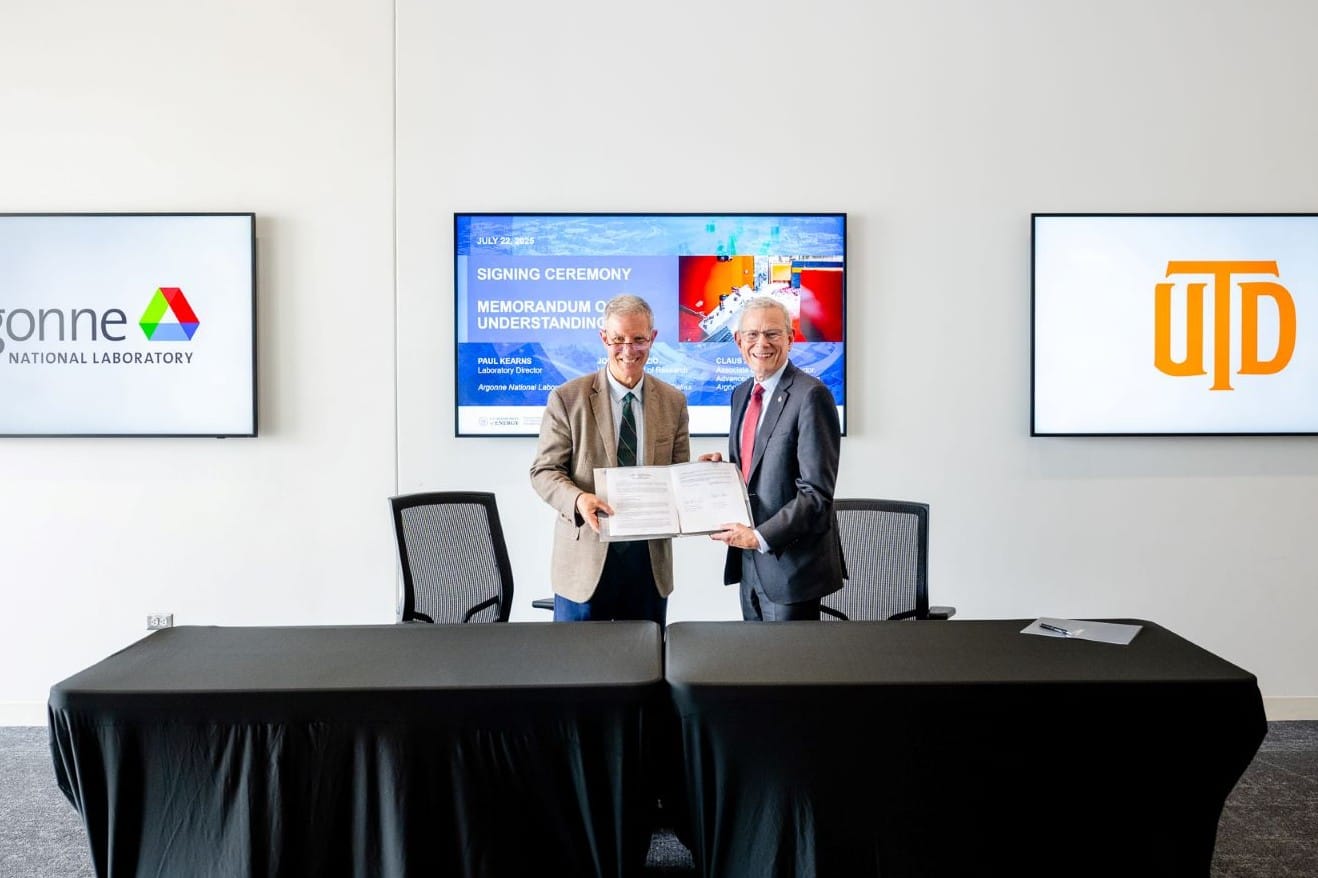
The landscape of global energy investment is undergoing a profound transformation, driven by an accelerating push for energy security and technological independence. A recent strategic collaboration between the US Department of Energy’s Argonne National Laboratory and the University of Texas at Dallas (UT Dallas) marks a significant step forward in this evolution. This partnership, solidified by a memorandum of understanding, aims to bolster domestic battery science, fortify critical materials supply chains, and cultivate a skilled workforce within the burgeoning energy storage sector. For oil and gas investors navigating an increasingly complex market, this initiative signals not just a shift in energy paradigms, but a tangible opportunity to diversify portfolios and capitalize on the long-term strategic build-out of a resilient domestic energy infrastructure.
The Strategic Imperative: Securing Domestic Energy Storage
This collaboration is far more than a mere academic partnership; it represents a critical pillar in the broader US strategy for energy independence and national security. The UT Dallas BEACONS Center, established in 2023 with a substantial $30 million award from the US Department of Defense, underscores the strategic military and economic importance of advanced energy storage solutions. By connecting Argonne’s Advanced Energy Technologies directorate with BEACONS, the initiative directly targets technology gaps in energy storage and champions the domestic sourcing of critical materials. Leaders from both institutions, including Jianlin Li of Argonne, emphasize the goal of “creating and upscaling the development of critical materials and optimising battery systems” to establish a “stable and competitive energy storage supply chain within the US.” For investors, this government-backed, mission-critical approach to battery manufacturing and materials processing mitigates many of the early-stage risks typically associated with emerging technologies, offering a robust foundation for long-term growth.
Navigating Volatility: Traditional Oil’s Influence on New Energy Investment
While the long-term strategic vision for battery technology shines brightly, the immediate energy market remains dominated by the ebb and flow of traditional crude. As of today, Brent crude trades at $90.38, marking a significant 9.07% decline from its open, with a day range between $86.08 and $98.97. Similarly, WTI crude sits at $82.59, down 9.41%, having traded between $78.97 and $90.34. This sharp correction follows a challenging 14-day period where Brent shed 18.5%, dropping from $112.78 on March 30th to $91.87 yesterday. Such pronounced volatility in crude prices, alongside a 5.18% drop in gasoline to $2.93 today, underscores the inherent unpredictability of fossil fuel markets. For investors, this instability in traditional oil and gas serves as a potent reminder of the strategic value in diversifying into areas like advanced battery technology. Investments in domestic energy storage offer a hedge against geopolitical shocks and supply chain disruptions that frequently buffet crude markets, providing a pathway to more stable, strategically aligned returns.
Investor Focus: Diversification and the Future of Energy Portfolios
Our proprietary reader intent data reveals a clear preoccupation among investors with the future trajectory of traditional oil and gas. Queries like “what do you predict the price of oil per barrel will be by end of 2026?” and “What are OPEC+ current production quotas?” dominate discussions, reflecting a deep concern over market stability and future returns. Investors are actively seeking clarity on the outlook for major players like Repsol, asking “How well do you think Repsol will end in April 2026?” These questions highlight a fundamental tension: while traditional energy remains central to many portfolios, there’s an underlying search for long-term resilience and growth beyond the cyclical nature of crude. The Argonne-UT Dallas partnership directly addresses this need for diversification. By focusing on critical materials and domestic battery manufacturing, it offers a tangible investment avenue that aligns with national security objectives and the global transition towards a less carbon-intensive future, providing a counter-balance to the inherent uncertainties of fossil fuel investments.
Key Catalysts on the Horizon: Policy, Innovation, and Market Dynamics
The coming weeks present a series of pivotal events that will shape the immediate future of the energy market, albeit primarily through the lens of traditional oil and gas. The OPEC+ Joint Ministerial Monitoring Committee (JMMC) meeting on April 18th, followed by the full Ministerial meeting on April 19th, will be closely watched for any signals regarding production quotas that could sway crude prices. Subsequent API and EIA Weekly Crude Inventory reports on April 21st, 22nd, 28th, and 29th, alongside Baker Hughes Rig Count releases on April 24th and May 1st, will provide granular insights into US supply and demand dynamics. While these events directly impact the profitability of traditional oil and gas ventures, their outcomes indirectly influence the broader energy investment landscape. Sustained high oil prices, for instance, could spur greater investment in alternative energy sources, including battery technology, as companies and governments seek to accelerate the transition away from volatile fossil fuels. Conversely, a sharp downturn might temporarily redirect capital, but the foundational, government-backed push for domestic battery tech, as exemplified by the Argonne-UT Dallas collaboration, represents a more resilient, long-term trend. This partnership, focused on creating a skilled workforce and optimizing battery systems, will benefit regardless of short-term crude fluctuations, acting as a critical enabler for the energy transition.
Building the Future: Workforce Development and Commercialization Pathways
A critical, yet often overlooked, component of the Argonne-UT Dallas collaboration is its robust focus on workforce development. The agreement specifically includes initiatives to engage UT Dallas students in professional development, aiming to cultivate a skilled talent pool essential for the burgeoning battery and critical materials sectors. This human capital investment is paramount for translating scientific breakthroughs into commercial realities. As Jianlin Li noted, the goal is to “establish a more stable and competitive energy storage supply chain within the US.” For investors, a strong, domestically trained workforce minimizes reliance on foreign expertise and ensures the sustained innovation necessary for long-term competitiveness. This focus on pipeline development, from fundamental research to skilled labor, enhances the commercialization potential of new battery technologies, making the US a more attractive hub for battery manufacturing and related industries. It’s an integral piece of the puzzle, ensuring that the intellectual capital and the practical skills are in place to support the strategic shift towards advanced energy storage solutions.