The Strategic Significance of US Arctic Expansion for Energy Investors
The U.S. commitment to expanding its operational capabilities in the Arctic, highlighted by Bollinger Shipyards securing a contract to construct four new Arctic Security Cutters (ASCs), marks a pivotal moment for global energy security and long-term investment strategies. This move, leveraging design collaboration with Canadian and Finnish expertise, is more than just a shipbuilding program; it’s a strategic assertion of presence in a region increasingly vital for future energy resources, trade routes, and geopolitical stability. For astute oil and gas investors, understanding the implications of enhanced Arctic access is crucial for navigating both immediate market volatility and the structural shifts defining the energy landscape for decades to come.
Arctic Access: Unlocking New Frontiers for Energy Security and Resource Exploration
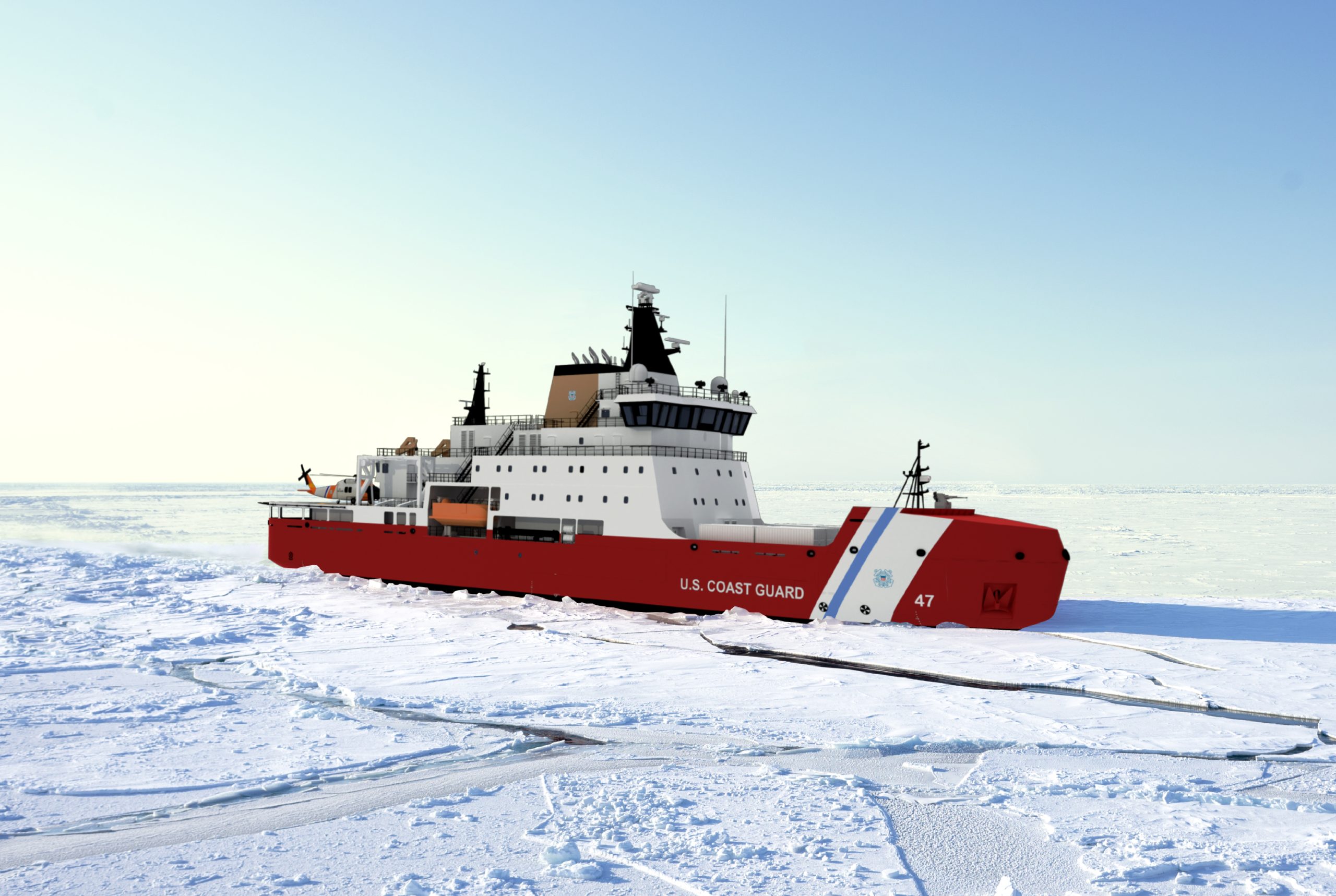
Bollinger Shipyards’ new contract to build four Arctic Security Cutters, with a long-term plan for up to eleven vessels, represents a significant leap in America’s ability to operate year-round in extreme polar environments. These medium polar icebreakers, based on a robust Multi-Purpose Icebreaker design from Seaspan Shipyards and Aker Arctic Technology, will be constructed at Bollinger’s Houma, Louisiana shipyard, utilizing extensive Gulf Coast fabrication capacity. Their mission scope – including icebreaking, sovereignty enforcement, and maritime security – directly impacts the viability of future resource exploration and secure transport routes in the Arctic. As the polar ice cap recedes, vast untapped hydrocarbon reserves become more accessible, alongside shorter shipping lanes that could fundamentally alter global logistics and crude oil distribution. Investors should view this as a foundational step towards de-risking future energy projects in a region ripe with potential, albeit one requiring substantial upfront infrastructure and security investments.
Geopolitical Dynamics and Their Influence on Oil Market Volatility
The expansion of U.S. Arctic capabilities unfolds against a backdrop of complex geopolitical dynamics that directly influence oil markets. Increased access and operational capacity in the Arctic introduce new considerations for global energy supply chains and strategic competition. As of today, Brent crude trades at $90.22 per barrel, reflecting a modest 0.23% dip within a day range of $93.87-$95.69. WTI crude similarly sits at $86.67, down 0.86%, fluctuating within its daily range of $85.50-$87.49. While these daily movements appear relatively stable, they contrast sharply with the significant volatility observed recently, where Brent experienced a nearly 20% decline from $118.35 on March 31st to $94.86 just yesterday. This sharp correction underscores the market’s sensitivity to supply-demand imbalances and geopolitical shifts. The long-term implications of Arctic access, including potential new supply sources and alternative shipping routes, could either mitigate or exacerbate future price swings, adding a strategic layer to how investors assess geopolitical risk premiums in the global oil market.
Beyond the Barrel: Investment Opportunities in Arctic Infrastructure and Logistics
When considering the investment implications of expanded Arctic access, it’s crucial for investors to look beyond direct hydrocarbon extraction. Our proprietary reader intent data reveals a keen interest in the future direction of WTI and end-of-year oil price predictions. While the long-term price trajectory of oil is subject to numerous variables, including global demand and OPEC+ policies, strategic developments like Arctic infrastructure are critical undercurrents. The construction of these icebreakers signals a commitment to enabling year-round operations, which will necessitate significant investments in supporting infrastructure: specialized port facilities, advanced navigation and communication systems, and robust logistics networks capable of operating in extreme conditions. This creates opportunities for companies in heavy construction, specialized maritime services, satellite communications, and even advanced materials science. Investors should evaluate firms positioned to benefit from this infrastructure build-out, recognizing that these ancillary industries often provide more stable, long-term returns compared to the inherent volatility of crude oil prices. The strategic value of secure Arctic passages for trade and resource transport could add a premium to these enabling technologies and services over the coming decades.
Navigating Future Market Signals and Strategic Planning
For investors focused on the immediate future, the coming weeks are packed with critical market signals that will shape short-term oil price movements, even as the long-term strategic game in the Arctic unfolds. Tomorrow, April 21st, the OPEC+ JMMC Meeting will provide insights into potential supply adjustments, followed by the EIA Weekly Petroleum Status Report on April 22nd, offering a snapshot of U.S. inventory levels. These immediate data points, along with the Baker Hughes Rig Count on April 24th and the EIA’s Short-Term Energy Outlook on May 2nd, will heavily influence market sentiment and price action. However, it’s vital for investors to integrate the strategic significance of expanding Arctic access into their forward-looking analysis. While the icebreakers won’t impact immediate supply, they lay the groundwork for future energy security, diversification of transport routes, and potential resource development. This long-term strategic advantage adds a unique dimension to risk assessment and opportunity identification, particularly for those looking to build resilient, future-proof portfolios in the evolving energy sector. Understanding how these macro-level geopolitical shifts intersect with routine market data is key to making informed investment decisions.