Geopolitical Tensions Ignite Volatility in Crucial Oil & Gas Chokepoint: The Strait of Hormuz
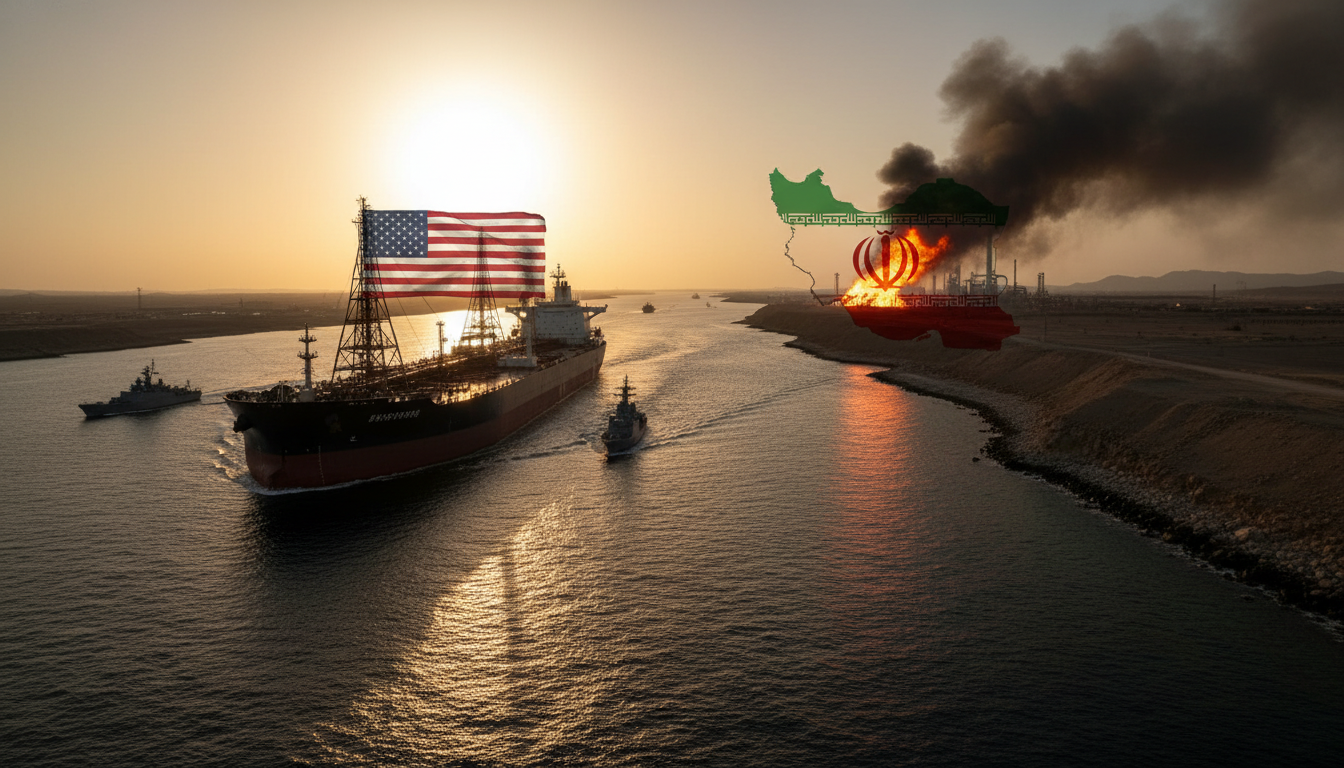
The global energy landscape remains gripped by significant uncertainty surrounding the Strait of Hormuz, a critical maritime passage that funnels a staggering one-fifth of the world’s crude oil and liquefied natural gas (LNG) exports. Recent developments suggest that Iran’s aspirations for controlling this vital waterway clash directly with the steadfast position of the United States, casting a long shadow over international shipping and the stability of global energy markets.
Following the abrupt cancellation of the latest round of US-Iran negotiations by President Donald Trump over the weekend, tensions have escalated. Secretary of State Marco Rubio minced no words in dismissing any Iranian proposition that would grant Tehran undue authority over the strait. His remarks underscored a core tenet of US foreign policy: the principle of free and unobstructed passage through international waters.
Iran’s Proposal Meets Firm US Rejection
A recent report indicated Iran had put forth a new proposal aiming to reopen the Strait of Hormuz and conclude the ongoing conflict, reportedly deferring more intricate discussions concerning its nuclear program. This initiative, however, failed to sway Washington. When pressed on the matter, Secretary Rubio unequivocally stated that any notion of Iran dictating which vessels may transit the strait or imposing any form of levy or toll is utterly unacceptable to the United States.
Secretary Rubio emphasized that an “open” strait, as defined by Iran, could not involve mandatory coordination with Tehran, seeking its explicit permission, or the payment of fees under implied threat. He articulated clearly that the US would not normalize—nor could it tolerate—a framework in which Iran unilaterally determines access to an international waterway and levies charges for its use. Such a scenario, from Washington’s perspective, is tantamount to an illegitimate claim over a global trade artery.
The Strait of Hormuz: A Bottleneck with Global Repercussions
The strategic importance of the Strait of Hormuz cannot be overstated. As the conduit for a substantial portion of global energy supplies, its disruption sends immediate and profound ripples through commodity markets. Since the US and Israel launched military actions against Tehran in late February, effectively closing the strait, market volatility has surged. While initial threats from Iran precipitated the closure, the US has since enforced its own naval blockade, preventing vessels with suspected Iranian links from traversing the channel.
Despite a general ceasefire holding since early April, the prolonged closure of this indispensable chokepoint has had a dramatic effect on global energy prices. Investors have witnessed a sharp escalation in crude oil benchmarks and LNG spot prices, reflecting the inherent supply risk. The strait, which functioned as a normal, unobstructed passage prior to the recent conflict, has become a central and contentious issue in US-Iran negotiations, mediated by Pakistan. A previous round of talks in Islamabad concluded without any meaningful resolution, highlighting the deep chasm between the two sides.
Failed Negotiations and Mounting Pressures
The recent breakdown in diplomatic efforts, culminating in President Trump instructing his son-in-law Jared Kushner and special envoy Steve Witkoff to forgo another trip to Pakistan for planned weekend talks, signals a lack of immediate progress. This diplomatic stalemate further fuels uncertainty for energy investors, who must price in the continued risk of supply chain disruptions and elevated operational costs.
The ongoing conflict and the resulting surge in US domestic gasoline prices have created significant political challenges for the Trump administration. Public dissatisfaction over fuel costs adds another layer of complexity to an already fraught geopolitical situation. Furthermore, the war has strained alliances with European nations, who, while grappling with their own energy crises, have largely sought to avoid direct involvement in the conflict.
International Concerns and the Threat to Global Trade
The international community is acutely aware of the dangers posed by any attempt to privatize or militarize the Strait of Hormuz. German Chancellor Friedrich Merz, in unusually frank comments, suggested that Iran’s leadership had demonstrated considerable skill in negotiations, potentially leaving the US in a difficult position. These remarks underscore a broader international concern regarding the effectiveness of diplomatic efforts and the potential for a prolonged standoff.
At a dedicated session of the United Nations Security Council, French Foreign Minister Jean-Noël Barrot delivered a stark warning about the implications of allowing Iran to impose tolls or solicit bribes for passage. Barrot cautioned that such a precedent would fundamentally undermine the principles of free navigation, transforming vital straits into militarized corridors. He painted a grim picture of global trade being held hostage, entire regions becoming isolated, and the world potentially “asphyxiated” by lawlessness and the dominance of brute force. For investors, this translates into an increased geopolitical risk premium across all sectors reliant on maritime trade, from shipping companies to commodity producers and end-users.
Investment Implications: Navigating Uncertainty
For investors focused on the oil and gas sector, the ongoing crisis in the Strait of Hormuz necessitates a careful reassessment of portfolio exposure. The persistent closure and the specter of continued geopolitical tension suggest sustained volatility in crude oil and LNG prices. Companies with significant shipping interests or those heavily reliant on Middle Eastern energy supplies face heightened operational risks and potential margin compression.
Conversely, energy producers in less volatile regions or those benefiting from alternative supply routes might see increased demand. Furthermore, the emphasis on energy security could accelerate investments in renewable energy sources and domestic production capabilities in consuming nations. As negotiations remain stalled and the US maintains its firm stance on freedom of navigation, the Strait of Hormuz will continue to be a primary driver of risk and opportunity in the global energy markets for the foreseeable future.