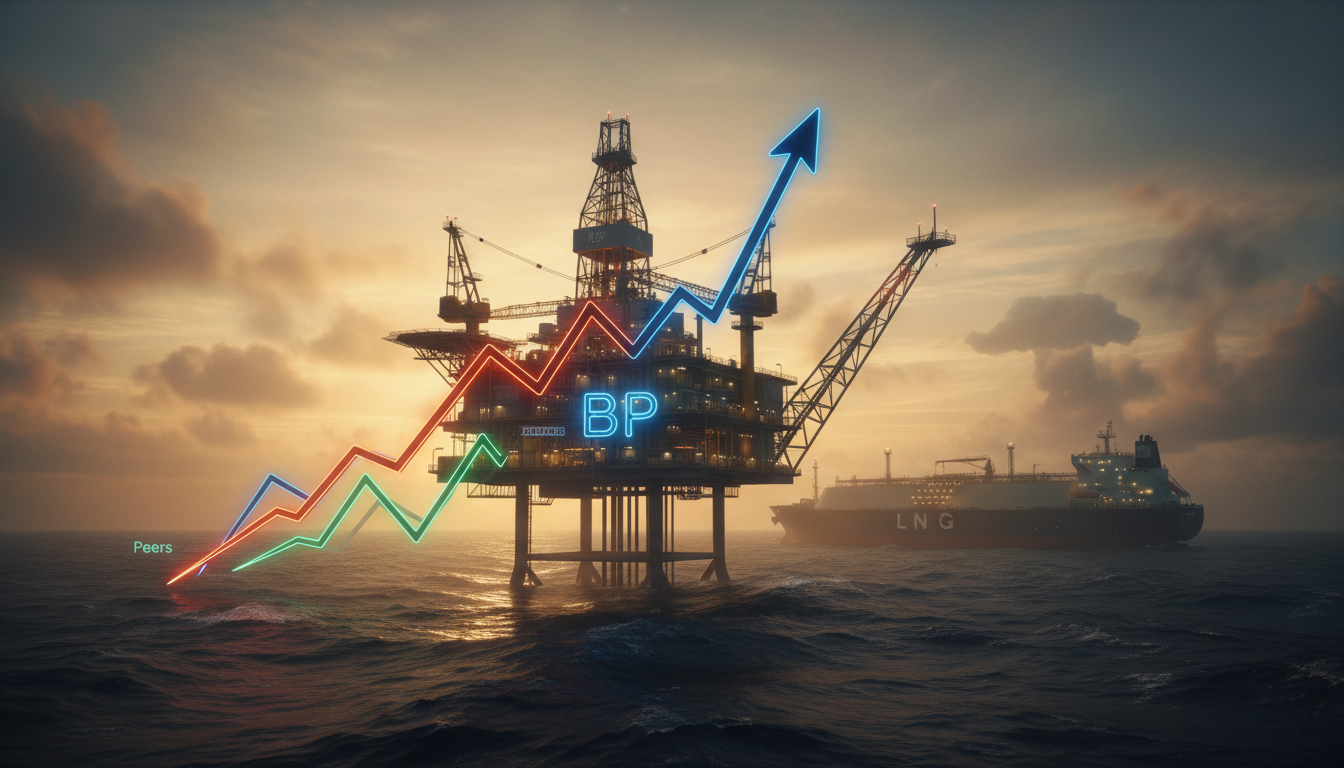
Geopolitical Turmoil Reworks Supermajor Valuations: BP Ascends, ExxonMobil Stumbles
The intensifying geopolitical landscape, particularly the heightened tensions affecting critical Middle Eastern oil and gas supply routes, has dramatically reshaped the investment narrative for the world’s largest integrated energy companies. In a notable reversal of fortunes, BP, long perceived as a laggard among its peers, has emerged as a surprising frontrunner in recent market performance. Conversely, ExxonMobil, a consistent outperformer since 2020, now faces headwinds, posting the weakest stock performance among the supermajors since the latest phase of regional instability began.
While the market has witnessed a significant surge in crude oil futures, rocketing approximately 45% since February 28, the share prices of the five major integrated oil and gas giants—ExxonMobil, Chevron, BP, Shell, and TotalEnergies—have struggled to mirror this dramatic uptick in commodity values. This disconnect highlights underlying investor concerns and sector-specific challenges, even as the broader energy commodity market signals scarcity and elevated risk premiums.
BP’s Strategic Pivot Pays Dividends Amidst Volatility
Amidst this backdrop of market turbulence, BP has delivered an impressive performance, with its shares climbing roughly 20% since the close of February. This rally marks a significant turnaround for the UK-based energy titan, which has grappled with investor skepticism and underperformance for years. BP’s earlier aggressive pivot towards renewable energy initiatives, often referred to as its “green strategy” from 2020, drew considerable criticism from shareholders who felt it diluted focus from the lucrative core upstream business, contributing to rising debt and a lagging share price even as oil prices surged in 2022-2023.
The discontent reached a crescendo with activist investors, notably Elliott Investment Management, vocally demanding a strategic re-evaluation. Under intense pressure, BP announced a significant recalibration of its long-term vision last year. This pivotal shift involved scaling back investments in lower-carbon ventures to prioritize and boost its conventional oil and gas production—a move designed to maximize returns from its established hydrocarbon assets. This renewed commitment to its foundational business appears to be resonating with investors, especially as global supply concerns escalate.
The company’s strategic agility in a volatile market is further underscored by its own projections. BP anticipates booking an “exceptional” oil trading result for the first quarter of 2026, a direct consequence of the extreme market fluctuations witnessed since the onset of the current regional hostilities. Investors eagerly await its official Q1 earnings report, scheduled for Tuesday, which is expected to provide concrete evidence of this enhanced trading performance.
ExxonMobil Faces Headwinds from Geopolitical Exposure
In stark contrast to BP’s resurgence, ExxonMobil, a long-standing titan of the industry known for its operational excellence and shareholder returns, has seen its shares decline by approximately 2% since the escalation of regional tensions. This underperformance can be directly attributed to its significant exposure to the volatile Middle East region. A substantial portion of ExxonMobil’s oil and gas production, coupled with its interests in Qatari liquefied natural gas (LNG) volumes, finds itself geographically constrained. These critical energy supplies are largely reliant on passage through the Strait of Hormuz, a choke point that has become increasingly fraught with geopolitical risk, effectively trapping volumes within the region.
For an investor-focused perspective, ExxonMobil’s predicament highlights the critical importance of geopolitical risk assessment in energy portfolios. While the company boasts a diversified global footprint, its strategic assets in the Middle East and its critical role in Qatar’s burgeoning LNG sector expose it directly to the vulnerabilities of key maritime transit routes. The inability to reliably move these high-value commodities out of the region due to security concerns creates supply chain bottlenecks and directly impacts investor sentiment, eroding the premium typically associated with its robust asset base.
Broader Implications for Energy Investors
The divergent paths of BP and ExxonMobil underscore a crucial lesson for investors navigating the complex energy landscape: strategic flexibility and geopolitical exposure are paramount. While a company’s long-term vision towards energy transition remains vital, the immediate realities of global supply and demand, influenced heavily by geopolitical events, can trigger rapid revaluations.
The fact that none of the supermajors have fully capitalized on the 45% surge in crude oil futures since February 28 suggests a cautious investor stance. This could be due to a multitude of factors, including regulatory pressures, environmental, social, and governance (ESG) considerations, and the inherent time lag between commodity price increases and their full realization in corporate earnings. However, the current environment has undeniably favored those companies that are either strategically pivoting back to their core strengths or those with less direct exposure to the most immediate supply disruption risks.
As the energy sector continues to grapple with the dual challenges of decarbonization and ensuring global energy security, investors must critically evaluate the nuanced strategies and regional exposures of their portfolio companies. The recent stock movements of BP and ExxonMobil serve as a potent reminder that in the volatile world of oil and gas investing, geopolitical stability and a clear, pragmatic strategic direction can dramatically influence shareholder value, creating both unexpected opportunities and significant downside risks.