Shell’s C$16.4 Billion Montney Bet: Reshaping its North American Energy Core
Shell plc is making a significant move to bolster its Canadian resource base, announcing an agreement to acquire ARC Resources Ltd. in a transaction valued at approximately C$13.6 billion in equity, escalating to roughly C$16.4 billion when accounting for debt. This strategic acquisition fundamentally expands Shell’s presence in Canada’s highly prolific Montney shale region, positioning the energy giant for substantial long-term oil and gas production growth.
For investors scrutinizing Shell’s portfolio trajectory, this deal signals a clear commitment to strengthening its upstream foundation. The integration of ARC Resources is projected to add an impressive 370,000 barrels of oil equivalent per day (boed) to Shell’s global production profile. Furthermore, the acquisition is set to expand Shell’s proven and probable reserves by an estimated 2 billion boe, reinforcing its resource base and providing a robust platform for sustained growth through the close of the current decade.
Strategic Integration: Deepening the Montney Foothold
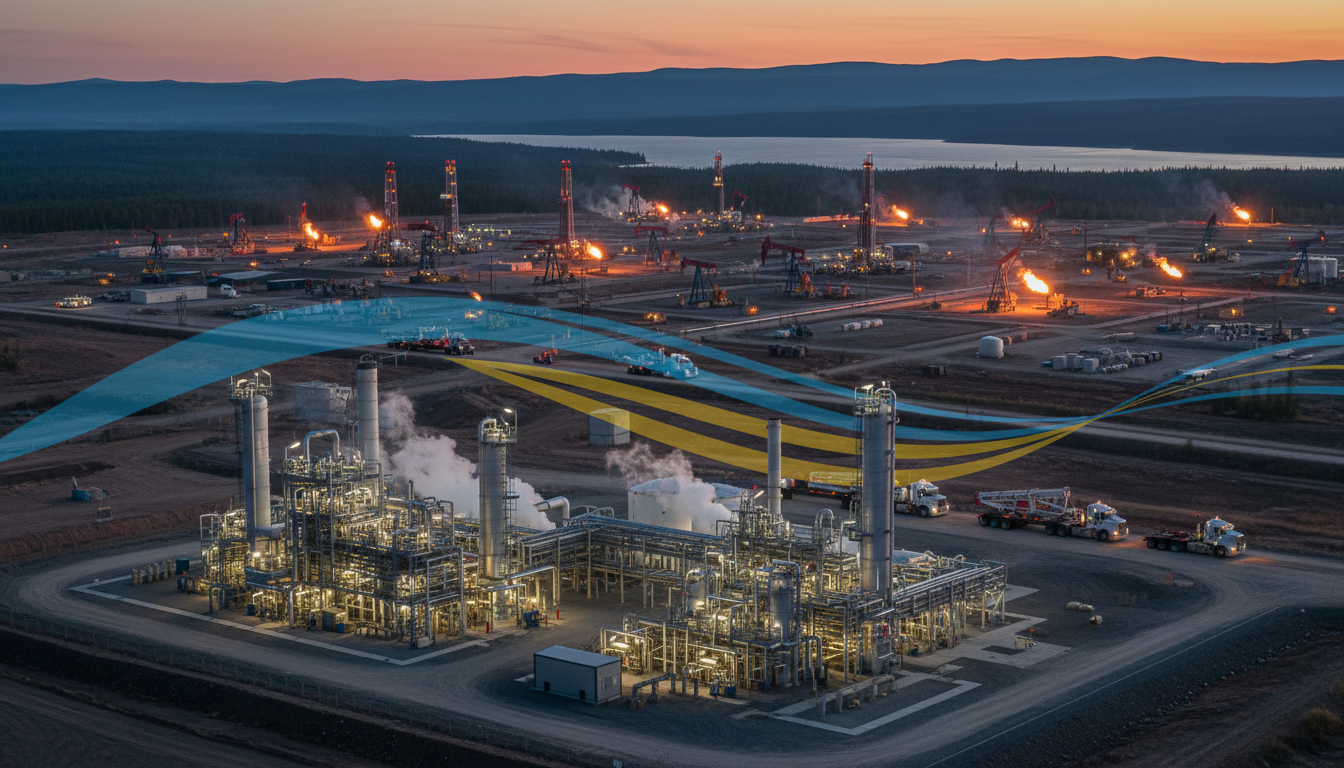
ARC Resources’ primary asset concentration lies within the Montney formation, spanning British Columbia and Alberta. This geological play stands as one of North America’s most dynamic and economically viable unconventional basins. The consolidation of ARC’s expansive acreage with Shell’s existing footprint in the Montney, notably its Groundbirch operations, creates a formidable synergistic entity.
This combined asset base holds particular significance due to its strategic linkage to the burgeoning global liquefied natural gas (LNG) market. Shell’s Groundbirch facilities are a key natural gas supplier to the ambitious LNG Canada project, a crucial export terminal poised to connect Canadian gas to international markets. The integration of ARC’s substantial gas production capabilities will undoubtedly enhance Shell’s ability to feed this vital export channel, underpinning its role in the global energy supply chain and tapping into strong demand for cleaner-burning natural gas.
Driving Growth and Optimizing Portfolio Performance
The acquisition is set to significantly uplift Shell’s production growth trajectory. The company now anticipates achieving a compound annual growth rate (CAGR) of approximately 4% through 2030, a direct reflection of the added scale and efficiency gained from the ARC Resources integration. This growth is meticulously aligned with Shell’s ongoing strategy to concentrate investments on low-cost, lower-emissions assets, aiming to enhance both operational efficiency and environmental performance within its conventional energy portfolio.
Wael Sawan, Shell’s Chief Executive Officer, underscored the strategic rationale behind the acquisition, stating, “ARC is a premier, cost-efficient operator within the Montney shale basin, perfectly complementing our existing Canadian operations. This transaction solidly establishes Canada as a pivotal ‘heartland’ for Shell.” This declaration highlights Shell’s intent to view its Canadian operations not merely as an extension, but as a central pillar of its global energy strategy, emphasizing the Montney’s long-term potential for shareholder value creation.
Deal Mechanics and Broader Industry Consolidation
Under the agreed terms, shareholders of ARC Resources are slated to receive a combination of cash and Shell shares for their holdings. This consideration structure reflects a premium to ARC’s recent trading levels, offering a compelling proposition for its investors. The successful completion of this landmark transaction is anticipated during the second half of 2026, contingent upon securing the requisite shareholder and regulatory approvals, a standard process for deals of this magnitude.
This significant acquisition by Shell serves as a potent indicator of the ongoing trend of consolidation sweeping across the North American shale landscape. Major energy players are actively seeking to optimize their portfolios, achieve greater economies of scale, and secure premium resources in core operating basins. Furthermore, the deal explicitly highlights the increasing strategic importance of Canadian natural gas reserves, particularly as global demand for LNG continues to surge, driven by energy security concerns and the transition away from higher-carbon fuels. Investors are keenly observing these consolidation efforts, recognizing their potential to reshape the competitive dynamics and long-term investment opportunities within the oil and gas sector.