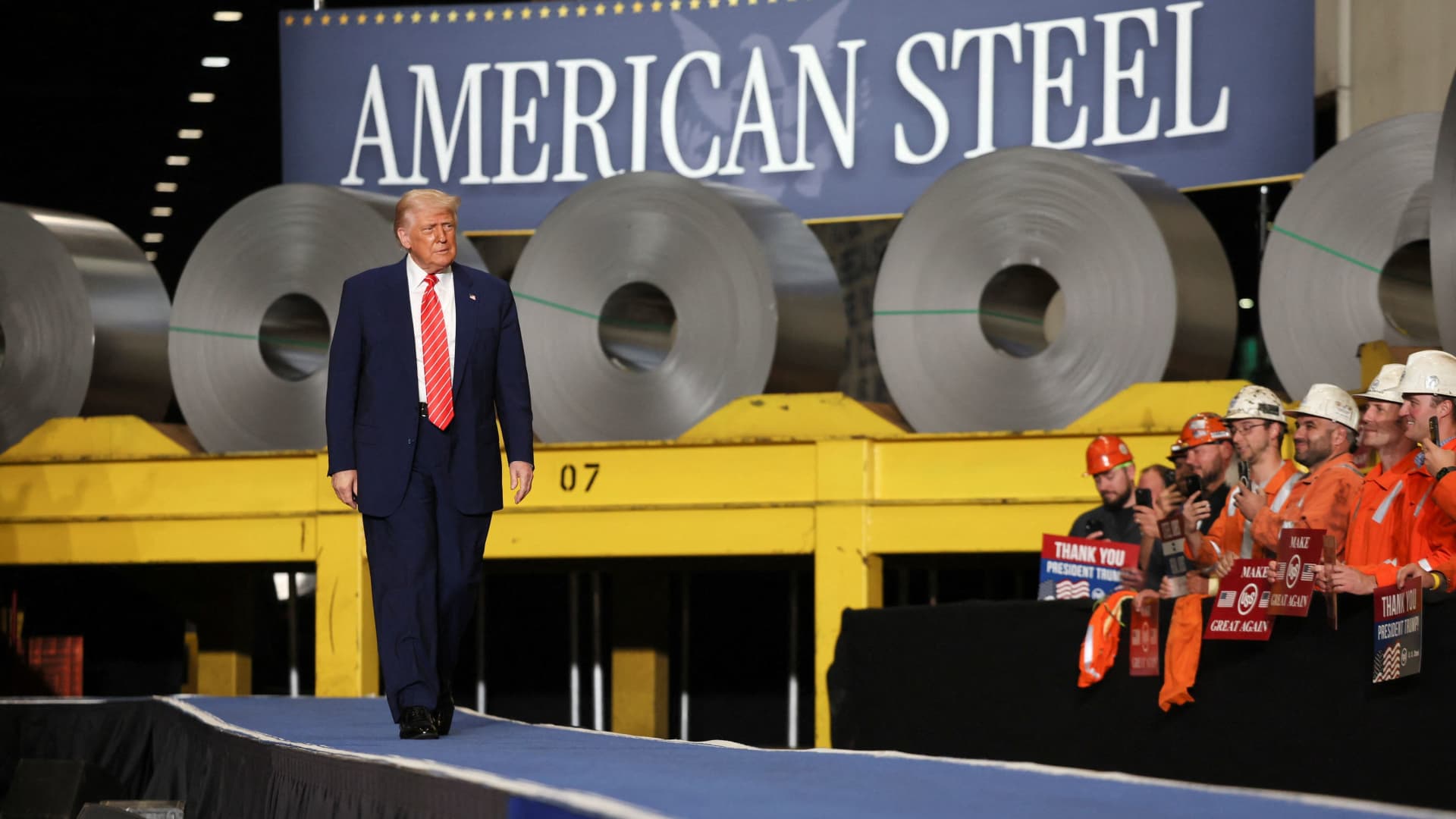
The recent appointments of Department of Commerce officials to oversee U.S. Steel under a “golden share” agreement, following its acquisition by Nippon, may seem like a development primarily for the steel industry. However, for astute energy investors, this move carries significant implications, underscoring a growing emphasis on industrial policy and domestic supply chain security that directly impacts the oil and gas sector. President Donald Trump’s designation of William Kimmitt as his representative to wield veto powers over key business decisions, and David Shapiro as a government director on the U.S. Steel board, signal a new era of state oversight in critical industries. This unprecedented level of government involvement in a major industrial player has immediate and long-term ramifications for the cost, availability, and strategic direction of essential materials underpinning energy infrastructure, from pipelines to drilling rigs. Understanding this dynamic is crucial for navigating an increasingly complex investment landscape where geopolitical considerations intersect with market fundamentals.
The Golden Share’s Echo in Energy Infrastructure
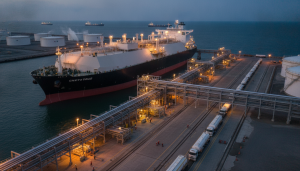
The “golden share” agreement, detailed in a November 20 letter from President Trump to U.S. Steel executive Scot Duncan, grants the President veto rights over critical operational decisions. These include preventing the company from changing its name, relocating its headquarters from Pittsburgh, moving operations outside the U.S., or, most significantly for the energy sector, closing U.S.-based production facilities. This direct government influence over a major steel producer has a tangible impact on the oil and gas industry. Steel is a fundamental input for nearly every facet of energy production and transportation – from the high-grade pipe required for subsea pipelines and LNG terminals to the structural components of drilling platforms and refinery expansions. Ensuring stable, domestically controlled steel production capacity inherently strengthens the energy supply chain. For investors, this translates into potentially reduced exposure to international supply disruptions, trade disputes, and currency fluctuations for a vital commodity. While guaranteeing domestic supply, it also introduces a layer of political consideration into pricing and production decisions that warrants close monitoring.
Navigating Volatile Markets: A Macro Backdrop
This increased governmental oversight in a key industrial sector unfolds against a backdrop of considerable volatility in the energy markets. As of today, Brent crude trades at $90.55 per barrel, reflecting an 8.89% decline from its opening, with a day range between $86.08 and $98.97. Similarly, WTI crude has seen an 8.88% drop to $83.07, fluctuating between $78.97 and $90.34. Gasoline prices have also dipped, now at $2.93, down 5.18% from the open. This sharp intraday correction comes after a recent period of sustained pressure, with Brent having declined by $14, or 12.4%, over the past 14 days, from $112.57 on March 27 to $98.57 yesterday. Such market swings highlight the interconnectedness of global supply, demand, and geopolitical developments. For energy companies heavily reliant on steel inputs, stable domestic sourcing, even with government oversight, could mitigate some of the supply-side risks that exacerbate cost pressures during periods of market uncertainty. Investors must weigh the benefits of enhanced supply chain security against the potential for politically influenced operational decisions within U.S. Steel.
Upcoming Catalysts and Investor Concerns
The immediate horizon is packed with events that will significantly shape energy market dynamics, all while the implications of the U.S. Steel governance structure continue to evolve. This week, the OPEC+ Joint Ministerial Monitoring Committee (JMMC) meets today, April 17th, followed by the full OPEC+ Ministerial Meeting tomorrow, April 18th. These gatherings are critical for assessing global crude supply postures, with our proprietary reader intent data indicating a strong investor focus on current OPEC+ production quotas and predictions for the price of oil per barrel by the end of 2026. The decisions emerging from these meetings will directly influence crude prices, impacting profitability across the upstream sector and informing strategic planning for midstream and downstream players. Further insights into U.S. supply and demand will come from the API Weekly Crude Inventory reports on April 21st and 28th, followed by the EIA Weekly Petroleum Status Reports on April 22nd and 29th. These inventory figures are key indicators of market balance. Additionally, the Baker Hughes Rig Count, scheduled for April 24th and May 1st, will offer a pulse check on drilling activity and future production capacity. Against this backdrop, the U.S. government’s direct involvement in U.S. Steel reinforces a broader policy trend towards domestic industrial strength, a factor that energy investors must now integrate into their supply chain and capital expenditure models when forecasting long-term project viability and profitability.
Strategic Implications for Energy Capital
For energy investors, the U.S. Steel golden share arrangement is more than an industrial curiosity; it represents a tangible shift in the risk-reward profile of critical inputs. On one hand, the government’s explicit commitment to maintaining U.S.-based production facilities provides a degree of certainty regarding domestic steel supply, potentially insulating energy projects from some of the volatility inherent in global trade. This could lead to more predictable project costs and timelines for infrastructure requiring substantial steel, such as new pipeline expansions, LNG export terminals, or refinery upgrades. On the other hand, the presence of government-appointed officials with veto power introduces a new dimension of political risk. While designed to safeguard national interests, these powers could, in theory, influence commercial decisions, potentially impacting steel pricing or allocation in ways that prioritize national policy over pure market economics. Energy companies and their investors must now factor this governmental oversight into their strategic planning, evaluating not just market fundamentals but also potential policy directives that could affect their access to or cost of essential materials. Companies with robust domestic supply chain strategies may find themselves better positioned, while those heavily reliant on international steel markets might face indirect pressure to consider more localized sourcing, aligning with the broader push for industrial self-reliance.