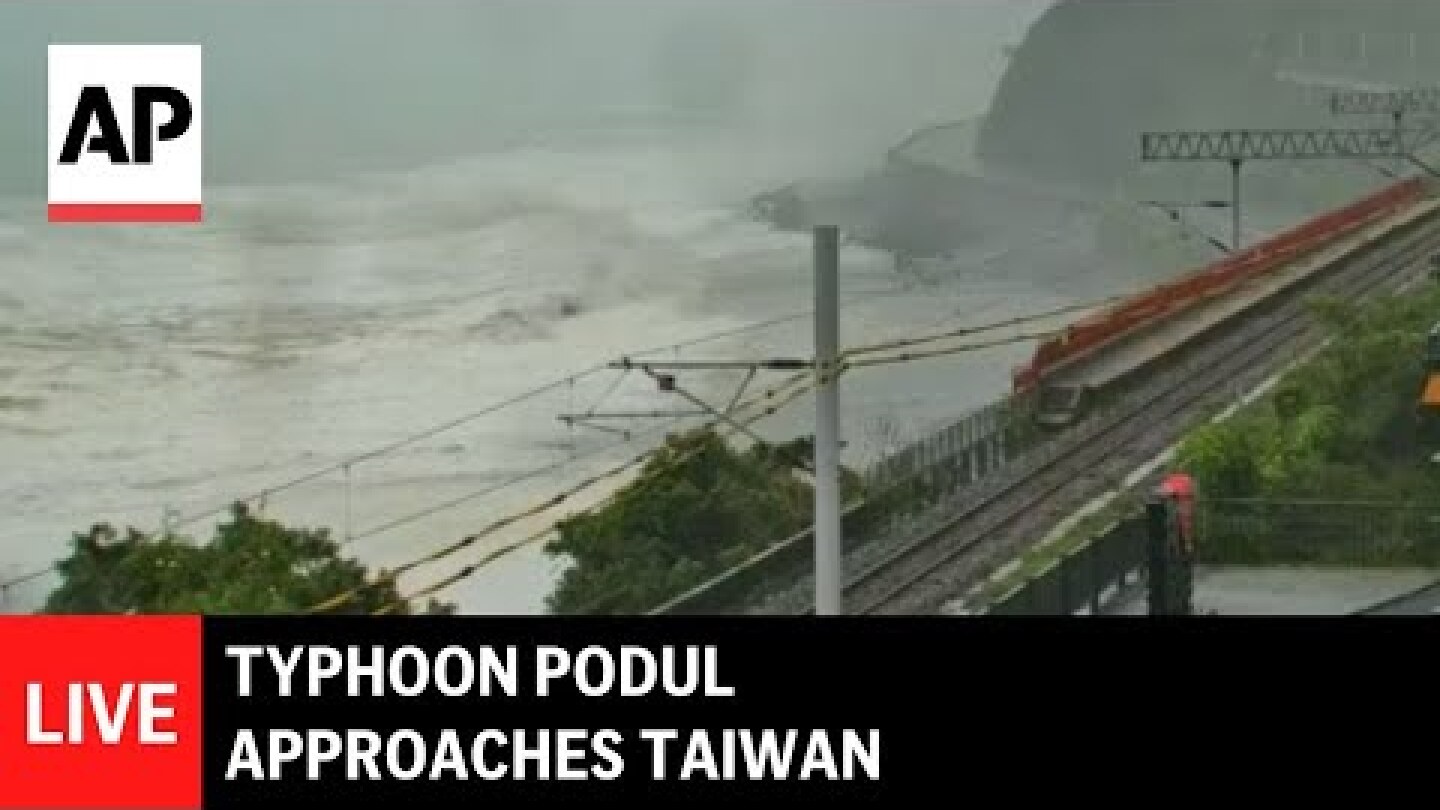
Typhoon Podul’s landfall in Taiwan on Wednesday presents a fresh variable for energy investors, raising immediate concerns about crude and liquefied natural gas (LNG) shipping through the critical Taiwan Strait. While the storm’s path primarily impacts the southern third of the island, far from the capital Taipei and its main international airport, its westward trajectory towards the Strait and mainland China introduces potential disruptions to one of the world’s busiest maritime arteries. For investors navigating a complex global energy landscape, understanding the ripple effects of such events, even seemingly localized ones, is crucial for assessing supply chain resilience and price stability in a market already sensitive to geopolitical and logistical pressures.
Crude & LNG Shipping: A Vulnerable Chokepoint Re-emphasized
The immediate aftermath of Typhoon Podul highlights the inherent vulnerabilities in global energy shipping lanes. Measuring 120 kilometers across, the storm is moving across the southern third of Taiwan at approximately 36 kilometers per hour, heading directly towards the Taiwan Strait. This vital waterway serves as a key passage for crude oil tankers and LNG carriers moving from the Middle East, Africa, and Australia to major consumption hubs in China, Japan, and South Korea. Even minor delays or rerouting necessitated by severe weather can have cascading effects on delivery schedules and freight costs.
As of today, Brent Crude trades at $99.24, marking a notable 4.54% increase within the day’s range of $94.42 to $99.84. Similarly, WTI Crude has seen a 3.29% rise to $91.03, within its daily range of $87.32 to $91.82. While this single weather event may not be the sole driver of today’s upward movement, it certainly contributes to a market sentiment already alert to supply chain risks. The 14-day trend for Brent, which saw a significant decline from $108.01 on March 26th to $94.58 on April 15th (a 12.4% drop), indicates a market ready to react to any perceived tightening of supply or logistical bottlenecks. The disruption in the Taiwan Strait, even if temporary, introduces an element of uncertainty that can add a risk premium, effectively halting or reversing recent downward price momentum.
Forward Outlook: Navigating Upcoming Events Amidst Logistical Risks
Looking beyond the immediate impact of Typhoon Podul, investors must consider how such logistical disruptions intersect with a packed calendar of critical energy events. The coming fortnight includes several pivotal dates that will shape market sentiment and potentially amplify the effects of supply chain jitters. The OPEC+ Joint Ministerial Monitoring Committee (JMMC) meeting on April 18th, followed by the Full Ministerial Meeting on April 20th, are particularly significant. Any decisions regarding production quotas will be scrutinized against a backdrop of potential shipping delays in Asia. Should OPEC+ opt for tighter supply, the market’s sensitivity to disruptions in key transit zones like the Taiwan Strait will be heightened, potentially leading to sharper price reactions.
Furthermore, weekly inventory reports, including the API Weekly Crude Inventory on April 21st and 28th, and the EIA Weekly Petroleum Status Report on April 22nd and 29th, will provide crucial insights into global supply-demand balances. If shipping delays in Asia lead to slower deliveries or localized stock draws, these reports could show unexpected inventory shifts, further influencing crude and product prices. The Baker Hughes Rig Count on April 17th and 24th, while focused on upstream activity, also contributes to the broader supply picture. In an environment where every barrel and every delivery route counts, the added uncertainty from a major typhoon in a strategic region like Taiwan creates a complex interplay of factors that investors must diligently monitor.
Addressing Investor Concerns: LNG Spot Prices and Brent Forecasts
Our proprietary reader intent data reveals a keen focus among investors on “What’s driving Asian LNG spot prices this week?” and requests for a “base-case Brent price forecast for next quarter.” Typhoon Podul offers a direct, albeit transient, answer to the former and a critical input for the latter. The Taiwan Strait is a major conduit for LNG shipments, and any weather-related delays or rerouting directly impacts the availability of LNG at destination ports, potentially driving up spot prices in the Asian market. LNG carriers are large vessels, and navigating severe weather requires significant caution, often leading to slower speeds or longer routes around affected areas. This added transit time translates to increased freight costs and delayed deliveries, tightening the immediate supply picture for an already dynamic commodity.
For Brent price forecasts, the typhoon introduces a short-term risk premium. While the market often quickly discounts transient weather events, the cumulative effect of such disruptions in strategically important chokepoints adds to the overall risk profile of global oil supply. Our base-case Brent forecast for the next quarter must now factor in the recurring nature of such events in the Asia-Pacific region. The potential for disruptions, even if localized to specific regions like Taiwan’s south and east coast (Taitung, Tainan, Kaohsiung, Chiayi, Yunlin, Pingtung, Hualien, Penghu), underscores the fragility of global supply chains. Investors should consider the implications for maritime logistics companies and energy firms with significant exposure to Asian markets when refining their quarterly outlooks.
Beyond Energy Shipping: Broader Economic Implications
While the immediate focus for energy investors is on shipping, it’s worth noting the broader economic implications within Taiwan. The storm, which made landfall in Taitung county, is expected to bring heavy rains, threatening further damage to agriculture. This comes after central and southern Taiwan were “badly hit by heavy rains in recent weeks,” causing “severe damage to crops” and “knocking out electricity to rural areas that took weeks to repair.” Such compounding events highlight the fragility of local infrastructure and economies in the face of extreme weather.
Though not directly related to crude or LNG prices, these regional impacts can indirectly influence energy demand for recovery efforts or reduce overall economic activity, which in turn affects industrial energy consumption. For diversified investors, understanding the resilience of local economies to such natural disasters provides a broader context for evaluating the stability of the regions that host critical energy infrastructure and transit routes. The delayed or canceled flights, even if a dozen, also reflect the immediate operational challenges that disrupt various sectors, underscoring the interconnectedness of global supply chains and economic activity.