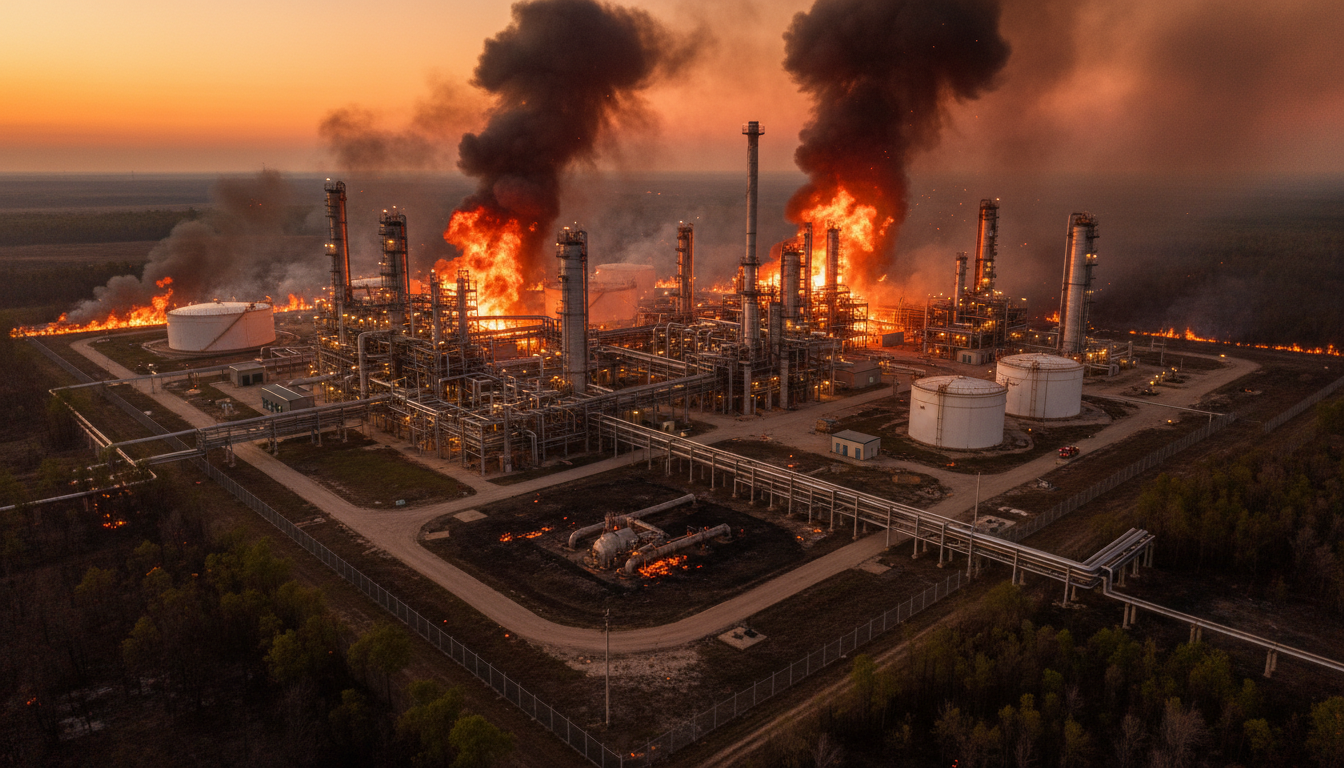
North American wildfires are demonstrating an alarming shift in behavior, now routinely extending their destructive reach through periods previously considered safe. This prolonged activity presents significant, evolving risks for investors, impacting everything from energy infrastructure and commodity markets to insurance stability and long-term asset valuations.
A new analysis reveals that weather conditions conducive to wildfires across North America have surged by an alarming 36% over the past five decades. This isn’t just about more fires; it’s about fires burning hotter and longer, a direct consequence of human-induced climate shifts fostering increasingly arid environments. The study, published in Science Advances, underscores how this phenomenon is eliminating the natural overnight reprieve that once aided firefighting efforts. What was once a nightly slowdown, if not outright cessation of flames due to falling temperatures and rising humidity, is now a less frequent occurrence, amplifying the operational challenges and financial exposures for numerous industries.
Regions are experiencing dramatic increases in potential burning hours. California, for instance, faces an additional 550 hours conducive to fire activity compared to the mid-1970s. Even more stark are the conditions in parts of southwestern New Mexico and central Arizona, where researchers observed up to 2,000 more annual hours ripe for wildfires – the most substantial increase identified across Canada and the United States. This expansion of the burn window, even without active fires, signals a growing hazard profile for energy assets and related infrastructure located in these vulnerable areas.
Escalating Risks from Nighttime Fire Activity
The escalating intensity of night-time fires carries immense implications for asset protection and emergency response costs. The devastating Lahaina, Hawaii inferno in 2023, which ignited at 12:22 a.m., serves as a stark reminder of fires that surge overnight. Similar patterns were observed in Alberta’s Jasper fire in 2024 and the Los Angeles fires of 2025. These incidents highlight the increased difficulty and danger for emergency crews, leading to higher suppression costs and prolonged business interruptions, translating directly into financial strain for affected companies and communities, including those with substantial investments in regional infrastructure.
Beyond extended daily burning cycles, the calendar itself is expanding. The number of days featuring fire-prone weather has jumped by 44% over the last half-century, effectively adding 26 additional high-risk days annually. This prolonged fire season directly translates to extended periods of operational risk for sectors heavily invested in land-based assets, from timber and agriculture to critical energy transmission lines and processing facilities, necessitating a re-evaluation of risk models and operational contingencies.
Experts attribute this perilous shift primarily to warmer, drier nighttime conditions, often exacerbated by elevated wind speeds. Xianli Wang, a fire scientist with the Canadian Forest Service and co-author of the study, emphasized that traditional fire behavior, where flames diminish or halt overnight, is becoming obsolete under these extreme hazard conditions. The warming atmosphere, Wang warns, suggests an worsening trajectory for these trends, necessitating proactive risk mitigation strategies from investors to protect asset valuations and ensure business continuity.
The financial and human costs associated with fires that fail to “sleep” are immense. John Abatzoglou, a fire scientist at the University of California Merced, notes that such relentless burning gives fires a significant head start each morning, making containment exponentially more difficult and expensive. He succinctly states that “nights aren’t what they used to be,” highlighting how widespread warming and persistent low humidity are keeping fires active round-the-clock, requiring greater resource deployment and elevating the risk profile for fire-fighting personnel and critical infrastructure alike.
Wildland firefighter Nicholai Allen, who founded a company focused on home fire prevention tools, underscores the extraordinary difficulties in battling blazes under cover of darkness. Beyond the reduced visibility, the erratic behavior of wildlife fleeing fires poses additional threats to crews, as evidenced by a colleague’s bear bite incident. These operational complexities contribute to higher incident costs, longer containment times, and increased potential for infrastructure damage, all of which weigh on investment returns and demand greater capital allocation for disaster response and mitigation efforts.
Understanding the Drivers of Extended Fire Seasons
The robust methodology underpinning these findings provides a solid basis for investor risk assessment. Researchers in Canada meticulously analyzed nearly 9,000 major fires from 2017 to 2023, utilizing weather satellite data and other tools to capture hourly atmospheric conditions, including humidity, temperature, wind, rainfall, and fuel moisture levels. This comprehensive dataset allowed them to construct a sophisticated computer model, correlating weather conditions with fire status, which was then applied to historical data across Canada and the United States spanning from 1975 to 2106. Such detailed analysis offers invaluable insights for long-term strategic planning for businesses susceptible to wildfire risk, particularly those in the energy sector with extensive land-based operations.
A critical factor driving this phenomenon is the disproportionate warming of nights compared to days. Scientists have long identified heat-trapping gases, predominantly from the combustion of fossil fuels such as coal, oil, and natural gas, as the cause. Increased cloud cover acts like a thermal blanket, absorbing and re-emitting heat back to Earth during the night. Data from the National Oceanic and Atmospheric Administration confirms this trend: since 1975, summer lowest nighttime temperatures in the contiguous U.S. have risen by 2.6 degrees Fahrenheit (1.4 degrees Celsius), a greater increase than the 2.2 degrees Fahrenheit (1.2 degrees Celsius) observed in daytime highest temperatures.
This nocturnal warming directly impacts humidity levels. Kaiwei Luo, a fire science researcher at the University of Alberta and lead author of the study, notes that nighttime humidity no longer recovers from daytime dryness as it once did. This sustained aridity creates a persistent high-risk environment, preventing natural dampening of fuels and maintaining conditions ripe for fire spread through the night, thereby extending the window of vulnerability for energy assets and natural resource investments.
Wildfire proliferation often correlates with drought conditions, particularly extreme drought. Xianli Wang explains that drought not only means drier air but also hotter, drier air that aggressively siphons moisture from the ground and vegetation, rendering fuel sources highly flammable. This creates a dangerous feedback loop where an already dry environment is further dehydrated by a warmer atmosphere, escalating the risk exponentially. Just as warmer nights impede human recovery during heatwaves, they prevent forests from regaining crucial moisture, making them more susceptible to ignition and prolonged burning, thereby increasing the “fuel load” and ease of fire propagation, and elevating long-term operational costs for affected industries.
Financial Impact and Investor Outlook
The financial implications of these extended and intensified fire seasons are starkly evident in the escalating burn areas. From 2016 to 2025, wildfires in the United States have, on average, consumed an area equivalent to the state of Massachusetts each year, totaling slightly over 11,000 square miles (28,500 square kilometers). This represents a staggering 2.6 times the average burn area recorded during the 1980s, according to the National Interagency Fire Center. Canada presents an even more dramatic picture, with its average land burned over the last decade surging to 2.8 times that of the 1980s, as reported by the Canadian Interagency Forest Fire Centre. These figures represent substantial losses in timber, real estate, and natural capital, directly impacting various investment portfolios and government spending priorities.
Jacob Bendix, a fire scientist at Syracuse University not involved in the research, described the study as a “sobering reminder” of climate change’s undeniable role in accelerating fire potential across nearly all fire-prone regions of North America. For investors, this translates into a fundamental re-evaluation of risk models and an increased imperative for climate resilience in portfolio construction. The ongoing transformation of wildfire behavior demands a dynamic approach to investment strategy, considering both the direct and indirect impacts on energy infrastructure, supply chains, insurance premiums, and the broader economic landscape.
The shift towards longer, more intense wildfire events, especially through the night, fundamentally alters the risk profile for North American energy and resource industries. Investors must recognize these changing dynamics, factor in higher operational costs, potential asset write-downs, and the increasing demand for climate adaptation solutions. Strategic investments in fire prevention technologies, resilient infrastructure, and sustainable land management practices will become increasingly critical for safeguarding returns in a warming world, offering both challenges and opportunities in the evolving market.