

Current Climate brings you the latest news about the business of sustainability every Monday. Sign up to get it in your inbox.
Whether on the campaign trail, at his rallies or at big speeches to the United Nations General Assembly or the World Economic Forum, Donald Trump rarely misses a chance to trash clean energy. His animus stretches back to at least 2012, when he waged a legal battle to stop a wind farm off the coast of Scotland that he didn’t like because it was visible from one of his golf courses.
He lost that fight, but as U.S. president, he’s signed executive orders blocking domestic offshore wind projects and pushed federal agencies to slow new clean energy projects on federal land, even as data centers and the electrification of everything push utility rates to nosebleed levels.
“Because of my landslide election victory, the United States avoided the catastrophic energy collapse which befell every European nation that pursued the Green New Scam – perhaps the greatest hoax in history,” he said in a meandering speech in Davos.
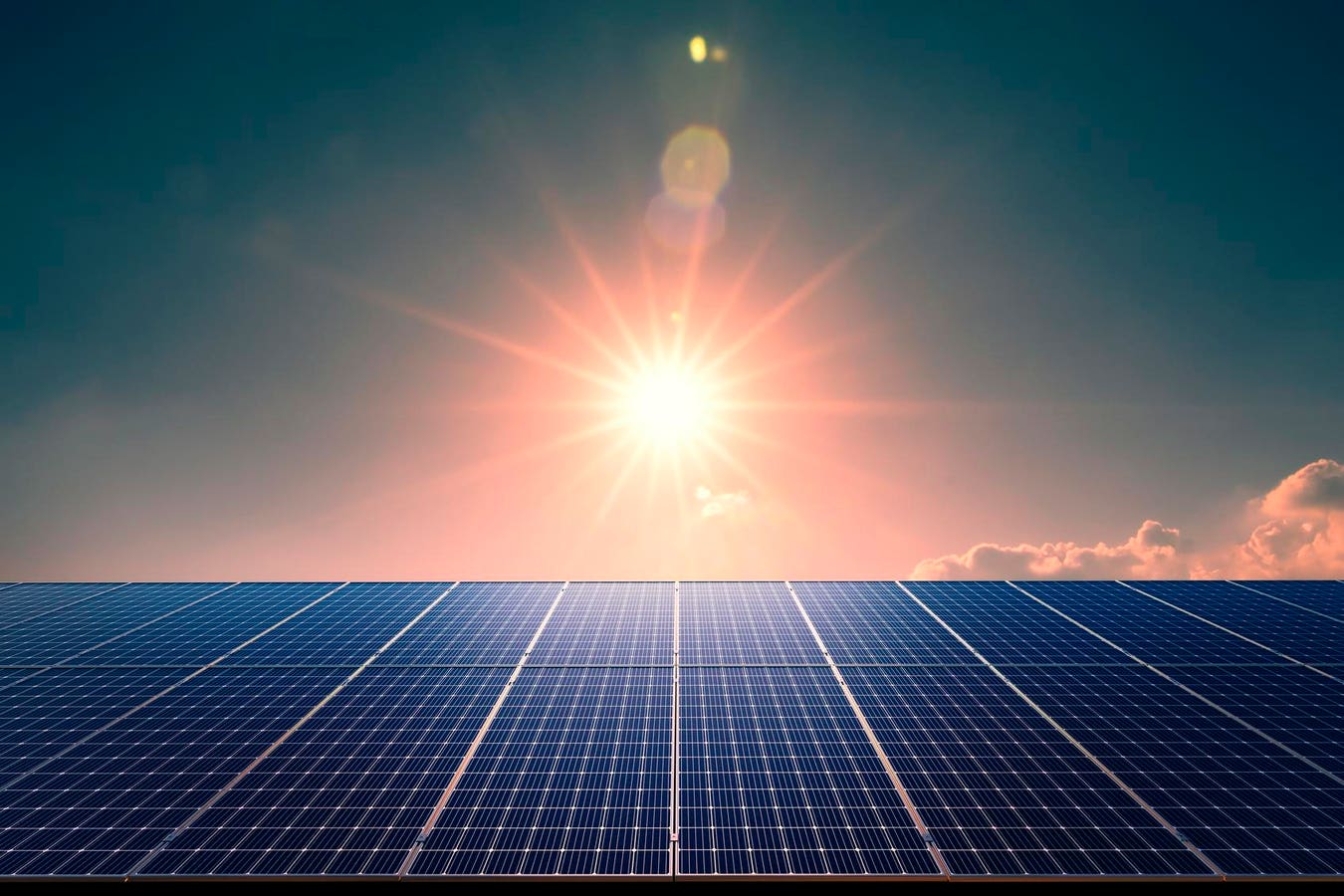
And yet, the fastest rising source of new electric power being added to the U.S. grid this year and next will be solar, with wind growing, though at a slower pace, according to the Energy Information Administration. Based on its short-term outlook, “utility-scale solar is the fastest-growing source of electricity generation in the United States, increasing from 290 [billion kilowatt-hours] in 2025 to 424 BkWh by 2027. Almost 70 gigawatts of new solar generating capacity projects are scheduled to come online in 2026 and 2027, which represents a 49% increase in U.S. solar operating capacity compared with the end of 2025.”
That’s because even though Trump’s administration has done much to gut Biden-era programs advancing clean energy, numerous big solar projects got in under the wire before federal incentives were eliminated and are coming online this year and next. Wind power, most heavily concentrated in the middle of the U.S., isn’t growing quite as quickly, likely increase only by 100 BkWh over the next two years, according to EIA.
Trump is pushing for more carbon energy extraction and consumption, and natural gas remains the biggest single source of electric power, though it’s forecast to dip below 40% over this year and next, while solar and wind combined continue to surpass coal at about 22% over the overall mix. Toss in nuclear and hydropower, and the portion of non-carbon U.S. electricity will likely top 45% this year, based on EIA projections.
However you define a scam, this sure looks like a helpful one.
The Big Read
Boston Globe via Getty Images
The Fastest Way To Power The Energy Crunch Is Hiding In Plain Sight
On a busy weekday in downtown Boston, a glass-and-steel tower quietly does something most buildings never do: it gives energy back. Schneider Electric’s future North American headquarters at Winthrop Center uses digital controls to consume 60% less electricity than a typical Boston office building, easing strain on a grid already buckling under the weight of data centers, electric vehicles, and electrified heating.
That matters more than it sounds. That’s because buildings, long treated as secondary concerns, may offer the quickest way to provide more usable electricity without constructing expensive new infrastructure.
As electricity demand surges, the country faces a growing “time-to-power” problem. AI-driven data centers, electrified transportation, and the push to decarbonize heating are colliding with a grid that was never designed to handle this level of load growth. New generation takes years to permit and build. Transmission takes longer. But roughly 30% of U.S. electricity flows into buildings—and about 40% of that is wasted.
The result is a massive pool of stranded capacity, already paid for and generated, quietly lost every day.
The scale is hard to ignore. Buildings consume roughly 4,000 terawatt-hours of electricity per year, equivalent to powering about 300 million homes. By comparison, data centers alone may require 300 to 400 terawatt-hours annually by 2030—the equivalent of 30 million homes. Even modest efficiency gains in existing buildings could materially change the energy equation.
Read more here
Hot Topic
Jason Few, CEO of FuelCell Energy, on its push to provide clean backup power for data centers
You’re working with Sustainable Development Capital to deploy up to 450 megawatts of fuel cell systems as backup power for data centers. How will that work?
The way to think about our technology is that we see ourselves as providing an on-site power solution to provide the power that a data center needs to run and deliver its value to its customers. We do that as a base flow technology, and with that, we can integrate other technologies, such as battery energy storage systems, as a way to provide the level of backup that’s needed in a data center, eliminating the need for things like a diesel backup generator, for example.
There’s a need to deliver power quickly, but I like to think about it more as there is a need to deliver the right power or better power. We deliver better power, is the way I think about it. It’s stable, it’s direct, it’s high-density power, and the fact that we generate power natively in DC power, as data centers move more toward wanting to take DC power directly, we are already where the puck is going, if you will. And we think that that gives us a great opportunity to deliver real value to the AI factory.
Are you also working in conjunction with battery systems?
There are multiple types of data centers. There are edge data centers. There are co-location data centers. And then what everyone is talking about now: AI data centers.
Across that spectrum, the power needs are very different. There may be a scenario where we’re providing power behind the meter to a data center and there’s not necessarily integration with other technologies per se, other than what you might find as your normal power electronics inside the data center.
What are the environmental benefits?
Historically, when data centers are buying power from the grid, one of the ways in which they create that level of reliability is they put in diesel backup generators. We think there’s a much better way to do it, and we deliver that kind of better power. We would deploy our platform on-site. We would then integrate technologies like a battery energy storage system to act as that backup power, and the way in which we would configure it, depending on the profile of that data center, we might also integrate something like [supercapacitors] to really handle dramatic changes in the load profile in the data center. And we could do that all in a way that delivers clean, baseload power that’s not producing SOx, NOx and other particulates like you would find with a diesel backup generator or a gas turbine or gas engine. And of course batteries aren’t emitting either.
We can deliver a really clean, integrated solution that meets the needs of that data center and do that in a distributed fashion, all on-site.
Are you using hydrogen as the base fuel or natural gas?
We can use natural gas. We can use biofuels, and we can use a hydrogen blend.
Today, if you think about hydrogen infrastructure across the United States, you don’t have the infrastructure built out to move hydrogen through a pipeline to deliver it across the country. We think over time, ultimately, the country will get there, but today this growth in the data centers is about how to deliver reliable base load or continuous power, and we can do that using natural gas without creating the emissions issues. Because we don’t combust the fuel, we don’t emit SOx, NOx, and other particulates. We don’t have moving parts, so we’re not making noise. A good analogy might be the air conditioner outside of your home in terms of a noise profile. We’re very power dense in terms of not needing a lot of land mass to deploy our technology at these data centers, or for that matter, a commercial and industrial customer that leverages our technology.
What Else We’re Reading
Yes, climate change can supercharge a winter storm. Here’s how (Grist)
A climate expert is working to restore climate risk scores deleted by Zillow (Inside Climate News)
Davos’ climate resignation: Once a showcase for climate ambition, the World Economic Forum is now talking more about coping with the damage (Politico)
America’s offshore wind farms get back to work after court victories (Canary Media)
‘Water bankruptcy’ — U.N. scientists say much of the world is irreversibly depleting water (Los Angeles Times)
Researchers find Antarctic penguin breeding is heating up sooner, and that’s a problem (Associated Press)
Mozambique floods force over 620,000 to flee as rising waters cut off communities (Reuters)
