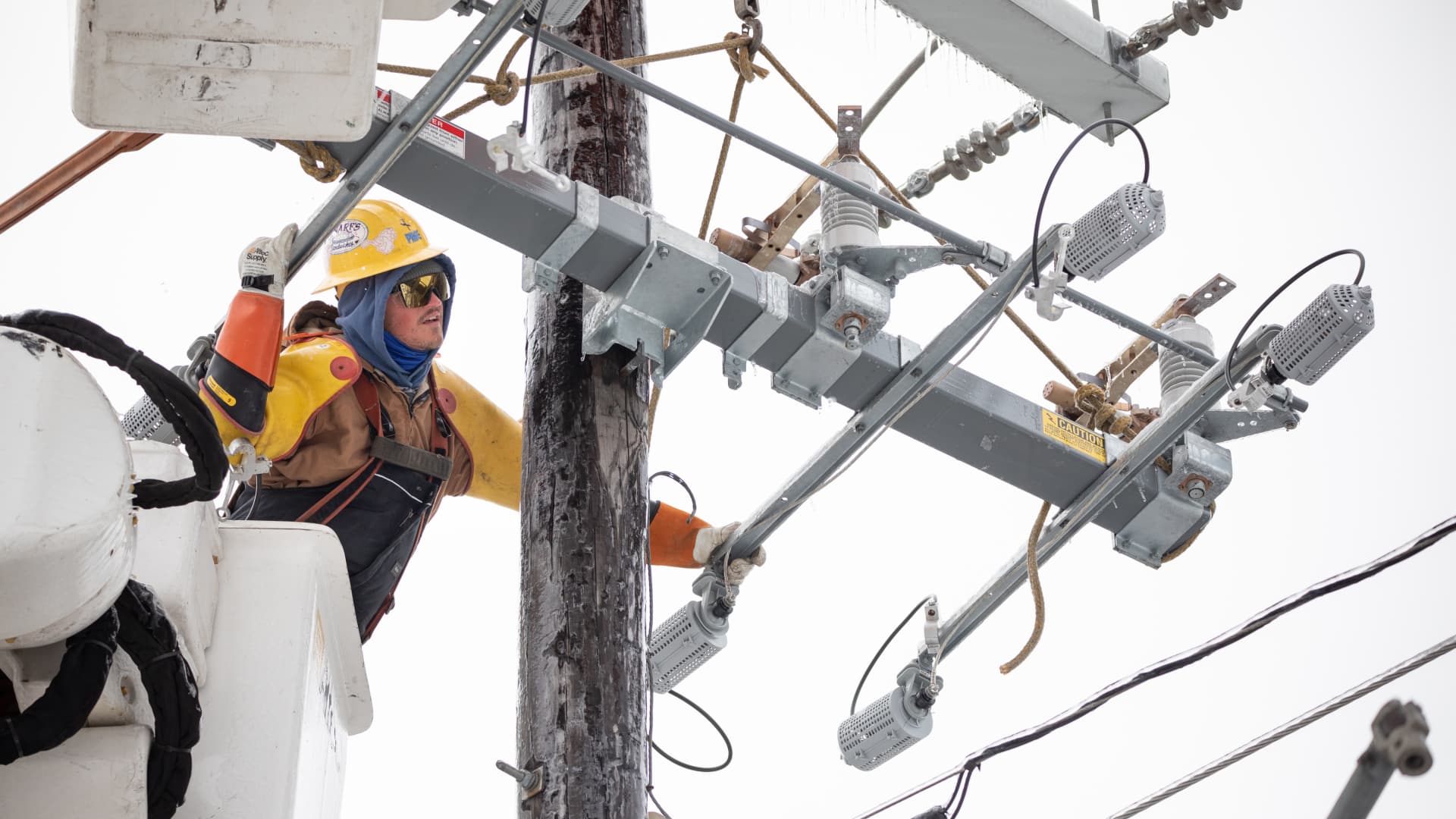
The energy landscape in Texas is undergoing a profound transformation, presenting both significant challenges and intriguing opportunities for investors in the oil and gas sector. As the Lone Star State continues its rapid industrial expansion, particularly with the proliferation of massive data centers, its electricity grid faces unprecedented stress. Our proprietary data pipelines and market intelligence reveal a burgeoning demand profile that, when coupled with the inherent vulnerabilities of extreme winter weather, could lead to critical supply shortfalls. This analysis delves into the escalating grid risks, current market dynamics, and forward-looking implications for energy investments, providing a unique perspective that leverages our first-party data and insights into investor sentiment.
Texas Grid Under Siege: The Data Center Demand Tsunami
Texas has long been a magnet for industry, thanks to its business-friendly policies and abundant natural resources. However, the latest wave of expansion, dominated by data centers and cryptocurrency mining operations, is reshaping its energy future. The sheer scale of new demand is staggering: as of this month, Texas’s grid operator, ERCOT, has received requests for grid connection totaling over 220 gigawatts (GW). This represents an astonishing 170% increase from the 83 GW of requests recorded just in January, highlighting the exponential acceleration of this trend. Critically, approximately 73% of these connection requests originate from data centers, including flagship projects like OpenAI’s Stargate campus in Abilene, which alone could demand up to 1.2 GW – equivalent to a large nuclear power plant.
This surge in demand, driven by round-the-clock energy consumption, compounds the risk of supply shortfalls, especially during extreme weather events. The North American Electric Reliability Corporation (NERC) recently issued a stark warning, noting that this strong load growth is significantly elevating winter electricity demand forecasts. Investors must recognize that while the Texas grid is generally robust under normal peak conditions, its vulnerability to severe freezing temperatures, reminiscent of Winter Storm Uri in 2021, is intensifying. During Uri, a catastrophic event that saw 20 GW of rolling blackouts and tragically claimed over 210 lives, the simultaneous spike in heating demand and widespread power plant failures, predominantly natural gas facilities, exposed critical weaknesses. The current trajectory suggests that future extreme weather events could test the grid even more severely, creating both urgent infrastructure needs and potential for strategic energy investments.
Navigating Volatility: Market Signals and Investor Sentiment
The localized energy challenges in Texas are unfolding against a backdrop of significant global energy market volatility. As of today, Brent crude trades at $90.7 per barrel, marking an aggressive 8.74% decline within a single trading session, with its range for the day spanning $86.08 to $98.97. Similarly, WTI crude has seen an 8.84% drop to $83.11, while gasoline prices have fallen 4.85% to $2.94. This sharp downturn follows a broader trend; our 14-day data indicates Brent crude has shed $14, or 12.4%, moving from $112.57 on March 27th to $98.57 just yesterday, April 16th, before today’s further depreciation. This immediate market turbulence reflects broader macroeconomic concerns and shifts in global supply-demand expectations, which naturally impacts investor confidence across the energy complex.
Our proprietary reader intent data shows that investors are keenly focused on future price trajectories, with a prominent question this week being: “What do you predict the price of oil per barrel will be by end of 2026?” While precise predictions are elusive, the current market movements underscore the inherent unpredictability. However, the escalating demand in regions like Texas for electricity, much of which is generated by natural gas, provides a crucial localized demand driver that could indirectly support natural gas prices and, by extension, influence the broader energy market. Investors are also actively inquiring about OPEC+’s current production quotas, signaling a clear understanding that global supply decisions remain a pivotal factor for future price stability. The confluence of these global market dynamics and localized demand surges creates a complex environment for energy sector investments, emphasizing the need for robust risk assessment and strategic positioning.
Investment Implications for Texas’s Energy Future
The immense demand from data centers presents a double-edged sword for the energy sector. On one hand, it guarantees a substantial and growing load, creating opportunities for new power generation and transmission infrastructure. Natural gas, as the dominant fuel for Texas power plants and a relatively clean-burning fossil fuel, stands to benefit significantly from this demand. Companies involved in natural gas exploration, production, and midstream infrastructure that can reliably supply gas to power generators, especially during peak winter demand, are positioned for growth. The challenge, however, lies in ensuring the resilience of this supply chain and the power plants themselves under extreme conditions. The NERC warning explicitly highlights the heightened risk of supply shortfalls, implying that significant capital investment is required not just for new capacity, but also for weatherization and hardening of existing assets.
Investment in grid modernization, energy storage solutions (like batteries), and distributed generation will also be critical. While Texas boasts abundant renewable energy resources, their intermittent nature necessitates reliable baseload and dispatchable power sources – primarily natural gas – to balance the grid, particularly when solar output drops or wind generation is low. For investors, this translates into opportunities within companies focused on gas-fired power generation, grid technology, and perhaps even advanced nuclear or carbon capture projects that could provide stable, high-capacity power to these energy-intensive data centers while addressing environmental considerations. The scale of the requested connections – 220 GW – suggests a multi-billion dollar investment landscape stretching well into the next decade.
Forward Outlook: Anticipating Winter 2026 and Beyond
Looking ahead, the energy market’s immediate focus turns to critical upcoming events that will shape the investment landscape. This week, the OPEC+ Joint Ministerial Monitoring Committee (JMMC) and the Full Ministerial Meeting are scheduled for April 17th and 18th, respectively. The outcomes of these meetings regarding production quotas will directly influence global oil supply and, consequently, broader energy prices, including the economics of natural gas. Any decisions that tighten global supply could push energy costs higher, impacting operating expenses for power generators and potentially influencing the cost of electricity for Texas’s burgeoning data center industry.
Beyond these immediate events, the weekly API and EIA petroleum inventory reports, along with the Baker Hughes Rig Count, provide continuous insights into supply-demand balances and drilling activity. These indicators are crucial for assessing the health of the upstream oil and gas sector, which directly feeds into the natural gas supply needed for Texas’s grid. For investors, the looming challenge of Winter 2026 demands proactive analysis. The rapid increase in data center load means that next winter, the grid will be under even greater pressure than in previous years. Policy decisions, regulatory frameworks, and expedited infrastructure projects initiated between now and then will be paramount. Companies that demonstrate robust operational resilience, invest in weatherization, and expand reliable generation capacity will likely outperform. The increasing intensity of demand in Texas underscores a growing systemic risk that requires urgent, strategic capital deployment across the entire energy value chain, from natural gas production to advanced grid management systems, making this a critical area for astute energy investors to monitor closely.


