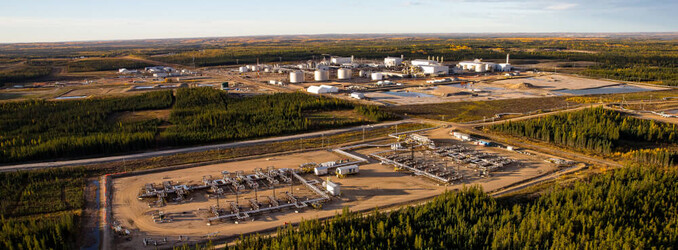
The Canadian oil and gas sector witnessed a significant development this week as Strathcona Resources Ltd. formally withdrew its unsolicited takeover bid for MEG Energy Corp. This decision, prompted by new terms in MEG’s revised agreement with Cenovus Energy Inc., marks a strategic retreat for Strathcona but highlights crucial dynamics in energy sector mergers and acquisitions. While Strathcona expressed disappointment, it asserted that its efforts ultimately led to a more equitable deal for MEG shareholders, allowing them greater participation in the company’s future growth. This outcome offers valuable lessons for investors tracking M&A activity and corporate governance in the evolving energy landscape.
Strathcona’s Strategic Retreat and M&A Dynamics
Strathcona’s decision to terminate its offer for MEG Energy, effective immediately, stems directly from what it described as unprecedented actions by MEG’s board of directors. The board’s endorsement of a revised arrangement with Cenovus Energy, coupled with waiving Cenovus’s standstill agreement and permitting the company to vote shares acquired after the record date, rendered Strathcona’s proposed acquisition unfeasible. Strathcona criticized the board’s repeated extensions of the Cenovus meeting date and the allowance of ongoing share purchases by Cenovus, deeming any improved offer “impractical and not in the best interests” of its own shareholders. This sequence of events underscores the complexities of hostile bids and the significant power wielded by incumbent boards in shaping M&A outcomes, particularly in the tightly-knit Canadian energy market. For investors, this case serves as a stark reminder of the due diligence required not just on asset quality, but also on corporate governance structures and board defenses when evaluating potential M&A targets.
Navigating Volatility: Crude Prices and Valuation Context
The backdrop to this M&A saga is a dynamic and increasingly volatile crude oil market. As of today, Brent crude trades at $90.38, reflecting a significant daily decline of 9.07% and moving within a day range of $86.08 to $98.97. Similarly, WTI crude has seen a sharp drop, now priced at $82.59, down 9.41% within a range of $78.97 to $90.34. This recent market turbulence is part of a broader trend; Brent crude has fallen by $22.4, or nearly 20%, from $112.78 just two weeks ago on March 30th. Such sharp movements inevitably influence valuation metrics and the appetite for large-scale acquisitions in the oil sands sector. A declining price environment can pressure margins for producers like MEG and Cenovus, potentially making an acquiring party more cautious about the premium it is willing to pay. Conversely, for a well-capitalized acquirer like Cenovus, a dip in valuations could present a more attractive entry point, while for a bidder like Strathcona, sustained high prices might have been necessary to justify a more aggressive, prolonged battle. The current price reality undoubtedly factored into Strathcona’s assessment of future returns and the viability of an improved offer.
Investor Focus and Upcoming Market Catalysts
Our proprietary data indicates that investors are grappling with significant uncertainty regarding future crude prices. A prominent question from our readership this week is, “what do you predict the price of oil per barrel will be by end of 2026?” This forward-looking sentiment highlights the critical role of macroeconomic factors and geopolitical events in shaping investment decisions. Closely related, investors are also seeking clarity on “What are OPEC+ current production quotas?”, recognizing the cartel’s outsized influence on global supply dynamics. These questions directly tie into a busy calendar of upcoming energy events. The OPEC+ Joint Ministerial Monitoring Committee (JMMC) meeting on April 19th, followed by the full OPEC+ Ministerial Meeting on April 20th, will be crucial. Any indications of changes to production quotas or shifts in member compliance could significantly impact supply expectations and price forecasts for the remainder of 2026. Beyond OPEC+, investors will also be closely monitoring the API Weekly Crude Inventory reports on April 21st and 28th, and the EIA Weekly Petroleum Status Reports on April 22nd and 29th, for insights into U.S. supply and demand fundamentals. The Baker Hughes Rig Count on April 24th and May 1st will further inform the market on North American production trends. These immediate catalysts will shape the short-term crude price trajectory, influencing investor sentiment towards oil sands plays and potential future M&A activity.
The Aftermath: Shareholder Value and Future M&A Landscape
While Strathcona’s bid has been terminated, its impact on the MEG-Cenovus arrangement is undeniable. Strathcona itself stated that its “efforts, along with those of fellow MEG shareholders, led to what it views as a more equitable deal” between MEG and Cenovus. This suggests a successful exertion of shareholder pressure, even without a consummated takeover. For MEG shareholders, the revised Cenovus deal, presumably enhanced due to competitive pressure, now proceeds without further disruption. This outcome reinforces the concept that shareholder activism, even from a failed bidder, can create value. Looking ahead, Strathcona, having formally terminated its offer according to the May 30, 2025, circular, now has its capital and strategic focus freed up. This could position it for other organic growth initiatives or alternative M&A targets in the Canadian heavy oil sector. The episode also sets a precedent for M&A in Canada, with Strathcona’s strong language about the MEG board’s “without precedent” actions potentially signaling increased scrutiny of board defenses and governance practices in future transactions. Investors must remain vigilant, understanding that while market fundamentals drive long-term value, the dynamics of corporate control and board decisions can significantly alter the short-to-medium term investment thesis for any energy company.