Solid-State Battery Short Circuits: A Persistent Hurdle Potentially Buoying Oil Demand
For investors keenly observing the dynamic interplay between emerging energy technologies and traditional fossil fuels, the ongoing advancements and, crucially, the persistent challenges in battery development hold significant weight. While solid-state batteries (SSBs) are frequently hailed as the next frontier for electric vehicles (EVs) and grid storage, promising enhanced safety and energy density, a new wave of research highlights fundamental material science obstacles that continue to impede their widespread commercialization. These technical hurdles suggest a longer, more arduous path for battery technology, an outlook that could underpin sustained demand for crude oil for an extended period.
The Elusive Promise of Solid-State Power
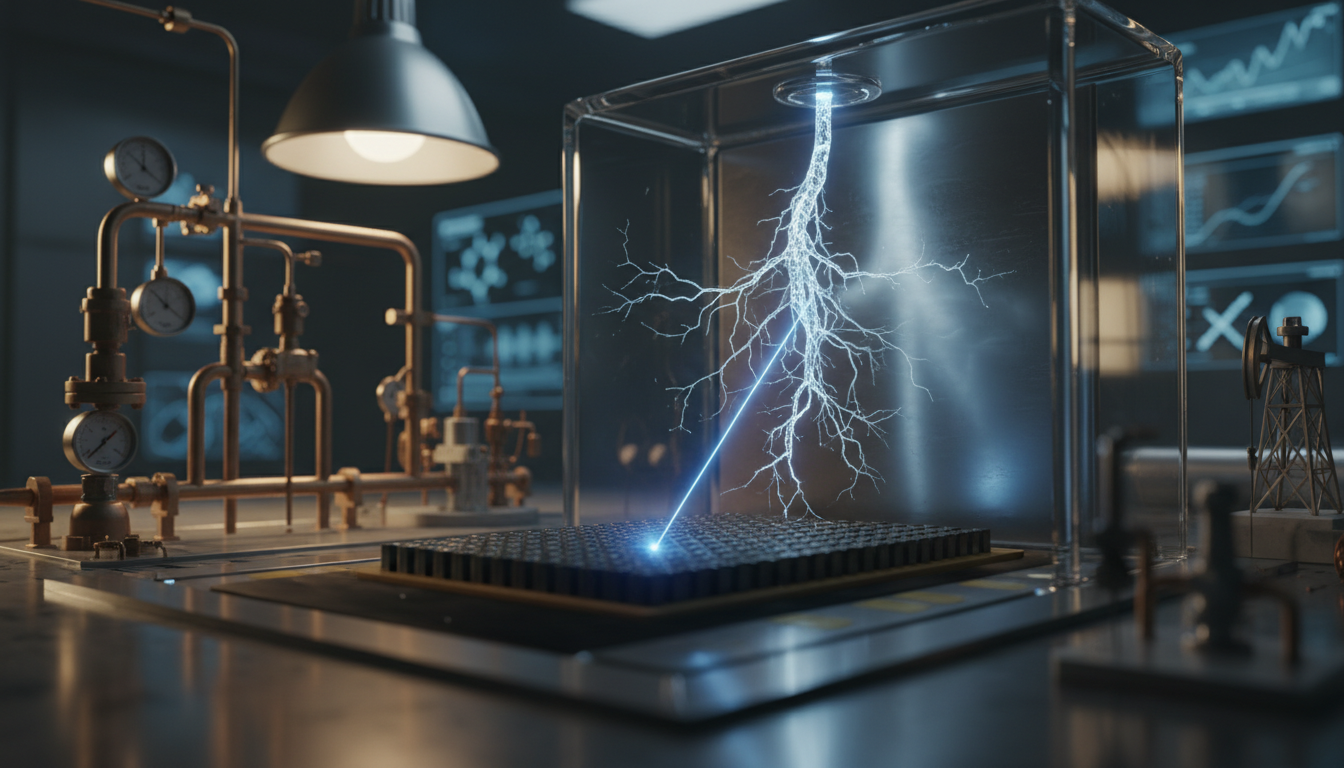
The vision of solid-state batteries replacing conventional lithium-ion cells relies heavily on overcoming inherent limitations, chief among them the problem of internal short circuits. In current liquid electrolyte lithium-ion batteries, dendrites—tree-like metallic structures formed by lithium deposits—are a well-documented issue. These dendrites grow from the negative electrode (anode), eventually piercing the critical separator film and establishing a direct electrical bridge to the positive electrode (cathode), leading to dangerous short circuits. This fundamental flaw significantly impacts battery lifespan and safety. Proponents of solid-state technology believed that by replacing flammable liquid electrolytes with robust solid ceramic materials, this risk would be largely mitigated. However, recent, in-depth investigations reveal that dendrites pose an equally, if not more, complex challenge for solid-state architectures, pushing back timelines for their mass-market viability.
Unraveling the Dendrite Dilemma in Solid-State Cells
An interdisciplinary team at the Max Planck Institute for Sustainable Materials has embarked on a detailed study to dissect the precise mechanisms behind short circuits in solid-state battery cells. Their findings, published in the scientific journal Nature, offer critical insights into why these sophisticated batteries are still prone to failure. The core enigma lies in how the relatively soft lithium metal, which forms both the electrode and the problematic dendrites, can effectively fracture and penetrate the much harder ceramic solid electrolyte. This paradox is central to understanding the commercialization bottleneck for SSBs.
Initially, researchers considered two primary hypotheses to explain this phenomenon. One theory proposed that internal stresses accumulate within the growing dendrites, eventually exerting enough force to mechanically fracture the stiff solid electrolyte. A second hypothesis suggested that electrons might leak along the grain boundaries of the solid electrolyte, promoting the nucleation and subsequent interconnection of lithium, ultimately forming a conductive pathway. Understanding the true mechanism is paramount for developing effective countermeasures, directly influencing the speed at which SSBs can transition from laboratory curiosities to market disruptors, and by extension, impact the global energy mix and oil demand forecasts.
Groundbreaking Research Clarifies the Fracture Mechanism
The experimental setup designed by the Max Planck team was meticulously complex, underscoring the difficulty of studying these microscopic interactions. Samples were prepared and examined under stringent vacuum conditions and at cryogenic temperatures. This rigorous approach was essential to eliminate any extraneous variables, such as ambient oxygen, water vapor, or even the electron beam from microscopes, which could inadvertently influence the results. The effort yielded remarkably clear and definitive conclusions that shed new light on the “soft on hard” conundrum.
Contrary to some expectations, the research team discovered that there was no significant accumulation of additional lithium specifically at the tip of the penetrating dendrites. Instead, their findings indicated a different, more insidious process. As Yuwei Zhang, lead author of the study and a research group leader at the Max Planck Institute, explained, the soft lithium metal exhibits a penetrating capability akin to a continuous jet of water eroding a rock. Their calculations, supported by simulations and measurements using electron backscatter diffraction, confirmed that hydrostatic stress within the dendrite itself is the root cause. This stress ultimately leads to the brittle fracture of the solid electrolyte, creating the conductive path for a short circuit. This revelation is a critical step forward in diagnosing the problem but simultaneously underscores the deep material science challenges still facing solid-state battery development.
Implications for Battery Commercialization and Oil Demand Outlook
This deep understanding of the dendrite fracture mechanism is not merely an academic achievement; it holds profound implications for the commercial viability of solid-state batteries and, consequently, for investors in the oil and gas sector. Preventing or, at the very least, significantly delaying dendrite growth and subsequent short circuits is absolutely essential to ensure that solid-state batteries can achieve a practical lifespan and safety profile required for widespread adoption in EVs and stationary storage. Until these issues are comprehensively resolved, the transformative impact of SSBs on global energy consumption patterns, particularly on liquid fuel demand, will remain constrained.
The Max Planck Institute has outlined several potential strategies based on their findings to mitigate these challenges. These include increasing the intrinsic mechanical strength of the electrolyte to resist or slow crack formation, introducing microscopic cavities within the electrolyte to strategically redirect dendrite growth pathways, or applying specialized protective coatings directly to the lithium electrodes to actively suppress dendrite nucleation. However, implementing these solutions at scale while maintaining cost-effectiveness, energy density, and charge/discharge cycling stability presents formidable engineering and manufacturing hurdles. Each proposed solution requires further extensive research, development, and validation.
For savvy oil and gas investors, these persistent technical obstacles in advanced battery technology translate into a more realistic timeline for the global energy transition. While the long-term shift towards electrification is undeniable, the speed and scale of that transition are heavily dependent on overcoming fundamental material science challenges like the dendrite problem in solid-state batteries. A slower, more challenging path for battery innovation means a more sustained and robust demand environment for crude oil and natural gas, underpinning continued investment opportunities across the upstream, midstream, and refining sectors. It reinforces the view that the world’s energy needs will continue to be met by a diverse portfolio, where fossil fuels play a crucial role for many decades to come, even as competing technologies strive for perfection.


