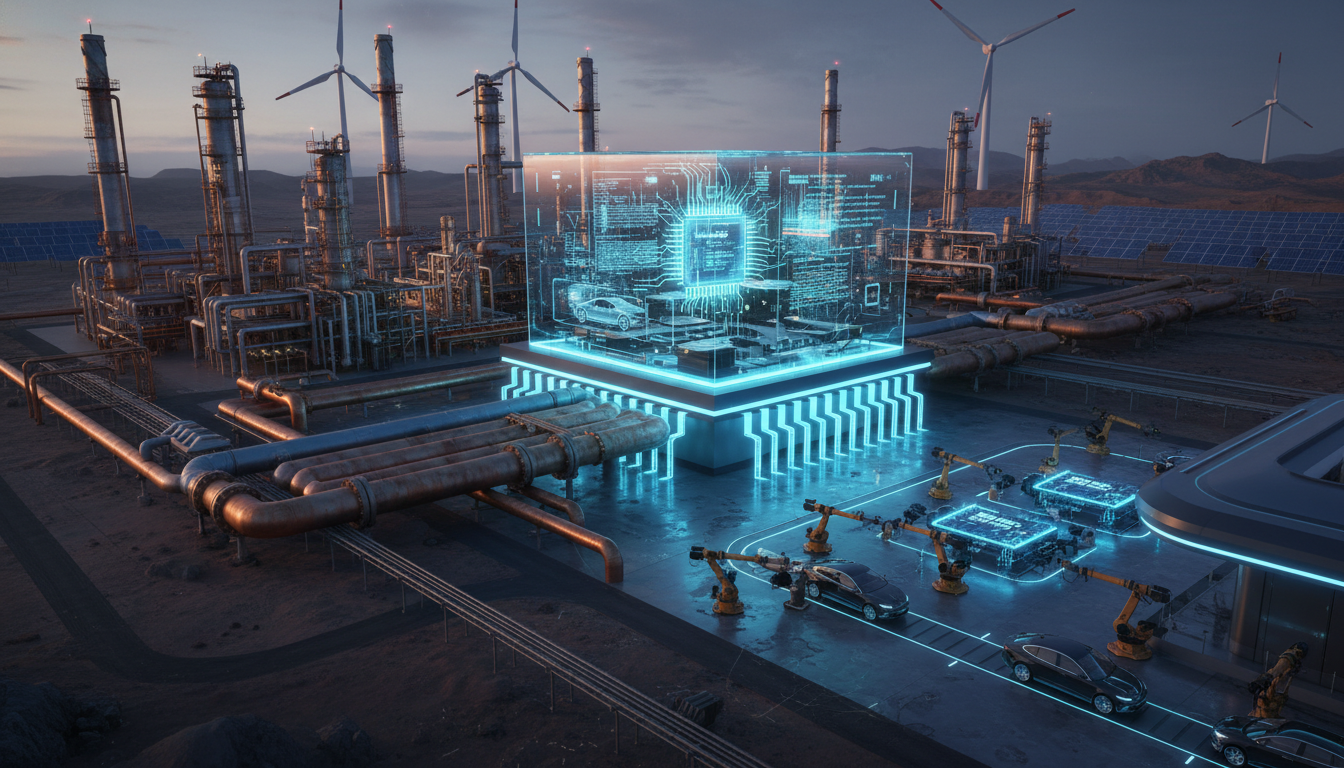
The global energy landscape is in constant flux, and while traditional hydrocarbon assets remain foundational, the accelerating pace of innovation in nascent sectors like electric vehicles (EVs) sends critical signals to oil and gas investors. A recent development from Chinese premium EV manufacturer NIO underscores this dynamic shift: the company is making a decisive pivot towards in-house semiconductor development, a strategic move with profound implications not just for the automotive industry, but for long-term energy demand and the capital allocation strategies of global energy giants.
NIO’s Strategic Bet on Silicon Autonomy
NIO’s Chief Executive, William Li, recently articulated the firm’s ambition to cultivate an internal chip development capability. This isn’t merely a technological upgrade; it’s a fundamental reorientation designed to sharpen NIO’s competitive edge and enhance its financial performance. The primary driver is a desire to reduce dependence on external suppliers, notably Nvidia, by integrating proprietary silicon that is meticulously tailored to NIO’s unique algorithms and intricate sensor architectures. This precise synchronization is particularly crucial for sophisticated artificial intelligence functionalities, such as advanced driver-assistance systems, where performance and efficiency are paramount.
For investors accustomed to the capital-intensive nature of the oil and gas sector, NIO’s rationale for this move offers a compelling parallel. Li openly stated that Nvidia’s automotive-grade chips command “very high gross margin.” By internalizing chip design and production, NIO aims to capture this value within its own ecosystem. While acknowledging the significant upfront research and development expenditures, the long-term vision is clear: these efforts are projected to substantially lift NIO’s overall profitability. This strategic internalization of high-margin technology mirrors the oil and gas industry’s own drive for vertical integration, optimizing every stage from exploration to refining to maximize returns and control costs.
Capital Allocation and the Pursuit of Profitability
The decision to invest heavily in proprietary chip development reflects a broader industry trend towards controlling key components of the value chain, a lesson long understood by integrated energy companies. For oil and gas investors, this presents a nuanced perspective on capital allocation. As the energy transition gains momentum, hydrocarbon companies are increasingly grappling with how to deploy capital effectively – whether to deepen investments in traditional assets, explore new energy ventures, or even integrate emerging technologies into their own operations. NIO’s aggressive stance on self-sufficiency in a critical technology segment serves as a powerful reminder of how such strategic capital deployment, despite initial high costs, can unlock significant long-term value and secure competitive advantage.
NIO has further solidified this strategy by spinning off its chip unit, Shenji, into an independent entity. William Li confirmed that Shenji is not only focused on supporting NIO but is also open to supplying chips to external customers. This move suggests a dual benefit: insulating the core EV business from the inherent risks of chip manufacturing while simultaneously creating a potential new revenue stream. This approach resonates with how integrated oil and gas majors have diversified their portfolios, sometimes through independent subsidiaries, into areas like petrochemicals, renewables, or carbon capture technologies, aiming to create new value beyond their traditional core.
Redefining Global Competitiveness and Energy Demand
Li emphasized that NIO’s nanometer-scale automotive-grade chips, coupled with its comprehensive whole-vehicle operating system, will be indispensable to its sustained global competitiveness. This focus on deep technological integration and control over core components is not just about manufacturing efficiencies; it’s about shaping the future of mobility. The rise of Chinese electric vehicle manufacturers, Li asserts, represents a “significant opportunity” to fundamentally redefine the high-end and luxury segments of the global car market, paving the way for NIO to establish itself as a premier global marque.
This aspiration has direct implications for oil and gas investors. A global shift towards high-end, technologically advanced EVs, driven by brands like NIO, signifies an accelerated erosion of demand for refined petroleum products in the transportation sector. As consumers increasingly opt for electric luxury and performance, the long-term demand curves for gasoline and diesel will continue their downward trajectory. This scenario necessitates a vigilant re-evaluation of refining capacities, product portfolios, and investment timelines for oil and gas companies. The pace at which these EVs penetrate global markets will directly influence the speed of the energy transition and the viability of legacy fossil fuel assets.
The Geopolitical Undercurrents and Supply Chain Resilience
Beyond profitability and market share, NIO’s drive for chip independence also reflects a broader geopolitical imperative for supply chain resilience. In a world increasingly marked by trade tensions and supply disruptions, reducing reliance on external technology suppliers becomes a strategic national interest, especially for critical components like semiconductors. This parallels the oil and gas industry’s own focus on energy security and diversifying supply sources to mitigate geopolitical risks and ensure stable access to essential resources.
For investors in the hydrocarbon space, observing NIO’s actions provides a valuable lesson in foresight and adaptability. The shift towards electrification in transportation is undeniable, and the speed at which it occurs is heavily influenced by technological advancements and strategic corporate decisions like NIO’s. The innovation happening within the EV ecosystem, particularly in areas that drive down costs and enhance performance, directly impacts the timeline for peak oil demand and the subsequent energy transition. Oil and gas investors must remain keenly attuned to these developments, understanding that every strategic move by an EV manufacturer, especially one involving core technology, has ripple effects that ultimately influence the valuation and long-term prospects of traditional energy assets.
In conclusion, NIO’s bold strategy to internalize chip development is more than an automotive news item; it’s a potent signal of the evolving competitive landscape and the relentless march of the energy transition. For the astute oil and gas investor, it underscores the critical need to continuously assess market shifts, understand the drivers of demand destruction in traditional sectors, and strategically position portfolios for a future where energy value is increasingly created through technological innovation and diversified solutions.


