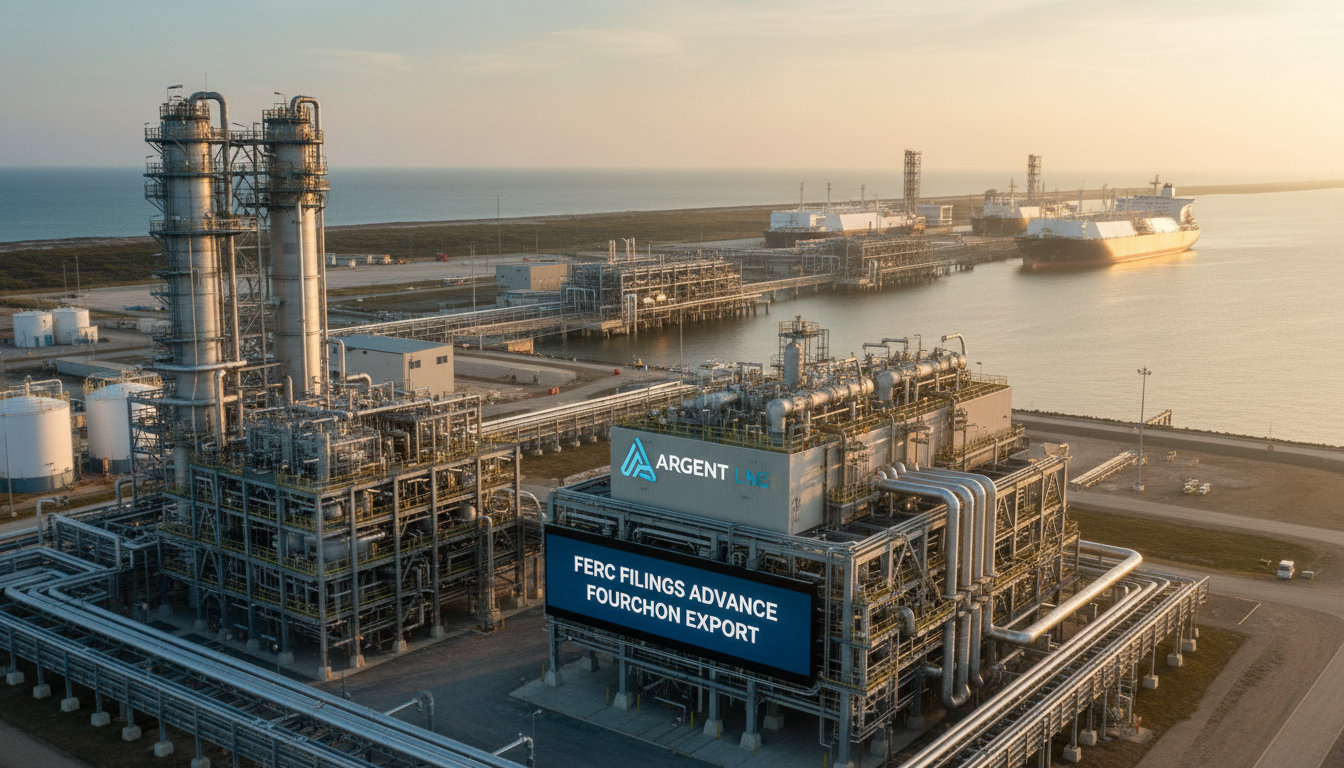
Argent LNG Takes Decisive Step Forward with Landmark Louisiana Export Terminal
Argent LNG is pushing ahead with its ambitious plans for a colossal liquefied natural gas (LNG) export facility at Port Fourchon, Louisiana, a move keenly observed by investors tracking the burgeoning U.S. energy export sector. The company has formally submitted a comprehensive suite of resource reports to the Federal Energy Regulatory Commission (FERC), marking a critical milestone in securing federal authorization for the massive 25-million tonnes per annum (MMtpa) project.
This filing initiates the rigorous environmental review process mandated for large-scale energy infrastructure developments, fundamentally advancing the project closer to an eventual final investment decision (FID). For savvy investors, this signifies a de-risking event, as regulatory progression often underpins project viability and attractiveness for future financing and equity participation.
Strategic Capacity for Global Energy Security
The proposed Port Fourchon terminal is designed to become a cornerstone of the U.S. Gulf Coast’s rapidly expanding LNG export capacity. With a formidable 25 MMtpa potential, it would stand as one of the nation’s largest facilities upon completion, poised to meet burgeoning international demand for natural gas. This strategic positioning targets long-term LNG supply agreements with key energy consumers across Europe and Asia, markets increasingly reliant on stable, diversified energy sources.
The facility’s scale and strategic location underscore its potential impact on global energy markets. As geopolitical shifts continue to redefine energy trade routes and supply security, U.S. LNG exports have become a vital component of global energy stability. Investors recognize that projects of this magnitude offer substantial, long-duration returns once operational, contributing significantly to the U.S. role as a dominant energy exporter.
Navigating the FERC Permitting Pathway
Argent LNG confirmed that the submitted resource reports delve into various crucial aspects of the project’s development. These include detailed general design specifications, thorough environmental impact considerations, and a comprehensive analysis of alternative approaches. This layered reporting structure is intrinsic to FERC’s staged review process, designed to meticulously evaluate every facet of a proposed energy project.
Jonathan Bass, CEO of Argent LNG, articulated the project’s profound importance, stating, “This is a project of national significance.” His comments highlight not only the economic benefits but also the strategic energy security implications for the United States. For investors, CEO Bass’s statement reinforces the macro-economic and geopolitical tailwinds supporting such large-scale energy infrastructure investments.
The company has indicated its intent to file additional resource reports in the coming months, steadily progressing through the multifaceted permitting requirements. This systematic approach is standard for major energy developments, providing regulatory bodies with the necessary information to conduct thorough assessments and ultimately, grant authorizations.
The Investment Horizon: Beyond Regulatory Hurdles
Advancing through FERC’s environmental review is a critical but initial hurdle. Investors understand that securing all necessary permits is a prerequisite for reaching a final investment decision. An FID triggers the commitment of substantial capital for construction, signaling confidence from project sponsors and financiers in the long-term economic viability and regulatory certainty of the venture. This phase often involves significant debt and equity raises, offering diverse opportunities for institutional and private investors.
The project is set to join a robust pipeline of new U.S. LNG export capacity currently under development. The landscape of U.S. LNG is highly dynamic, characterized by intense competition, technological advancements, and shifting global demand patterns. Investors closely monitor the progress of each new terminal, assessing factors like off-take agreements, construction timelines, and overall market saturation. Argent LNG’s Port Fourchon facility positions itself as a significant contender in this competitive, yet high-growth, sector.
Long-Term Outlook for U.S. LNG Exports
The sustained demand from energy-hungry markets in Asia, coupled with Europe’s strategic imperative to diversify away from traditional pipeline gas sources, creates a powerful tailwind for U.S. LNG exports. The logistical advantages of the Gulf Coast, with its established natural gas pipeline infrastructure and access to major shipping lanes, reinforce the strategic attractiveness of locations like Port Fourchon. Projects moving forward today are anticipating demand trajectories extending well into the next few decades, driven by global population growth, industrialization, and the ongoing energy transition which sees natural gas as a cleaner bridge fuel.
For investors eyeing exposure to the global energy market, Argent LNG’s methodical progress represents a compelling development. While the path from initial permitting to commercial operation is lengthy and capital-intensive, the strategic importance, scale, and market alignment of the Port Fourchon facility underscore its potential to generate significant shareholder value over the long term, cementing the United States’ role as a pivotal player in the international energy landscape.