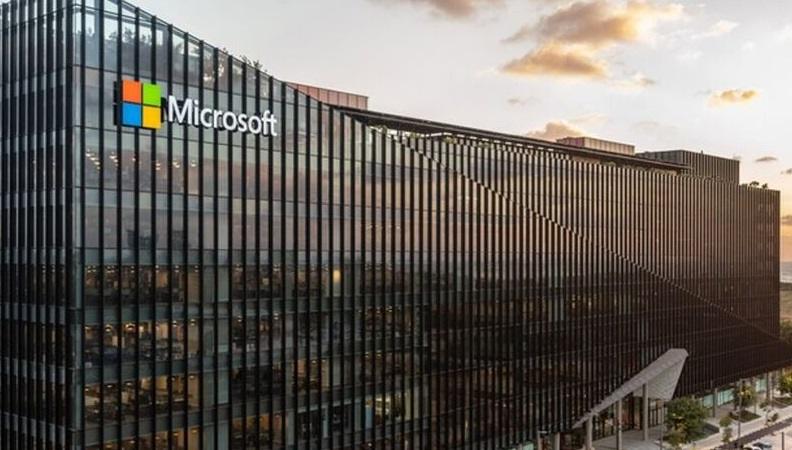
The Green Steel Gambit: Microsoft-Stegra Deal Signals Deeper Decarbonization Amidst Energy Market Volatility
The recent collaboration between Swedish green iron and steel maker Stegra and tech giant Microsoft is a significant development for investors tracking the energy transition, particularly in hard-to-abate industrial sectors. This isn’t merely a procurement agreement; it’s a strategic partnership designed to accelerate the availability and adoption of near-zero emission steel in Microsoft’s datacenter operations. For savvy investors, this deal underscores a growing trend where corporate sustainability targets are driving substantial capital into innovative, decarbonized industrial processes, creating new avenues for value creation even as traditional energy markets navigate significant short-term fluctuations.
Strategic Imperatives: Green Steel’s Ascent Amidst Crude Price Dips
Stegra, a company founded in 2020, has quickly positioned itself at the forefront of sustainable steel production, leveraging hydrogen produced from green power and 100% renewable electricity to achieve up to 95% fewer emissions than conventional methods. Microsoft’s engagement with Stegra, building on its 2023 investment via its Climate Innovation Fund, solidifies a commitment to decarbonizing its supply chain. The agreement includes both a physical supply of low-carbon steel from Stegra’s Boden facility, destined for Microsoft’s datacenter equipment via its component suppliers, and a crucial system of environmental attribute certificates (EACs). This dual-pronged approach highlights the practical challenges and innovative solutions emerging in the green industrial transition.
This long-term strategic focus on decarbonization stands in stark contrast to the immediate volatility gripping the traditional energy markets. As of today, Brent crude trades at $90.38, reflecting a significant 9.07% decline within the day, with its range fluctuating between $86.08 and $98.97. Similarly, WTI crude has fallen to $82.59, down 9.41%. This sharp decline in crude prices, representing an 18.5% drop in Brent over the last 14 days from $112.78 to $91.87, indicates a bearish sentiment in the short term. Yet, the Stegra-Microsoft deal exemplifies that despite these immediate market headwinds for conventional fuels, the strategic imperative for green industrial solutions continues to gain momentum, signaling a long-term shift in capital allocation towards sustainable infrastructure and materials.
The Dual Mechanism: Physical Supply and Environmental Attribute Certificates
The structure of the Microsoft-Stegra agreement offers valuable insight into the evolving mechanics of industrial decarbonization. The physical supply deal represents the ultimate goal: direct integration of low-carbon materials into supply chains. Microsoft’s Chief Sustainability Officer, Melanie Nakagawa, rightly emphasizes that the “end game is to source physical materials with the lowest possible CO₂ footprint.” However, scaling such solutions rapidly is challenging. This is where the second agreement, the EAC system, becomes a critical enabler. By separating the environmental value from the physical product, EACs allow Microsoft to claim the emissions reductions towards its carbon goals, even if the physical steel itself is sold as conventional. This mechanism prevents double counting and, crucially, signals demand to the market, which in turn can enable project financing and accelerate global production of green steel. For investors, this creates a transparent, auditable pathway for corporate sustainability claims, potentially de-risking investments in green industrial projects by providing a clear market for their environmental attributes.
Investor Focus: Beyond Daily Swings to Long-Term Green Value
Our proprietary reader intent data reveals a strong focus this week on the immediate trajectory of crude prices, with questions like “what do you predict the price of oil per barrel will be by the end of 2026?” and “What are OPEC+ current production quotas?” dominating queries. Investors are clearly grappling with the short-term volatility and seeking clarity on market fundamentals for traditional energy plays. However, the Stegra-Microsoft deal serves as a powerful reminder that while short-term oil prices are critical for immediate trading strategies, a significant and growing portion of investment capital is flowing into long-term decarbonization solutions. This deal isn’t just about Microsoft’s sustainability; it’s about validating a market for green industrial products and the innovative financial instruments (like EACs) that support their scaling. For those looking beyond the next quarter, understanding the mechanisms driving green industrial growth, even in sectors not directly tied to oil production, is crucial for identifying future growth engines and resilient portfolios.
Looking Ahead: Green Momentum in a Dynamic Energy Landscape
The energy calendar is packed with events that will undoubtedly shape short-term oil market dynamics, but their influence on the long-term green transition remains distinct. Looking ahead, the crucial OPEC+ Joint Ministerial Monitoring Committee (JMMC) meeting is scheduled for tomorrow, April 18th, followed by the full Ministerial meeting on April 19th. These meetings will dictate production quotas and directly impact global crude supply and pricing. Furthermore, weekly data releases such as the API Weekly Crude Inventory (April 21st, April 28th) and the EIA Weekly Petroleum Status Report (April 22nd, April 29th) will provide fresh insights into demand and inventory levels, while the Baker Hughes Rig Count (April 24th, May 1st) will signal upstream activity. While these events will drive immediate market reactions for oil and gas investors, the strategic pivot exemplified by the Stegra-Microsoft deal underscores that the momentum for green industrial solutions is largely insulated from these daily and weekly fluctuations. Corporate net-zero targets and growing investor demand for ESG-compliant assets ensure that the push for innovations like green steel will continue to accelerate, representing a deepening bifurcation in the energy investment landscape.


