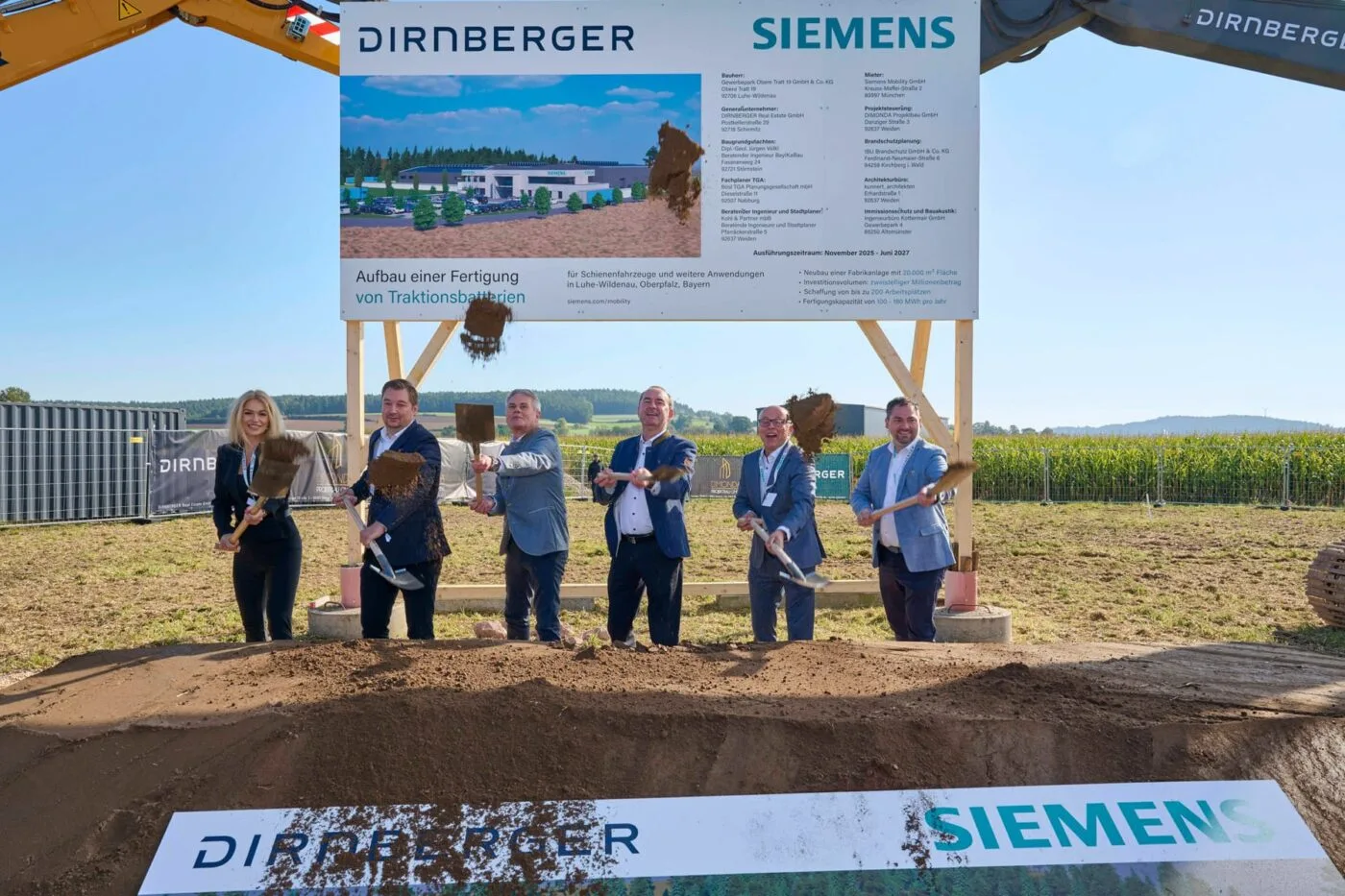
The energy landscape continues its dynamic shift, presenting both challenges and opportunities for oil and gas investors. A recent development from Siemens Mobility underscores this transition: the groundbreaking for a new €35 million production facility in Luhe-Wildenau, Bavaria, dedicated to manufacturing battery systems for rail vehicles. This strategic investment, slated for series production by October 2027 with an annual capacity of up to 120 megawatt hours, signals a significant push towards decarbonizing heavy transport. For investors tracking the long-term trajectory of fossil fuel demand, particularly diesel, this move by a global industrial giant warrants close attention, even as the crude market navigates its own immediate volatility.
The Long-Term Erosion of Diesel Demand in Heavy Transport
Siemens Mobility’s commitment to large-scale battery system production for regional trains and locomotives marks a decisive pivot in a sector traditionally dominated by diesel. While much of the electrification narrative focuses on passenger vehicles, the transition in heavy-duty transport, such as rail freight and passenger lines, holds profound implications for global diesel consumption. The new Bavarian facility, a €35 million investment with €22 million directly from Siemens Mobility and €2.7 million from Bavarian subsidies, highlights the financial and governmental backing for these green technologies. With planned capacities around 500 kilowatt hours for regional trains and up to 2,000 kilowatt hours for locomotives, these battery systems are designed to meet stringent robustness and durability requirements far exceeding those of automotive solutions. By establishing full-scale system production, Siemens Mobility, already a market leader in battery-electric regional trains since 2017, is not just innovating; it’s industrializing the alternative to diesel. This long-term trend, though slow-moving, directly impacts the future demand curve for refined products, a critical consideration for investors pondering questions like “what do you predict the price of oil per barrel will be by end of 2026?”
Navigating Current Market Headwinds and Upcoming Catalysts
While the long-term energy transition gains momentum, the immediate crude market presents a picture of significant volatility. As of today, Brent Crude trades at $90.38 per barrel, reflecting a sharp 9.07% decline within the trading day. WTI Crude mirrors this weakness, standing at $82.59, down 9.41%. Gasoline prices have also seen a notable drop, now at $2.93 per gallon, a 5.18% decrease. This recent downturn is part of a broader trend, with Brent having shed nearly 20% of its value over the past two weeks, falling from $112.78 on March 30th. Such a dramatic shift raises immediate questions for investors, particularly regarding the stability of current price levels and the actions of key market players. The upcoming OPEC+ Ministerial Meeting on April 19th is a critical event on the calendar. With crude prices under considerable pressure, the market will be keenly watching to see if the cartel decides to implement further production cuts to stabilize prices. This directly addresses investor inquiries such as “What are OPEC+ current production quotas?” and will be a significant factor in short-to-medium-term price discovery. Further insights into supply-demand balances will come from the API and EIA Weekly Petroleum Status Reports on April 21st/22nd and April 28th/29th, respectively, alongside the Baker Hughes Rig Count reports on April 24th and May 1st, all of which provide crucial data points for assessing market health.
Strategic Implications for Oil & Gas Portfolios in a Transitioning World
The divergence between the accelerating energy transition and the immediate volatility in crude markets creates a complex landscape for oil and gas investors. Siemens’ investment in rail battery systems exemplifies the structural changes chipping away at fossil fuel demand, particularly in hard-to-abate sectors. This long-term demand erosion, while not an overnight phenomenon, adds a layer of fundamental bearishness that must be weighed against short-term supply-side shocks or geopolitical premiums. For investors asking about specific company performance, such as “How well do you think Repsol will end in April 2026,” it underscores the need to evaluate portfolio companies not just on their current operational efficiency but also on their strategic adaptability to a decarbonizing world. Companies that are diversifying their energy mix, investing in lower-carbon solutions, or showing resilience in a volatile commodity market will likely be better positioned. The immediate focus on OPEC+ actions and inventory data highlights the tactical need for agility in portfolio management, while the Siemens news reinforces the strategic imperative to consider long-term shifts in energy consumption patterns. A balanced approach, acknowledging both the cyclical nature of commodity markets and the secular trend of energy transition, is paramount for sustainable returns in this evolving environment.