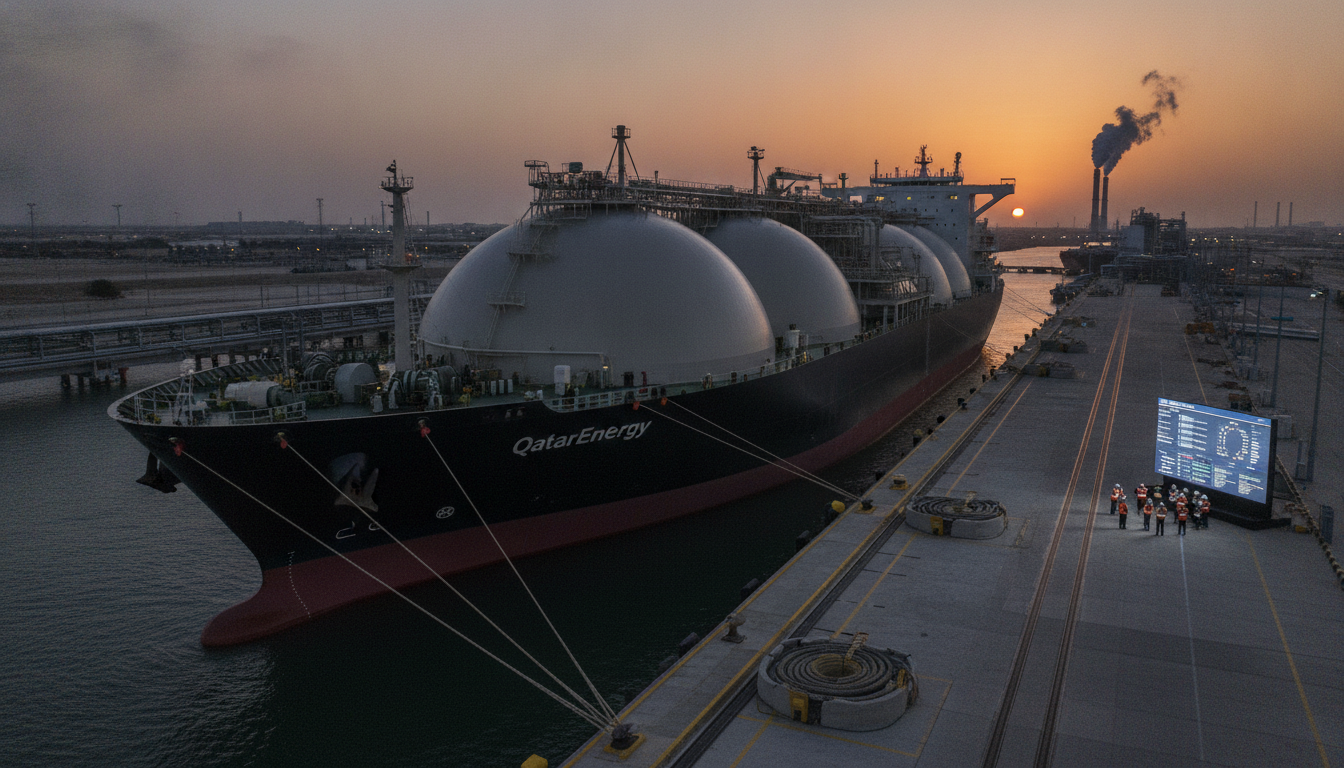
QatarEnergy’s Extended LNG Force Majeure Signals Deepening Global Gas Market Volatility
The global natural gas market is bracing for a prolonged period of constrained supply as QatarEnergy, a pivotal player in the liquefied natural gas (LNG) sector, prepares to extend its force majeure declaration on shipments through mid-October. This critical development underscores the escalating impact of geopolitical instability in the Middle East on energy flows, creating significant headwinds for global energy security and investor sentiment. Market participants, particularly major buyers across Europe and Asia, are anticipating formal notifications in the coming weeks, a move that will undoubtedly reverberate through international energy exchanges.
Force majeure, a contractual provision invoked when extraordinary circumstances prevent a company from fulfilling its obligations, highlights the severe operational challenges posed by current regional tensions. While QatarEnergy has not publicly commented on these reports, the anticipated extension follows previous cancellations. In June, the Qatari energy giant had already informed various customers in Asia and Europe of shipment disruptions, impacting deliveries scheduled for August and September. A further extension through mid-October signifies a systemic rather than transient issue, forcing a re-evaluation of supply chain resilience for investors monitoring the LNG landscape.
Geopolitical Risks Amplify Supply Chain Vulnerability
The decision to extend force majeure emerges against a backdrop of intensifying hostilities in the Middle East, casting a long shadow over the region’s ability to maintain stable energy exports. The Strait of Hormuz, a narrow maritime choke point, is intrinsically linked to global energy supply. Before the recent conflict escalation, an astonishing one-fifth of the entire global LNG trade navigated through this strategic waterway. Any disruption or perceived threat in this crucial transit route immediately translates into heightened risk premiums and supply concerns across international commodity markets.
Recent diplomatic maneuvers further exacerbate this uncertainty. Reports indicate that the United States and Iran have downplayed the prospects of immediate peace talks this week, a development that instantly triggered a sharp upward surge in natural gas prices across both European and Asian benchmarks. This direct correlation between geopolitical developments and commodity pricing underscores the inherent volatility investors must navigate. The inability to de-escalate regional tensions quickly dashes hopes for a swift recovery in supply stability from this critical energy-producing region, solidifying a bearish outlook for consistent LNG availability.
Global Competition Intensifies: Europe and Asia Vie for Scarce LNG
The impending extension of QatarEnergy’s force majeure could not come at a more critical juncture for global demand. The tightening supply landscape is fueling an intense competitive bidding environment between major consuming regions, primarily Europe and Asia, as they scramble for a limited pool of available LNG cargoes. This demand-side pressure is multifaceted. Across various Asian countries, elevated temperatures are driving up electricity demand for cooling, directly translating into increased natural gas consumption.
Concurrently, European nations are aggressively working to replenish their strategic gas stockpiles in anticipation of the upcoming winter heating season. Memories of past energy crises, particularly the sharp price increases seen in recent winters, are driving a proactive strategy to secure sufficient inventories. This dual pressure from both immediate summer demand and forward-looking winter preparation means that any reduction in supply, especially from a major exporter like Qatar, has an outsized impact on global gas prices and market equilibrium. Investors should closely monitor storage levels and spot market premiums as key indicators of ongoing supply-demand imbalances.
Investment Implications: Navigating a Volatile Natural Gas Market
For investors focused on the oil and gas sector, these developments present both challenges and opportunities. The extended force majeure from QatarEnergy signals a sustained period of elevated natural gas prices and increased volatility. Energy companies with diversified LNG portfolios or those involved in developing new liquefaction capacity outside of geopolitically sensitive regions may see increased interest and valuation. Conversely, utility companies and energy-intensive industries heavily reliant on spot LNG purchases could face significant cost pressures, impacting their profitability.
The situation also underscores the growing importance of energy security in national policy and corporate strategy. Investments in domestic gas production, renewable energy sources, and robust energy infrastructure capable of handling diverse supply routes are likely to accelerate. Financial markets will continue to price in higher geopolitical risk premiums for energy assets tied to the Middle East, making careful due diligence and risk assessment paramount. The interplay between global energy demand growth, persistent geopolitical frictions, and the imperative for energy transition will define investment narratives in the natural gas market for the foreseeable future, making vigilance and adaptability key for successful portfolio management.


