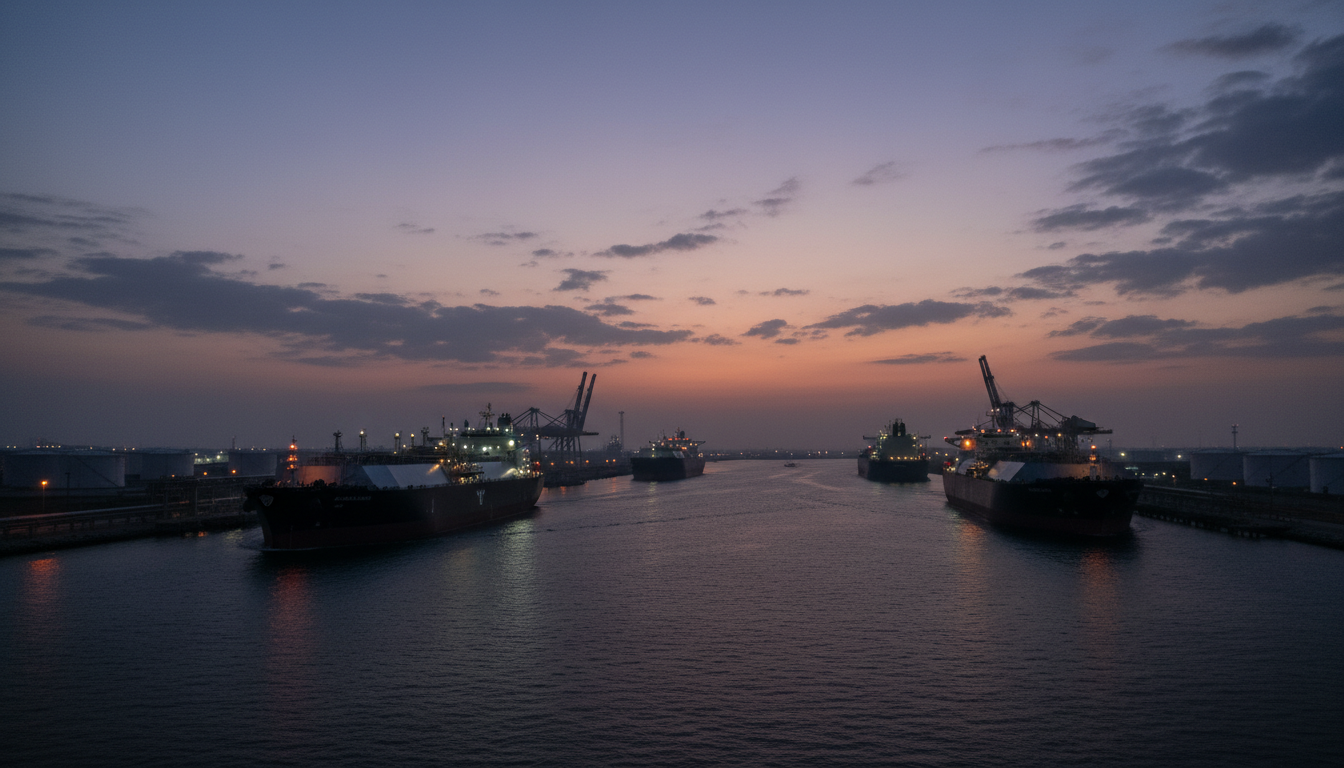
Qatar’s LNG Exports Navigating Escalating Geopolitical Storms
The global liquefied natural gas (LNG) market faces significant upheaval as Qatar, a pivotal supplier, implements extraordinary measures to safeguard its vital energy exports amidst heightened regional instability. Reports indicate that the world’s second-largest LNG exporter, prior to recent conflicts, has instructed vessels operating near its critical Ras Laffan export terminal to deactivate their Automatic Identification System (AIS) transponders. This unprecedented directive underscores the escalating security threats impacting maritime trade routes, particularly the Strait of Hormuz, a crucial chokepoint for a substantial portion of the world’s energy flows. For investors monitoring the volatile oil and gas landscape, these developments signal a new era of risk and re-evaluation of supply chain resilience.
The Strategic Maneuver: Vessels Go Dark Amidst Regional Tensions
The decision by Qatari authorities to request LNG vessels to switch off their transponders near the Ras Laffan port is a direct response to a deteriorating security environment. Since February 28, the waters surrounding Qatar have experienced a significant increase in security threats, pushing the nation to adopt proactive measures to deter potential targeting. Vessel-tracking data compiled by industry analysts confirmed that at least nine LNG tankers anchored near Qatar ceased transmitting signals via their AIS from May 11. This “going dark” strategy, typically associated with covert operations, is now being employed by commercial shipping to navigate an increasingly dangerous transit zone.
This practice is not limited to LNG carriers. Crude tankers have also reportedly exited the Strait of Hormuz in recent days after deactivating their tracking systems, as cited by shipping data. Maritime intelligence firm Windward noted on Monday that “commercial shipping and maritime security activity around the Strait of Hormuz are increasingly shifting into dark or emissions-controlled conditions.” Such a systemic shift in maritime behavior introduces new layers of complexity for global shipping, impacting insurance premiums, real-time supply chain visibility, and the overall risk assessment for energy commodities. Investors in shipping and logistics firms must now factor in these non-transparent operating conditions, which can lead to unforeseen delays and heightened operational costs.
Strait of Hormuz Chokepoint: A Critical Bottleneck for Global LNG Flows
The strategic importance of the Strait of Hormuz cannot be overstated, particularly for the global LNG market. Its de facto closure for a period trapped approximately 20% of daily global LNG flows, predominantly from Qatar and a portion of the United Arab Emirates. This severe disruption, lasting over two months since February 28, sent ripples through international energy markets, highlighting the vulnerability of concentrated supply routes. For importing nations heavily reliant on Qatari LNG – including key Asian economies and increasingly Europe – the blockage presented a significant energy security challenge, prompting a scramble for alternative supplies and exerting upward pressure on spot prices.
While a Qatari LNG tanker successfully navigated the Strait of Hormuz this past weekend, marking the first such transit since February 28, the underlying threats persist. This cautious resumption of transit, likely facilitated by the aforementioned ‘going dark’ strategy, does not alleviate the long-term concerns about the reliability and safety of shipping through this vital artery. The protracted nature of the blockade underscores the urgent need for a reassessment of geopolitical risk in energy investment portfolios, driving demand for diversified energy sources and alternative trade routes where feasible.
Ras Laffan’s Rehabilitation: A Five-Year Challenge for QatarEnergy
The challenges facing Qatar’s LNG sector extend beyond maritime security. Iranian drone and missile strikes in the region inflicted substantial damage on Qatar’s key LNG liquefaction complex, Ras Laffan. This facility holds paramount importance as the world’s single largest liquefaction complex, making any disruption here a major event for global energy markets. The extent of the damage has forced QatarEnergy to declare force majeure on some long-term LNG contracts, a legal provision allowing a party to suspend or terminate contractual obligations due to unforeseen circumstances beyond their control. This force majeure is expected to last for up to five years.
The declaration indicates that full operational capacity at Ras Laffan could take up to half a decade to restore. This prolonged outage has profound implications for long-term LNG contract holders, who now face supply uncertainty for a significant period. For investors, this translates into potential sustained tightness in the LNG market, particularly impacting those firms with long-term purchase agreements tied to Qatari supply. The reduced availability of LNG from such a crucial source could buoy natural gas prices globally and increase the valuation of alternative LNG projects and exporters outside the Persian Gulf region over the medium to long term. The five-year recovery timeline also places significant pressure on Qatar’s standing as a consistently reliable supplier, potentially influencing future investment decisions in new liquefaction capacity globally.
Resumed Shipments: A Cautious Return to Transit
The successful passage of a Qatari LNG tanker through the Strait of Hormuz this weekend, the first since the comprehensive blockage began on February 28, offers a glimmer of hope amidst the crisis. Similarly, crude tankers have also managed to exit the Strait in recent days, employing the same method of deactivating their AIS signals. This indicates that while the geopolitical risks remain critically high, a precarious path for energy exports has been established, albeit one shrouded in operational secrecy.
However, this “dark” transit comes with its own set of risks and implications. The lack of real-time tracking data complicates maritime surveillance, increases the potential for miscalculation, and could exacerbate maritime insurance premiums. While it provides a temporary solution to resume critical energy flows, it is not a sustainable long-term strategy for transparent and secure global commerce. The international community, and energy investors in particular, will be keenly watching how this new mode of operation evolves and whether more robust, transparent security measures can be established for this vital shipping lane.
Investment Implications: Navigating Uncertainty in the Global LNG Market
The unfolding situation in Qatar presents a complex tapestry of risks and opportunities for energy investors. The immediate challenges include heightened geopolitical instability, physical damage to critical infrastructure, and an unprecedented shift in maritime operational practices. The long-term implications point towards potential sustained high natural gas prices, increased demand for LNG from alternative sources, and a re-prioritization of energy security and supply chain diversification by importing nations.
Investors should consider several key factors: the potential for ongoing volatility in natural gas and LNG spot prices, the valuation impact on companies with exposure to Qatari LNG contracts, and the enhanced attractiveness of new LNG liquefaction projects in regions deemed geopolitically stable. Furthermore, the increased operational risk for maritime shipping will likely affect the tanker sector, potentially driving up freight rates and insurance costs. As the global energy landscape adapts to these profound shifts, astute risk assessment and strategic portfolio diversification will be paramount for navigating the inherent uncertainties of the oil and gas sector. The imperative for resilient energy infrastructure and diversified supply channels has never been clearer, signaling a significant recalibration of investment strategies in the global LNG market for years to come.
Source


