Strategic Cobalt Pact Fortifies U.S. Energy Transition Supply Chains
In a move signaling robust efforts to secure critical raw materials for the burgeoning energy transition, a significant memorandum of understanding has been forged between Entreprise Générale du Cobalt (EGC), EVelution Energy LLC, and global commodity titan Trafigura Pte Ltd. This landmark agreement aims to establish a long-term supply framework for Congolese cobalt hydroxide destined for the United States, marking a pivotal step in strengthening domestic industrial capabilities and supporting the nation’s burgeoning electric vehicle and strategic defense sectors.
For investors keenly tracking the evolving energy landscape, this development underscores the intense strategic value now placed on critical minerals. While traditional energy markets often focus on hydrocarbons, the shift towards electrification means that securing consistent, high-quality supplies of materials like cobalt is paramount for sustained growth in new energy sectors. This alliance is projected to supply a substantial portion of the anticipated U.S. cobalt demand, highlighting its profound implications for energy independence and industrial resilience.
Securing a Vital Link: The Congo-U.S. Cobalt Corridor
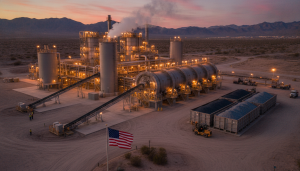
The core of this strategic partnership revolves around the Democratic Republic of Congo (DRC), the world’s leading source of cobalt. Under the terms of the expected definitive agreements, EGC, acting on its state mandate, will be responsible for sourcing cobalt hydroxide within the DRC. This material is then earmarked for processing by EVelution Energy at its advanced facility in Arizona. The refinement process will transform the cobalt hydroxide into crucial battery-grade cobalt sulfate and/or alloy-grade cobalt metal, essential components for a diverse array of U.S. industries.
Trafigura, a prominent player in global commodity trading, confirmed the far-reaching impact of this collaboration. The framework is poised to support approximately 40% of the projected U.S. cobalt demand, a figure that commands attention from a national security and economic development perspective. This substantial contribution will serve critical U.S. end-users, spanning the aerospace, defense, and, most notably, the rapidly expanding electric vehicle battery manufacturing sectors. For oil and gas investors eyeing diversification or monitoring demand shifts, this underscores the tangible acceleration of EV adoption and the foundational elements required to sustain it.
Domestic Processing: A Strategic Imperative for U.S. Industry
The establishment of domestic refining capabilities, such as EVelution Energy’s Arizona plant, represents a critical shift in the U.S. approach to critical minerals. Historically, the U.S. has been heavily reliant on offshore processing for many raw materials, creating vulnerabilities in its supply chains. By refining Congolese cobalt hydroxide within U.S. borders, the nation significantly reduces its exposure to geopolitical risks and logistical bottlenecks that could impede the production of essential technologies.
This initiative not only fosters greater economic independence but also creates high-value manufacturing jobs and stimulates innovation in material science and battery technology. Investors should recognize the long-term strategic value in companies that establish or support domestic processing infrastructure for critical minerals. Such ventures are often underpinned by government incentives and strategic mandates, providing a degree of stability and growth potential that can be attractive in a volatile global market.
U.S. Government’s Proactive Stance in Mineral Security
This private sector initiative aligns seamlessly with broader U.S. government strategies to bolster its critical mineral supply chains. As far back as December 2025, the United States’ development lender unveiled plans to acquire a stake in a new partnership focused on marketing Congo’s vast mineral resources. This forward-thinking governmental engagement was designed to grant U.S. end-users crucial rights of first refusal on vital copper and cobalt supplies.
Such governmental backing signals a comprehensive, multi-faceted approach to resource security. For investors, this creates a more predictable and supported environment for investments in mining, processing, and manufacturing related to critical minerals. It highlights a deliberate policy to counteract global competition for these resources, particularly from nations with highly integrated supply chains. This synergy between governmental policy and private enterprise provides a robust framework for long-term growth and stability in the U.S. critical minerals sector, influencing the broader energy commodity market dynamics.
Impact on Global Energy Markets and Investment Portfolios
The implications of this agreement extend far beyond the immediate beneficiaries. For the wider energy investment community, this development is a powerful indicator of the ongoing energy transition’s demands. While oil and gas remain foundational, the rapid growth in electric vehicles, grid-scale energy storage, and renewable energy technologies is creating new commodity supercycles and shifting capital allocation strategies.
A secure and diversified cobalt supply directly underpins the expansion of the EV market, which, in turn, influences future demand for refined petroleum products. As EV penetration increases, the long-term trajectory of gasoline demand faces downward pressure. Savvy investors in the oil and gas sector are increasingly looking at how these interconnected energy systems evolve, exploring opportunities for diversification into areas that support or benefit from the transition, including critical minerals or companies involved in sustainable resource management.
Furthermore, the geopolitical dimensions of critical mineral sourcing mirror the historical complexities of global oil markets. Just as energy security has traditionally been linked to oil and gas reserves and supply routes, it is now inextricably tied to access to materials like cobalt, lithium, and rare earths. This new era of resource diplomacy and supply chain resilience presents both challenges and opportunities for investors. Companies that demonstrate robust, ethical, and secure supply chains for these materials will likely command a premium.
Navigating the Challenges of Ethical Sourcing and Market Dynamics
While the strategic benefits are clear, the sourcing of cobalt from the DRC comes with its own set of complexities, notably concerns around ethical mining practices and environmental stewardship. EGC’s state mandate is intended, in part, to bring greater oversight and responsible practices to the sector. However, continuous vigilance and transparent reporting will be crucial for investor confidence and market acceptance.
For investors, understanding these nuances is critical. Companies involved in the cobalt supply chain face increasing scrutiny regarding their ESG (Environmental, Social, and Governance) performance. Those demonstrating leadership in responsible sourcing, fair labor practices, and environmental protection are better positioned for long-term success. Moreover, the inherent price volatility of critical minerals, influenced by global demand fluctuations and evolving battery chemistries, demands careful risk assessment.
Despite potential headwinds, the strategic importance of cobalt for U.S. industrial and defense needs, coupled with the accelerating global energy transition, paints a compelling picture for this sector. The collaborative efforts seen in this MOU represent a significant step toward de-risking the supply chain and building a resilient domestic capacity. For oil and gas investors, observing these trends provides crucial insight into the future trajectory of energy demand and the emerging investment frontiers in the broader energy market.