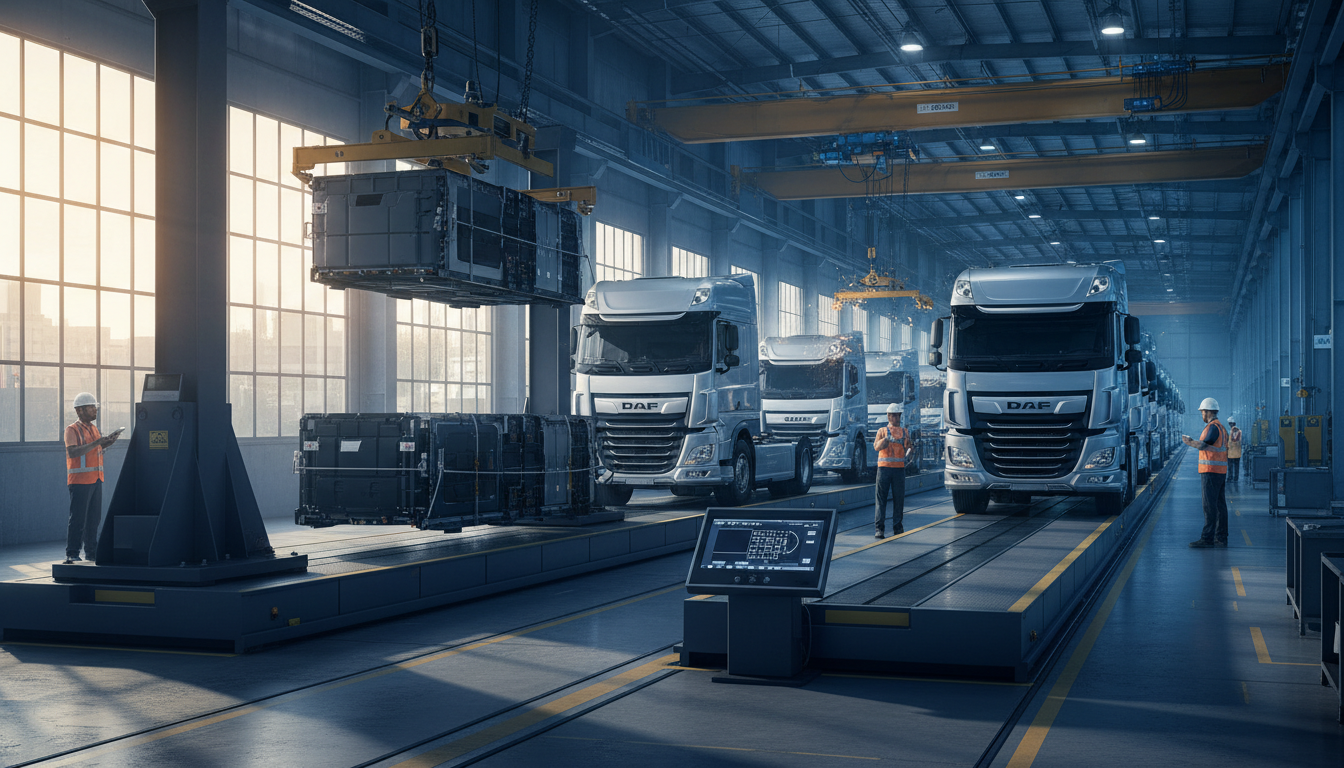
The heavy-duty trucking sector is undergoing a profound transformation, with electrification emerging as a key driver of change. As global economies push towards decarbonization, manufacturers are rapidly innovating to meet the evolving demands of logistics and freight. In a significant development for the electric vehicle segment, DAF has commenced serial production of its premium, heavy-duty XG Electric and XG+ Electric trucks, models specifically engineered to tackle the rigorous demands of national and international long-haul transport.
This strategic rollout, announced with the start of production at the company’s Eindhoven facility, underscores a critical pivot within the commercial vehicle market. The XG Electric and XG+ Electric stand as DAF’s flagship battery-electric offerings, sharing a robust technological foundation with their XD and XF Electric siblings. While their core technical specifications align across the electric range – featuring modular drivetrains powered by Paccar electric motors capable of delivering up to 350 kW – the distinction for the XG and XG+ lies primarily in their enhanced cab design, signaling a premium long-haul experience for operators.
Advanced Power Systems Driving Fleet Efficiency
At the heart of DAF’s electric heavy-duty lineup are advanced LFP battery packs, renowned for their stability and longevity. These systems are capable of rapid charging, accepting up to 325 kW, a crucial factor for minimizing downtime in intensive logistics operations. For added flexibility, an optional 22 kW AC onboard charger is also available, accommodating various charging infrastructures. Depending on specific motor power requirements and a customer’s operational profile, these vehicles can be configured with between three and five battery packs. This modularity allows for a total energy capacity ranging from 315 kWh to an impressive 525 kWh, providing a substantial operational range of up to 500 kilometers on a single charge.
For investors monitoring the energy transition, the emphasis on such robust battery configurations for long-haul models is noteworthy. While the XD Electric targets regional and supra-regional distribution, the XG and XG+ are explicitly designed for demanding cross-border and national routes. This means operators will likely gravitate towards the larger battery setups to maximize range and minimize charging stops, directly influencing the total cost of ownership and the viability of electric solutions in this critical segment. The strategic choice of LFP chemistry, often favored for its safety and cost-effectiveness, also reflects a calculated approach to long-term fleet management and asset depreciation.
Optimizing Driver Comfort and Operational Performance
Beyond the powertrain, DAF has clearly prioritized driver experience, recognizing that comfort directly impacts productivity and retention in the trucking industry. The XG and XG+ cabs are a testament to this philosophy, boasting significant enhancements over their XF counterparts. These premium cabs are 33 centimeters longer and taller, translating into an expansive internal volume of 12.5 cubic meters. Drivers benefit from an impressive standing height of up to 2.2 meters and an 80-centimeter-wide bed, setting a new industry benchmark for spaciousness and overnight accommodation on lengthy journeys. This focus on driver well-being is not merely a luxury; it’s a strategic investment in operational continuity and efficiency, particularly relevant for routes demanding multiple days away from home base.
Strategic Blending of Tradition and Innovation
A key aspect of DAF’s market strategy, and one that resonates strongly with an oil and gas investment perspective, is its hybrid approach to powertrain offerings. The XG and XG+ are not exclusively electric; they are also available with traditional diesel engines, mirroring the flexibility offered across the XB, XD, and XF series. This dual-fuel availability allows DAF to cater to a broad spectrum of customer needs during the ongoing energy transition, providing solutions for fleets that are not yet ready for full electrification while simultaneously advancing zero-emission capabilities. The manufacturer explicitly states that electric versions were integrated into the design from the very outset of the new generation’s development, ensuring seamless integration and elevating production capabilities at the Eindhoven plant.
Harald Seidel, President of DAF Trucks, highlighted this commitment, stating, “The start of production of the XG Electric and XG+ Electric underlines our commitment to offering zero-emission solutions across a broad range of applications.” He further emphasized the practical efficacy of these vehicles, noting, “Customers such as Hellmold & Plank demonstrate that our electric trucks are delivering strong efficiency and sustainable performances in everyday logistics operations.” This statement provides crucial validation for investors, demonstrating that DAF’s electric portfolio is moving beyond pilot programs into tangible, real-world operational success.
Early Adopters and Market Signals
The successful deployment of DAF’s electric trucks by companies like Hellmold & Plank serves as a powerful indicator of market readiness and adoption. This 122-year-old family-owned logistics provider, based in Giessen, Germany, already leverages numerous DAF electric trucks for diverse operations, including shuttle services and supply chain logistics for drugstores. While the specific utilization of their new XG+ Electric unit remains undisclosed, its acquisition by an established fleet operator signals confidence in DAF’s long-haul electric capabilities. Such early adoption by major logistics players is a bellwether for wider market penetration, gradually chipping away at the long-standing dominance of fossil fuels in the commercial freight sector.
Outlook: Investment in the Evolving Energy Landscape
The rollout of DAF’s XG Electric and XG+ Electric models represents more than just new products; it signifies a strategic acceleration in the heavy-duty electric vehicle market. For investors tracking the energy transition, these developments highlight the continued, albeit gradual, displacement of traditional diesel demand in commercial transport. Companies like DAF, under the Paccar umbrella, are positioning themselves at the forefront of this shift, balancing the imperative for decarbonization with the operational realities of global supply chains. The long-term implications for crude oil demand, infrastructure development for charging networks, and the broader logistics sector’s capital expenditures are substantial. As electric truck technology matures and charging infrastructure expands, the return on investment for fleets adopting these solutions will likely improve, further catalyzing the transition away from fossil fuels and towards a more diversified energy future for heavy transport.