Geopolitical Tensions Mount as Chinese VLCC Navigates Critical Hormuz Chokepoint
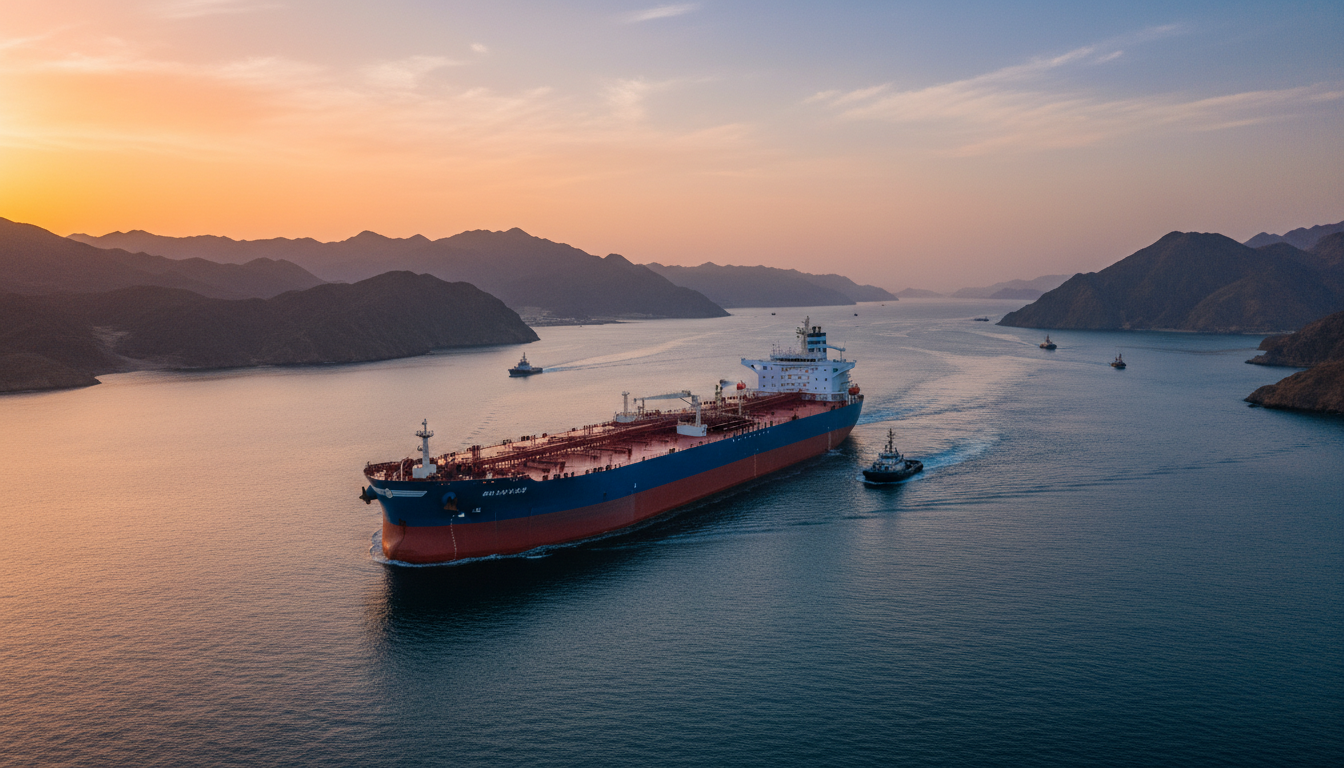
Investors in the global energy sector are closely monitoring an unfolding situation in the Strait of Hormuz, where a Chinese Very Large Crude Carrier (VLCC), the Yuan Hua Hu, is currently attempting transit. Ship-tracking data indicates the supertanker, owned by Chinese state-owned shipping giant Cosco, is proceeding south along the eastern flank of the critical chokepoint. This high-stakes passage emerges amidst a delicate geopolitical dance involving Washington, Beijing, and Tehran, directly impacting the intricate balance of international oil markets.
The Yuan Hua Hu’s journey carries significant weight for oil market stability and Sino-Iranian relations. Should this vessel successfully traverse the Strait, it would represent only the third instance since the outbreak of recent hostilities that a tanker carrying crude for China from the Persian Gulf has navigated these contentious waters. The ship is reportedly broadcasting its Chinese origin and crew details, a tactic previously employed by other vessels seeking unmolested passage through the strait – a testament to the heightened security concerns and perceived risks in the region.
China’s Energy Security and the Hormuz Lifeline
China, as the world’s preeminent energy importer, relies profoundly on Middle Eastern crude to fuel its vast industrial complex and burgeoning economy. While Beijing has diligently built up substantial strategic crude oil inventories, providing a crucial buffer against immediate supply disruptions, the restoration of consistent, unimpeded oil flows from the Persian Gulf remains an economic imperative. The current situation underscores the vulnerability of global energy supply chains and highlights the strategic importance of maritime security for major consuming nations.
The incident also resurrects memories of earlier challenges. In April, the very same Yuan Hua Hu, along with another Chinese VLCC, was granted passage through the Strait of Hormuz under what has been termed Iran’s controversial ‘toll system.’ This arrangement reportedly demands a payment of $2 million per supertanker for safe conduct. Such a levy, if indeed accurate and widely applied, introduces a new layer of cost and political complexity for oil shipping, directly impacting freight rates and the economic viability of certain supply routes.
The Geopolitical Chessboard: Washington, Beijing, and Tehran
This critical maritime movement coincides with a period of intensified diplomatic activity. President Trump is en route to Beijing for high-level discussions with President Xi, where the volatile situation in the Strait of Hormuz and broader issues concerning Iran are expected to feature prominently. While President Trump has publicly asserted that he does not require China’s assistance in resolving differences with Iran, reports suggest he intends to engage President Xi in “a long talk” regarding Tehran’s regional actions and nuclear ambitions. This signals a complex, multi-faceted negotiation where energy security and geopolitical leverage intertwine.
Beijing’s historical role in the region has been one of balancing economic interests with diplomatic neutrality. Earlier in the conflict, accounts emerged indicating that China had directly pressed Iranian officials to cease attacks on vessels transporting crude oil and liquefied natural gas (LNG) through Hormuz. However, subsequent attacks on shipping in the chokepoint suggest that Tehran, despite any overtures, did not entirely succumb to this pressure, asserting its own strategic interests and demonstrating its capacity for disruption.
Investor Outlook: Navigating Volatility and Supply Risk
For investors, the Strait of Hormuz remains a focal point of geopolitical risk. Any escalation or sustained disruption in this waterway — through which approximately one-fifth of the world’s oil supply passes — could trigger significant volatility in crude oil prices, elevate shipping insurance premiums, and impact the profitability of oil majors and tanker companies alike. The successful passage of the Yuan Hua Hu would offer a momentary reprieve, signaling a potential, albeit fragile, pathway for essential energy flows.
Conversely, any impediment to its journey would send shockwaves through the market, pushing crude benchmarks higher and underscoring the severe risks to global economic growth. Investors should monitor not only the physical movement of tankers but also the evolving rhetoric and outcomes from the Trump-Xi summit, as these discussions could shape the diplomatic framework for de-escalation or, conversely, exacerbate tensions. The interplay between energy demand, supply resilience, and geopolitical stability is rarely more evident than when a single supertanker becomes a symbol of broader global anxieties.
The Path Forward: Vigilance in Energy Markets
The situation in the Strait of Hormuz demands continuous vigilance from market participants. The Yuan Hua Hu’s passage serves as a tangible indicator of the current risk appetite and operational realities within a highly contested maritime domain. While China’s significant oil stockpiles provide a short-term buffer, the long-term imperative for secure and affordable energy supplies from the Middle East remains undiminished. The unfolding events underscore the intricate web of economic dependencies and geopolitical pressures that define today’s oil and gas landscape, reinforcing the necessity for investors to factor these complex dynamics into their strategic planning.


