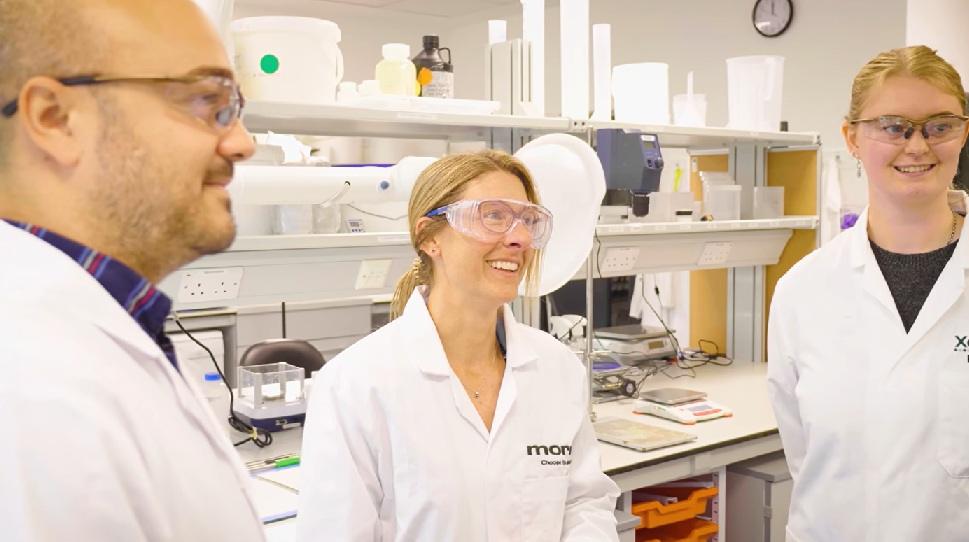
The energy landscape is undergoing a profound transformation, extending beyond the traditional ebb and flow of crude supply and demand. While geopolitical tensions and production quotas continue to dominate headlines, a more subtle, yet equally powerful, shift is occurring in the downstream sector. The recent announcement of Xampla, a UK materials innovation company, securing US$14 million in Series A funding, underscores this evolving dynamic. This investment, aimed at scaling plant-based alternatives to single-use plastics, is not merely a feel-good story; it represents a tangible threat to the petrochemical industry and demands a strategic re-evaluation from oil and gas investors.
The Rising Tide of Sustainable Alternatives and Petchem Pressure
Xampla’s success in attracting significant capital highlights the accelerating pivot towards sustainable materials. The company’s Morro materials, derived from regenerative plant proteins and entirely free of PFAS or conventional plastics, offer a compelling solution to the global plastic waste crisis. With an ambitious goal to replace over 10 billion single-use plastic items within the next five years, Xampla is targeting critical applications such as linings in takeaway boxes, coffee cups, and sachets – areas traditionally dominated by petrochemical-derived polymers. These materials are not only plastic-free and biodegradable but also home compostable and, crucially, exempt from the EU’s stringent Single-Use Plastic Directive (SUPD). This regulatory advantage, coupled with growing consumer preference for eco-friendly products, positions Xampla as a formidable disruptor. The scale of the problem is immense: approximately 400 million tonnes of plastic waste are generated annually, with less than 10% ever recycled. Investors are increasingly scrutinizing the long-term viability of petrochemical investments, given evolving regulatory landscapes and shifting consumer preferences, making the appeal of technologies like Morro materials evident.
Current Market Dynamics: A Mixed Signal for Petrochemical Feedstocks
While the long-term threat from plant-based alternatives looms, the immediate market for traditional petrochemical feedstocks presents a complex picture. As of today, Brent crude trades at $98.57, reflecting a marginal decline of 0.83% within a day range of $97.92 to $98.57. Similarly, WTI crude sits at $90.18, down 1.09% within its daily range of $89.57 to $90.21. Gasoline prices, meanwhile, have remained relatively stable at $3.09. However, a broader look at the past 14 days reveals a more significant trend: Brent crude has seen a substantial drop from $112.57 on March 27 to its current $98.57, representing a decline of $14 or 12.4%. This significant reduction in crude prices could, in theory, offer some relief to petrochemical producers by lowering feedstock costs. Yet, this short-term advantage must be weighed against the structural erosion of demand being driven by innovators like Xampla. Our readers are keenly asking about the current Brent crude price and the models powering these responses, indicating a strong focus on immediate market shifts. However, the larger narrative of demand erosion from sustainable alternatives presents a distinct long-term challenge to the petrochemical value chain, irrespective of daily crude movements.
Navigating Future Headwinds: Regulatory Shifts and Upcoming Events
The investment in Xampla is a clear signal that the market is valuing companies capable of navigating and benefiting from the global push towards sustainability. This push is strongly influenced by regulatory frameworks, exemplified by the EU’s Single-Use Plastic Directive, which creates a competitive moat for compliant alternatives like Morro materials. Looking ahead, the next 14 days are packed with critical energy events that will shape the immediate crude market, indirectly influencing petrochemical economics. The upcoming OPEC+ Joint Ministerial Monitoring Committee (JMMC) meeting on April 18, followed by the Full Ministerial meeting on April 20, are pivotal. Any decisions regarding production quotas will directly impact global crude supply and pricing, thereby affecting feedstock costs for petrochemicals. Furthermore, the weekly API and EIA crude inventory reports on April 21, 22, 28, and 29 will provide crucial insights into supply-demand balances. Consistent inventory builds, for instance, could signal weakening demand, putting further downward pressure on crude prices. While these events primarily influence the upstream and midstream sectors, their ripple effects on petrochemical margins are undeniable. Our readers are actively seeking information on OPEC+ current production quotas, underscoring the immediate impact of supply-side decisions. However, investors must also weigh these traditional market drivers against the emerging structural shifts in demand driven by companies like Xampla. The potential for Morro materials to capture a significant share of the $30 billion barrier coatings market by 2032, as projected by Emerald Technology Ventures, represents a long-term demand erosion that even OPEC+ decisions cannot fully offset for petrochemicals.
Strategic Imperatives for Oil and Gas Investors
The $14 million Series A funding for Xampla, led by specialized sustainable packaging venture funds, is a bellwether for where smart money is moving. This is not merely about corporate social responsibility; it’s about identifying and capitalizing on the next wave of industry growth. For oil and gas investors, this development necessitates a strategic imperative: diversification and proactive engagement with the energy transition. Petrochemical divisions, traditionally reliable profit centers, face increasing pressure from innovative materials. Companies that fail to adapt by investing in sustainable alternatives, exploring partnerships with bio-materials firms, or re-tooling their R&D efforts risk being left behind. The focus on applications like barrier coatings for paper and cardboard directly challenges a core market for petrochemical plastics, which offers grease, oxygen, and moisture protection. The promise of Morro Coating to maintain cardboard recyclability while providing superior barrier properties highlights a superior value proposition that conventional plastics struggle to match. The question of ‘Why should I use EnerGPT?’ from our readers, while about our platform, reflects a broader investor need for advanced tools to navigate complex, evolving markets where traditional oil and gas metrics are increasingly influenced by ESG factors and technological disruption. Investors in the oil and gas sector must recognize that the future of energy extends beyond hydrocarbons, encompassing a holistic view of materials science, environmental impact, and evolving consumer demands. Ignoring the rise of plant-based plastics would be a critical oversight in a rapidly changing investment landscape.


