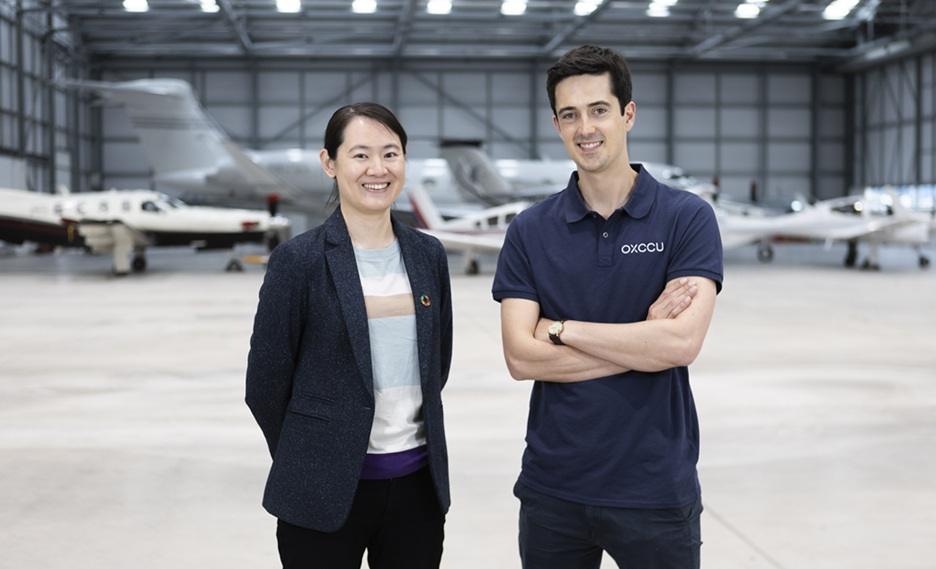
The recent $28 million Series B funding round for OXCCU, a UK-based climate tech startup, marks a significant milestone in the nascent but rapidly expanding sustainable aviation fuel (SAF) sector. This capital infusion is earmarked for scaling and commercializing OXCCU’s proprietary technology, which converts waste CO2 and green hydrogen directly into affordable, low-carbon jet fuel. In an energy landscape characterized by both persistent fossil fuel demand and an accelerating push for decarbonization, innovations like OXCCU’s hold considerable weight for investors seeking exposure to the next wave of energy solutions. Our analysis delves into the implications of this funding, contrasting it against the current volatile crude market and examining the broader investment signals for the energy transition.
Navigating Volatility: SAF’s Place Amidst Shifting Crude Prices
The timing of OXCCU’s successful capital raise occurs against a backdrop of significant turbulence in the traditional oil markets. As of today, Brent Crude trades at $90.38 per barrel, representing a sharp 9.07% decline within the day’s trading range of $86.08 to $98.97. Similarly, WTI Crude has fallen to $82.59, down 9.41% from its daily high. This downward pressure is not an isolated event; our proprietary data shows Brent has shed approximately $22.40, or nearly 20%, since late March, moving from $112.78 to its current level. This volatility, extending to refined products with gasoline dipping to $2.93 per gallon, inevitably shapes investor sentiment across the entire energy complex. Many of our readers are keenly focused on this dynamic, with frequent inquiries about “what do you predict the price of oil per barrel will be by end of 2026?” While the immediate dip in conventional fuel prices might temporarily ease pressure on airlines to adopt more expensive SAF, the long-term imperative for decarbonization remains undimmed. Investors are increasingly aware that the energy transition is not a linear path, but rather a strategic shift driven by regulatory mandates, corporate sustainability goals, and technological advancements, irrespective of short-term crude fluctuations.
OXCCU’s Catalyst for Change: Addressing SAF’s Core Barriers
OXCCU’s technology directly addresses some of the most formidable obstacles hindering widespread SAF adoption: high production costs and feedstock limitations. The International Air Transport Association (IATA) projects SAF production will double in 2025, yet still constitute a mere 0.7% of total airline fuel consumption. This stark figure underscores the urgent need for scalable, cost-effective solutions. OXCCU’s process, spun out from the University of Oxford, innovates by consolidating the traditional two-step Reverse Water Gas Shift (RWGS) and Fischer-Tropsch (F-T) reactions into a single catalytic conversion. By directly transforming waste CO2 and green hydrogen into liquid hydrocarbons, the company claims significant reductions in both capital and operating expenditures. This single-step approach also enhances feedstock flexibility, allowing the use of diverse carbon sources such as reformed biogas, gasified wood waste, and pure CO2 combined with hydrogen. For investors, this translates into a potentially more resilient and economically viable pathway to producing SAF, promising up to 85% lifecycle greenhouse gas emission reductions relative to conventional jet fuel. The ability to leverage various waste streams not only lowers costs but also mitigates supply chain risks, a critical factor in a rapidly expanding market.
Scaling Ambition: From Lab to Commercial Reality
The $28 million Series B funding is a crucial enabler for OXCCU’s ambitious scaling objectives. CEO Andrew Symes rightly highlighted that securing such capital in a tight market environment is a testament to the scientific rigor and market urgency behind their mission. The company has already opened its OX1 demonstration plant at London Oxford Airport in 2024, with a second, OX2, slated for full operation by 2026. This phased approach to commercialization provides a clear roadmap for investors tracking progress. The capital will accelerate these efforts, moving the technology from pilot scale to full commercial deployment. For investors considering exposure to climate tech, the transition from proof-of-concept to industrial-scale production is often the most capital-intensive and risk-laden phase. OXCCU’s ability to attract significant funding, particularly from “serious players” as Symes noted, signals confidence in their technological readiness and market potential. This forward momentum is vital for meeting the aviation sector’s long-term decarbonization targets, which will increasingly rely on breakthroughs in SAF production to bridge the gap between current supply and future demand.
Macro Tailwinds & Headwinds: Upcoming Events Shaping the Energy Landscape
While OXCCU’s progress offers a glimpse into the future of aviation fuel, the broader energy market remains highly dynamic, influenced by a series of critical upcoming events. This Sunday, April 19th, marks a full Ministerial OPEC+ Meeting, an event our readers are tracking closely, especially concerning “OPEC+ current production quotas.” Any decisions on supply adjustments from this influential group could significantly impact global crude prices, thereby affecting the economic competitiveness of SAF in the short term. Following this, the market will scrutinize the API Weekly Crude Inventory reports on April 21st and 28th, along with the EIA Weekly Petroleum Status Reports on April 22nd and 29th. These data releases provide crucial insights into U.S. supply and demand dynamics, offering further clues about short-term price movements. For investors, these events collectively paint a picture of the macro environment in which energy transition companies like OXCCU operate. A prolonged period of high traditional oil prices could accelerate SAF adoption by making it more economically attractive, while a sustained downturn might slow its uptake. However, the fundamental drive towards net-zero emissions, coupled with increasing regulatory pressure and corporate ESG commitments, suggests that investments in innovative decarbonization technologies will continue to attract capital, regardless of the immediate swings in the conventional energy market.


